Beyond the Textbook: A Practical Guide to Fostering Critical Thinking and 21st-Century Skills in South African High Schools
In the bustling, often over-crowded corridors of a South African high school, the pressure is palpable. The bell rings, and the relentless march through the CAPS curriculum continues. For teachers, Heads of Department (HODs), and school management, the primary goal often feels singular: get learners through their National Senior Certificate (NSC) examinations. While this is an undeniably crucial objective, an overemphasis on rote memorisation and content coverage is creating a generation of learners who are academically proficient but critically unprepared for the complexities of the 21st-century world and the Fourth Industrial Revolution (4IR).
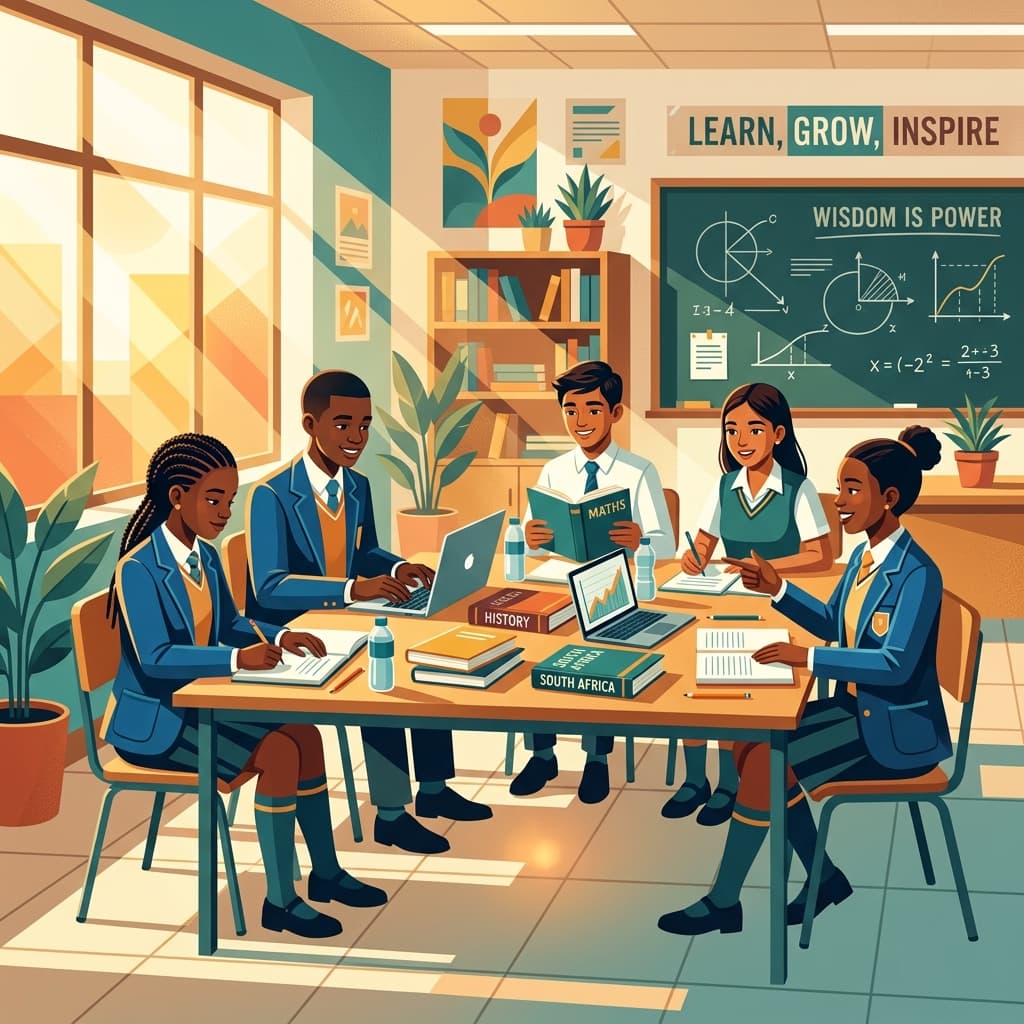
This article is a comprehensive guide for South African educators dedicated to moving beyond the "chalk and talk" paradigm. It’s a deep dive into practical, implementable strategies for embedding critical thinking, communication, collaboration, and creativity—the core 21st-century skills—directly into your daily teaching, without sacrificing CAPS compliance. We will explore how to transform your classroom from a space of passive reception into a dynamic hub of inquiry, problem-solving, and innovation, ultimately preparing our learners not just to pass matric, but to thrive in life beyond the school gates.
Understanding the 'Why': Critical Thinking and 21st-Century Skills in the South African Context
Before we unpack the "how," we must firmly establish the "why." The imperative to cultivate these skills is not a passing educational trend; it is a fundamental necessity for the social and economic future of South Africa. The world our current Grade 8 learners will enter upon graduating is one of automation, artificial intelligence, and unprecedented global connectivity. Jobs that require repetitive tasks are disappearing, while demand for roles requiring analytical reasoning, complex problem-solving, and interpersonal skills is skyrocketing.
Beyond Rote Learning: Moving Past the 'CAPS Checklist' Mentality
The Curriculum and Assessment Policy Statement (CAPS) provides the essential framework for what needs to be taught. However, it should be viewed as the floor, not the ceiling. The danger lies in a "checklist" approach, where teaching becomes a race to cover content points, often at the expense of deep understanding. Critical thinking is not an extra subject to be squeezed in; it is the method through which the CAPS content should be explored.
For example, instead of merely asking learners to list the causes of the 1976 Soweto Uprising in History, a critical thinking approach asks them to evaluate the reliability of different sources describing the event, analyse the long-term consequences on the anti-apartheid struggle, and debate the effectiveness of student protest as a tool for social change. The same CAPS content is covered, but the cognitive demand is profoundly different. This shift transforms learners from passive sponges into active, engaged historians.
The 4Cs Framework for the South African Classroom
The 4Cs provide a powerful, memorable framework for understanding the core 21st-century skills:
- Critical Thinking: The ability to analyse information objectively, evaluate evidence, identify different points of view, and form a reasoned judgement. In South Africa, this means equipping learners to discern fake news from credible sources, analyse political rhetoric, and solve complex community-based problems.
- Communication: Sharing thoughts, questions, ideas, and solutions clearly and effectively. This goes beyond writing essays; it includes verbal articulation in debates, presenting group findings, and using digital tools to convey complex information.
- Collaboration: Working together to achieve a common goal, including demonstrating empathy, taking on responsibility, and compromising to reach a consensus. In our diverse classrooms, this is a vital social cohesion tool, teaching learners to work across cultural and linguistic divides.
- Creativity: Trying new approaches to get things done, which equals innovation and invention. This isn't just about art class; it's about finding innovative solutions to scientific problems, developing unique business plans in EMS, or crafting a compelling narrative in English.
The Economic Imperative: Preparing Learners for a 4IR South Africa
South Africa grapples with one of the highest youth unemployment rates in the world. A matric certificate, while essential, is no longer a guaranteed ticket to employment. Employers consistently report a skills gap, citing a lack of problem-solving abilities, poor communication skills, and an inability to work effectively in teams. By explicitly teaching these 21st-century skills, we are directly addressing this gap. We are cultivating a generation of adaptable, resilient, and entrepreneurial thinkers who can create jobs, not just seek them. This is a matter of national importance.
Practical Strategies for Embedding Critical Thinking Across the CAPS Curriculum
The theory is compelling, but the real challenge lies in implementation within the constraints of a 45-minute lesson, large class sizes, and limited resources. The following are actionable strategies that can be adapted for any subject.
The Power of Questioning: From 'What' to 'Why' and 'What If'
The single most powerful tool a teacher possesses is the question. Shifting from lower-order to higher-order questions can single-handedly transform the cognitive landscape of your classroom.
- Lower-Order Questions (Remembering & Understanding):
- "What is the definition of photosynthesis?"
- "Who was the first democratic president of South Africa?"
- "List the three types of rock."
- Higher-Order Questions (Applying, Analysing, Evaluating, Creating):
- "How might the process of photosynthesis be affected by prolonged drought in the Karoo?" (Application/Analysis)
- "Evaluate the argument that Nelson Mandela's leadership style was the single most important factor in the transition to democracy." (Evaluation)
- "Design a sustainable community plan that incorporates all three types of rock for construction and landscaping." (Creation)
Actionable Step: Plan three key higher-order questions for every lesson you teach. Write them in your lesson plan and make a conscious effort to ask them, allowing for adequate "wait time" for learners to formulate their thoughts.
Subject-Specific Integration: Making It Work in Your Classroom
Let's move from the general to the specific. Here’s how these skills can be woven into various subjects within the CAPS framework.
**In English Home Language / First Additional Language:**
- Media Analysis: Instead of just identifying persuasive techniques in an advertisement, have learners deconstruct a recent political party advert or a social media campaign. Ask: "Who is the target audience? What values are being promoted? What information is being left out? How does this message attempt to influence your behaviour?"
- Literary Debates: Move beyond comprehension questions about prescribed works. Stage a formal debate on a complex theme. For Things Fall Apart, a debate could be: "To what extent was Okonkwo a victim of his circumstances versus a product of his own choices?" This forces learners to find textual evidence, structure an argument, and anticipate counter-arguments.
Lesson Planner
Generate comprehensive, CAPS-aligned lesson plans in seconds.
**In History and Social Sciences:**
- Source Analysis: This is the heart of the historian's craft. Provide learners with conflicting primary sources about an event—for instance, a government report and a first-person account from a protestor regarding the Marikana massacre. Task them with corroborating evidence, identifying bias, and writing a nuanced account that acknowledges the different perspectives.
- Historical Simulation: For a topic like the TRC (Truth and Reconciliation Commission), divide the class into groups representing different stakeholders (e.g., victims, perpetrators, commissioners, international observers). Have them research and role-play their positions to understand the complexities and emotional weight of the process.
**In Mathematics and Physical Sciences:**
- Problem Formulation: Give learners the answer and ask them to formulate the problem. For example, "The answer is 42m/s. What could the physics problem be?" This encourages creative application of formulas.
- Data Interpretation with Local Relevance: Use real-world South African data sets. In Life Sciences, learners could analyse local water quality reports and propose solutions for purification. In Mathematics, they could use StatsSA data to analyse unemployment trends in their province and create graphical representations to present their findings. This connects abstract concepts to tangible realities.
**In Life Orientation:**
- Ethical Dilemmas: Life Orientation is a perfect incubator for critical thinking. Present learners with real-world ethical scenarios relevant to their lives: "A friend offers you a copy of an exam paper before you write. What are the potential consequences of accepting or refusing for yourself, your friend, and the school?" Use a framework like the "Four-Way Test" (Is it the truth? Is it fair to all concerned? Will it build goodwill and better friendships? Will it be beneficial to all concerned?) to guide their reasoning.
- Community Action Projects: Task learners with identifying a problem within the school or local community (e.g., littering, bullying, lack of recycling facilities) and developing a comprehensive, actionable plan to address it. This integrates all 4Cs.
Cultivating Collaboration and Communication Skills
Learning is a social process. By structuring activities that require meaningful collaboration and communication, we prepare learners for the team-oriented nature of the modern workplace.
Designing Effective Group Work (That Isn't Just One Learner Doing Everything)
We've all seen it: a "group" project where one learner does all the work. To foster true collaboration, structure is key.
- Assign Specific Roles: In a group of four, assign roles like:
- Facilitator: Keeps the group on task and ensures everyone contributes.
- Researcher: Gathers the necessary information.
- Scribe/Designer: Records the group's ideas and designs the final product.
- Spokesperson: Presents the group's findings to the class.
- Use the Jigsaw Method: For a complex topic, divide it into four sub-topics. Form "expert groups" where learners with the same sub-topic from different teams collaborate to master the material. Then, they return to their original "home groups" to teach their sub-topic to their teammates. This creates interdependence; the group cannot succeed unless every member contributes.
- Assess Both Process and Product: The final mark should reflect not only the quality of the submitted work but also the collaborative process. Use a simple rubric where learners can peer-assess their teammates on criteria like contribution, reliability, and respectful communication.
The Art of the Debate and Socratic Seminars
Formal debates and Socratic seminars are exceptional tools for developing communication skills. A Socratic seminar is a structured discussion where learners respond to open-ended questions about a text or idea. The goal is not to win an argument, but to achieve a deeper understanding.
Actionable Step: Host one Socratic seminar per term. Choose a provocative article or a challenging chapter from a book. Arrange the desks in a circle, set clear ground rules (e.g., listen actively, build on others' ideas, refer to the text), and act as a facilitator, not a lecturer.
The Role of Assessment and School Leadership
For these changes to take root, they must be supported by assessment practices and a whole-school vision.
Assessing What Matters: Moving Beyond the Pen-and-Paper Test
If we only assess content recall through traditional tests and exams, learners will quickly realise that critical thinking and collaboration, while discussed, are not truly valued. Assessment must evolve to measure these 21st-century skills.
- Rubrics are Essential: Develop clear rubrics for presentations, debates, and projects. These rubrics should have criteria for content knowledge, but also for communication clarity, evidence-based argumentation, and collaborative effectiveness.
- Portfolios of Evidence: Encourage learners to build portfolios that showcase their best work over a term or year. This could include written essays, recordings of presentations, photos of group projects, and personal reflections on their learning journey.
- Practical Demonstrations: In subjects like Science, instead of just a written test, assess a learner's ability to design, conduct, and analyse an experiment.
A Whole-School Approach: Leadership's Role in Driving Change
A single teacher can be a spark, but a school's leadership team is the engine of systemic change.
- Champion Professional Development: HODs and principals must prioritise professional development focused on these pedagogical strategies. Invite experts, facilitate peer-to-peer learning sessions where teachers can share what works, and create Professional Learning Communities (PLCs).
- Adapt the Timetable: Where possible, consider block scheduling or interdisciplinary project days that allow for more in-depth, project-based learning that doesn't fit neatly into a 45-minute period.
- Communicate with Parents: School management must communicate this pedagogical vision to parents. Explain why their children are doing more group projects and debates, and how these activities are building essential skills for their future success, linking it directly to university and career readiness.
Conclusion: Our Collective Responsibility
Fostering critical thinking and 21st-century skills in our high schools is not a luxury; it is our fundamental responsibility. It is the work of preparing South African youth for a future that is uncertain, complex, and filled with both challenges and opportunities. This shift in pedagogy does not mean abandoning the CAPS curriculum. It means bringing it to life. It means transforming our classrooms into vibrant arenas where learners are challenged to think deeply, communicate clearly, collaborate effectively, and create a better future for themselves and their country. The task is great, but the potential of our learners is greater still. Let us equip them not with a map for a world that no longer exists, but with the compass and the skills to navigate any terrain they may encounter.
Tyler. M
Dedicated to empowering South African teachers through modern AI strategies, research-backed pedagogy, and policy insights.