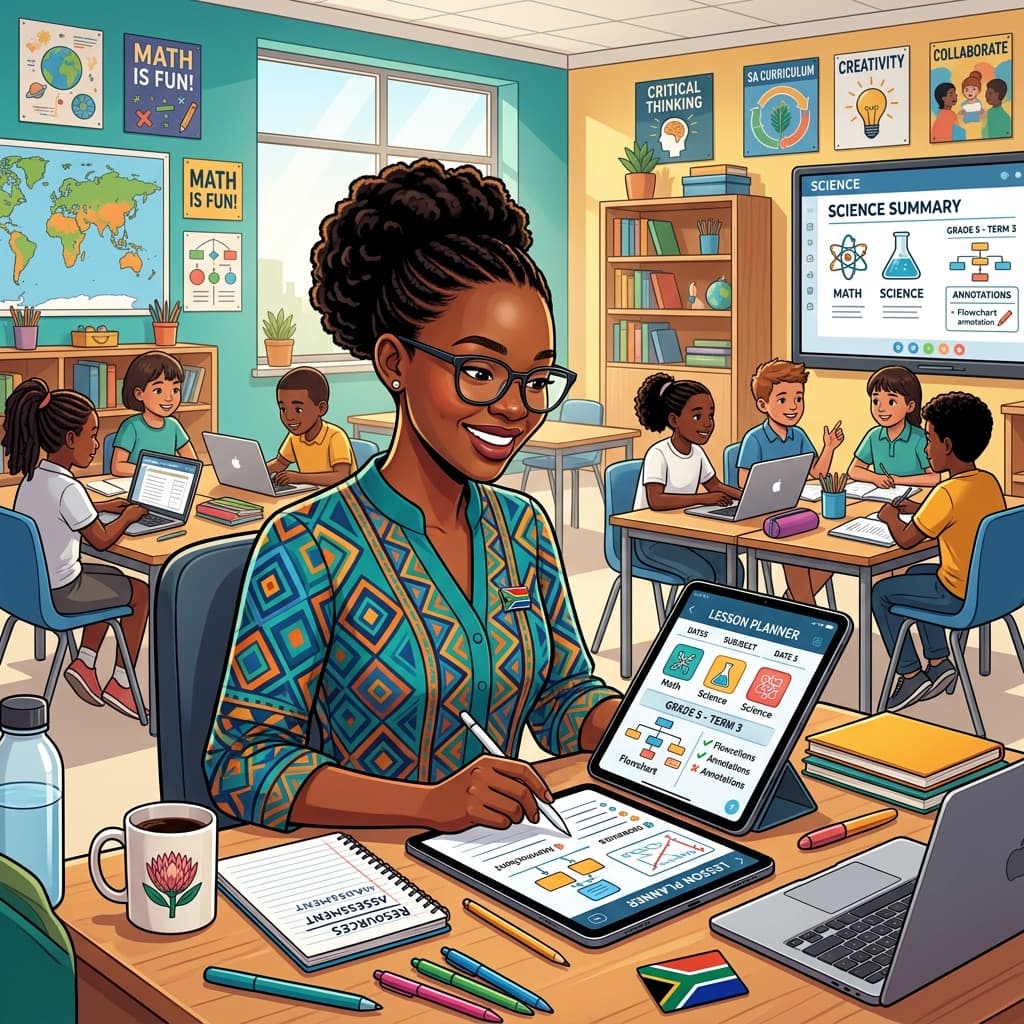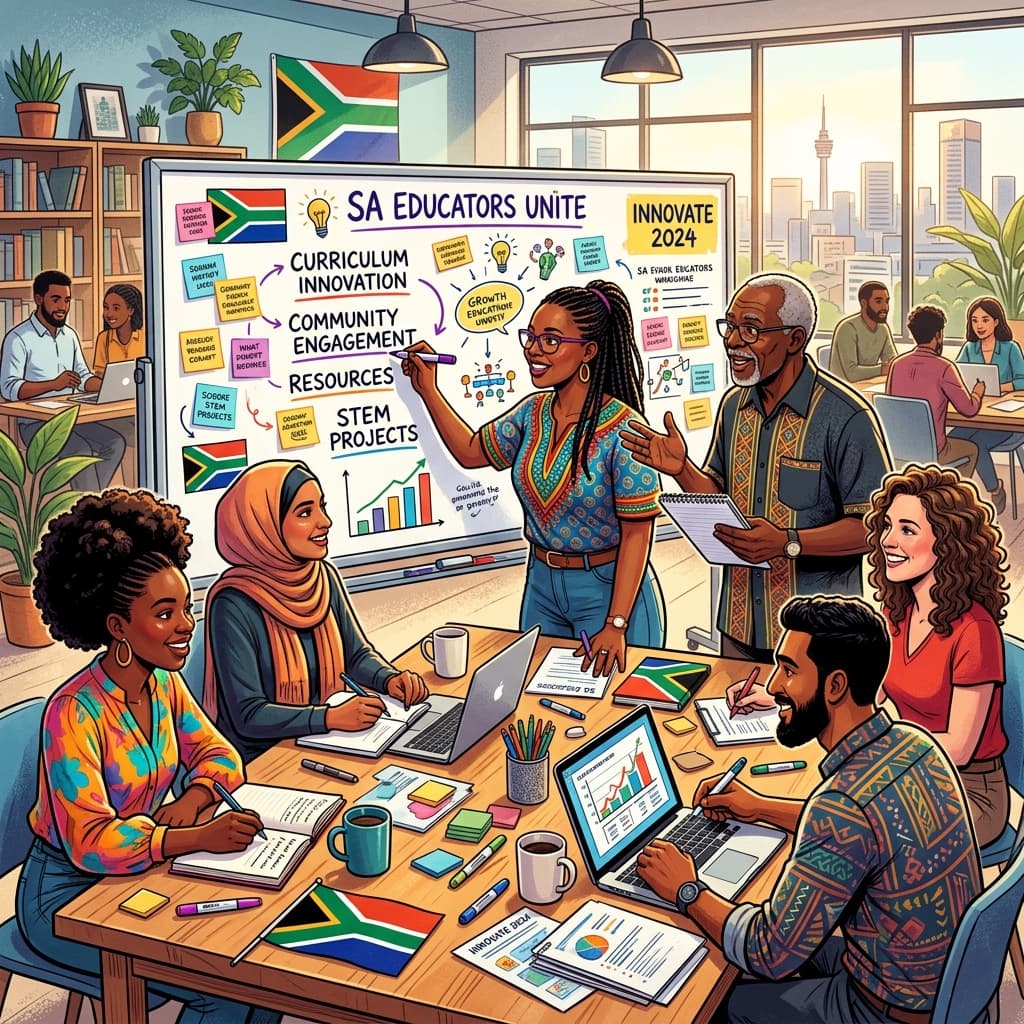
As South African teachers, we operate in a unique and often challenging educational landscape. We know firsthand that passion and dedication are abundant, but classroom resources can sometimes be scarce. Yet, this very scarcity often ignites a powerful spark: the incredible ingenuity and resourcefulness that defines our profession. This post isn't about lamenting what we lack; it's about celebrating and harnessing the vast potential within us and our communities to create dynamic, engaging learning environments, even with limited traditional resources.
Shifting Our Mindset: Resourcefulness as Our Superpower
The first and most crucial step in transforming a resource-constrained classroom is a shift in perspective. Instead of viewing limited supplies as a barrier, let's reframe them as an invitation to innovate, to think differently, and to tap into a wellspring of creativity that often lies dormant when everything is readily available.
Imagine your classroom as a laboratory of discovery, where every discarded item, every natural element, and every community interaction holds educational potential. This mindset isn't just about saving money; it's about fostering critical thinking, problem-solving, and adaptability – essential skills for both teachers and learners in the 21st century, deeply aligned with the CAPS curriculum's call for active, engaged learning. Our role, then, evolves from mere deliverers of content to facilitators of exploration, empowering learners to interact with their environment in meaningful ways.
Harnessing Everyday Materials: Your Classroom is a Treasure Trove
Before you even consider purchasing anything, take a good look around your classroom, your home, and your school grounds. You'll be amazed at the educational potential hiding in plain sight.
Reimagining Recyclables: From Waste to Wonder
Recycled materials are not just eco-friendly; they are a goldmine for hands-on learning, allowing learners to manipulate, construct, and understand concepts in a tangible way.
- Cardboard Boxes & Rolls:
- Literacy: Cut letters, create sight word flashcards, construct storytelling backdrops, make mini-books. Larger boxes can become reading nooks or puppet theatres.
- Numeracy: Build 3D shapes, create number lines, construct dice, develop place value charts.
- Science: Model solar systems, build simple machines (levers, pulleys), create animal habitats, construct wind turbines.
- Life Skills: Design and build miniature homes, create props for role-playing community roles.
- Plastic Bottles & Containers:
- Science: Create terrariums, rain gauges, simple water filters, density experiments. Use smaller containers for sorting and classifying activities.
- Art: Paint and decorate to make sculptures, musical shakers, or plant pots.
- Numeracy: Use bottle caps for counting, pattern making, or as counters for board games.
- Newspapers & Magazines:
- Literacy: Cut out letters, words, and images for collage stories, vocabulary building, or creating news reports.
- Art: Papier-mâché sculptures, collages, drawing surfaces.
- Life Skills: Discuss current events, identify different types of advertisements, understand media literacy.
- Bottle Tops & Lids:
- Numeracy: Excellent for counting, sorting by colour or size, creating patterns, and as game tokens.
- Fine Motor Skills: Stringing them together (if suitable), stacking, or using them in pegboards.
Practical Tip: Designate a "Recycling Station" in your classroom and encourage learners and their families to bring in clean, safe recyclables. This fosters a sense of ownership and responsibility.
Natural Wonders at Your Doorstep: The Great Outdoors as Your Classroom
South Africa's diverse natural environment offers an unparalleled outdoor classroom. Even a small schoolyard or nearby park can become a vibrant learning space.
- Stones, Pebbles & Rocks:
- Numeracy: Counting, sorting by size/shape/colour, creating patterns, simple addition/subtraction.
- Art: Rock painting, creating mandalas, building sculptures.
- Science: Observing geological features, discussing erosion, understanding weight and mass.
- Leaves, Twigs & Flowers:
- Science: Observing plant life cycles, identifying different plant species, understanding photosynthesis (even simply by observing colour changes), creating leaf rubbings.
- Art: Leaf collages, ephemeral art, creating dyes.
- Literacy: Using leaves to inspire descriptive writing or poetry.
- Soil, Sand & Water:
- Science: Investigating soil composition, observing water absorption, creating mud kitchens for sensory play and exploration of properties.
- Life Skills: Understanding gardening, plant growth, water conservation.
- Fine Motor Skills: Digging, pouring, mixing.
Practical Tip: Integrate regular "nature walks" into your timetable, even if it's just around the school grounds. Provide learners with magnifying glasses (even DIY ones from plastic bottles) and notebooks to record their observations. This supports CAPS Natural Sciences and Technology objectives beautifully.
Household Items & Donations: Unconventional Resources, Endless Possibilities
Don't underestimate the power of items found around the house or donated by the community.
- Old Clothes & Fabric Scraps:
- Life Skills: Role-play costumes, practicing buttons/zips, understanding different textures.
- Art: Fabric collages, weaving, creating soft sculptures.
- Literacy: Creating character puppets for storytelling.
- Kitchen Utensils (e.g., measuring cups, spoons, sieves):
- Numeracy: Exploring measurement (volume, capacity), comparing sizes, counting.
- Science: Simple experiments with liquids and solids, understanding density.
- Old CDs/DVDs:
- Art: Reflective surfaces for collages, mosaic pieces.
- Science: Observing light refraction, creating spinning tops to explore colour mixing.
Practical Tip: Send a letter home to parents/guardians detailing specific items you need (e.g., "clean plastic bottles," "fabric scraps") and explaining how they'll be used. You'll be surprised by the generosity.
Community as a Resource: Tapping into Local Wisdom & Support
Our schools don't exist in isolation. The communities they serve are rich reservoirs of knowledge, skills, and tangible resources. Building strong community links is not only vital for school support but also deeply enriches the learning experience.
Parent & Guardian Involvement: Unlocking Local Expertise
Parents, guardians, and extended family members are an invaluable, often untapped, resource.
- Material Collection: As mentioned, they can be excellent at sourcing recyclables and household items.
- Skill Sharing: Invite parents with specific skills to demonstrate or teach a mini-lesson. Think about:
- Weaving or knitting: For fine motor skills and cultural crafts.
- Gardening: Establishing a school vegetable patch (Life Skills, Natural Sciences).
- Traditional storytelling or music: Enriching language arts and cultural heritage (Home Language, First Additional Language, Life Skills).
- Basic carpentry or sewing: For practical skills development.
- Cultural Knowledge: Encourage parents to share stories, songs, and traditions that align with CAPS social sciences or indigenous knowledge systems. This fosters pride and understanding.
Local Businesses & NGOs: Partners in Education
Reach out to businesses and non-governmental organisations (NGOs) in your area. Many are keen to contribute to local education.
- Donations: Shops might donate end-of-roll fabric, cardboard boxes, old display materials. Hardware stores might offer offcuts of wood or paint samples. Printing companies might donate paper scraps.
- Guest Speakers: Professionals (e.g., a nurse, a police officer, an artist, a farmer) can provide real-world insights into different careers and topics relevant to CAPS Life Skills and Social Sciences.
- Field Trips: Local farms, libraries, community centres, or small businesses can offer free or low-cost educational excursions, providing learners with experiences beyond the classroom walls.
- Mentorship Programs: Older learners might benefit from mentorship opportunities with local professionals.
Leveraging Fellow Teachers & School Staff: A Collaborative Ecosystem
Within your own school, there's a wealth of shared experience and potential resources.
- Resource Sharing: Establish a central "resource bank" where teachers can share homemade teaching aids, books, or even just ideas.
- Collaborative Lesson Planning: Plan interdisciplinary lessons with colleagues to maximise shared materials and expertise.
- Skill-Sharing Workshops: Organise informal workshops where teachers can teach each other how to make specific teaching aids or implement new strategies. The school caretaker, admin staff, or even groundskeepers often have practical skills that can be tapped into (e.g., for fixing equipment, identifying local plants).
Practical Tip: Create a "Community Skills and Resources Register" for your school. Document who in the community or within the staff has skills or materials they're willing to share.
Pedagogical Strategies for Resource-Scarce Environments: Maximising Impact
Beyond the physical resources, certain teaching strategies thrive in environments where traditional materials are scarce. These approaches focus on interaction, critical thinking, and learner-centred activities, aligning perfectly with CAPS principles.
The Power of Storytelling & Oral Tradition: Engaging Minds, Building Language
Humans are wired for stories. In a classroom with limited visual aids, your voice, imagination, and the collective imagination of your learners become your most powerful tools.
- Narrative for All Subjects: Use stories to introduce concepts in history, science, life skills, and even mathematics. "Once upon a time, there were five very brave numbers..."
- Learner-Generated Stories: Encourage learners to create and tell their own stories, using prompts or everyday objects as inspiration. This develops language skills (Home Language, FAL), creativity, and confidence.
- Role-Playing & Drama: Act out historical events, scientific processes, or social scenarios. This requires no props, just imagination and enthusiasm, fostering empathy and understanding (Life Skills, Creative Arts).
Gamification & Interactive Learning: Making Learning a Playful Challenge
Games are inherently engaging and can transform mundane tasks into exciting challenges, often requiring minimal resources.
- Simple Board Games: Draw grids on cardboard, use bottle tops as counters, and create questions related to any subject.
- Quizzes & Debates: Divide the class into teams for oral quizzes, charades, or debates. These hone listening, speaking, and critical thinking skills.
- "I Spy" & Scavenger Hunts: For younger learners, "I Spy with my little eye something that starts with 'A'" reinforces letters. For older learners, scavenger hunts (indoors or outdoors) can be used for science observations, historical facts, or mathematical challenges.
Group Work & Peer Learning: Collective Intelligence
The CAPS curriculum strongly advocates for collaborative learning. Group work naturally maximises limited resources and fosters essential social and communication skills.
- Shared Resources: If you only have one map or one textbook, learners can share and discuss in groups.
- Jigsaw Learning: Divide a topic into segments, assign each group a segment to research/discuss, and then have group members teach each other.
- Peer Tutoring: Pair stronger learners with those who need support. This reinforces concepts for the tutor and provides individualised help for the tutee.
- Project-Based Learning: Assign group projects that require learners to use available resources (recycled materials, community experts) to solve a problem or create a product.
Outdoor Learning & Environmental Education: Connecting with the World
Taking learning outside is not only cost-effective but also provides sensory-rich, hands-on experiences crucial for developing a holistic understanding of the world.
- Science Observations: Directly observe plants, animals, weather patterns, and ecological relationships in the schoolyard.
- Mathematical Concepts: Measure distances, count objects, estimate heights, identify geometric shapes in nature.
- Art & Creativity: Sketch natural elements, create land art, use natural materials for crafts.
- Physical Education: Organised games using natural boundaries and improvised equipment.
- Life Skills: Develop an understanding of sustainability, conservation, and responsible citizenship.
Visual Aids & Self-Made Charts: Clarity Through Creativity
While fancy posters might be out of reach, effective visual aids can be created with everyday materials.
- Hand-Drawn Charts: Use large sheets of brown paper (from packaging), old calendars (turn them over for a blank side), or even newspaper sheets taped together. Involve learners in the drawing and writing to foster ownership.
- Learner-Created Displays: Encourage learners to draw, label, and contribute to classroom displays based on their learning. Their work becomes the visual aid.
- Repurposed Items: Use old political maps (if still relevant), calendars, or even packaging with clear graphics as part of your display.
Integrating Technology (Even Low-Tech Solutions): Bridging the Gap
While access to advanced technology varies greatly across South African schools, there are many low-tech and creative ways to incorporate technology-like benefits.
The Humble Chalkboard/Whiteboard: An Interactive Hub
This is arguably the most powerful "technology" in a resource-limited classroom.
- Interactive Lessons: Use it for brainstorming, mind mapping, drawing diagrams, collaborative problem-solving, and displaying short, clear instructions.
- Learner Engagement: Invite learners to come up and write, draw, or demonstrate.
- Storyboarding: Develop narratives or processes step-by-step.
Radio & Public Address Systems: Aural Learning
If your school has a radio or a PA system, explore its potential.
- Educational Broadcasts: Tune into educational radio programmes (if available and relevant to CAPS).
- School Announcements as Learning: Turn daily announcements into listening comprehension exercises or discussion starters for life skills.
Shared Devices (Tablets/Smartphones - if available): Maximising Limited Access
If your school or you personally have access to even one tablet or smartphone, it can be a valuable shared resource.
- Group Access: Rotate groups of learners to access educational apps, short videos, or online resources for research (with strict supervision).
- Digital Storytelling: Learners can use the device to record their stories or create simple photo essays.
- Documenting Learning: Use the camera to document projects, outdoor observations, or classroom activities for display or reflection.
Projector & Screen (Even DIY Ones): Bringing Visuals to Life
A small, portable projector can transform a classroom. If one isn't available, consider DIY options.
- DIY "Screen": A blank wall, a large white sheet, or even a piece of cardboard can serve as a projection surface.
- Visuals from Shared Devices: Connect a shared smartphone or tablet to a projector (if possible) to display images, maps, or short educational videos to the entire class. This significantly amplifies the impact of one device.
Practical Tips for Implementation & Sustainability
Embarking on a journey of resourceful teaching is ongoing. Here are some tips to ensure your efforts are sustainable and impactful.
- Start Small, Iterate, and Reflect: Don't try to revolutionise your entire teaching approach overnight. Choose one or two ideas to implement each term, reflect on what worked well, and adapt.
- Document Your Successes: Take photos of learner creations, note down positive impacts on engagement, and collect learner feedback. Share these with colleagues, school leadership, and parents to build support and celebrate achievements.
- Involve Learners in Resource Creation: This is crucial. When learners help make the teaching aids, they develop practical skills, foster a sense of ownership, and understand the value of materials. It's a powerful way to integrate Life Skills and Technology.
- Create a "Resource Bank" at School: Work with your colleagues to establish a central, organised space where shared resources (homemade, donated, or natural) can be stored and accessed by everyone. This prevents duplication of effort and fosters a collaborative spirit.
- Be Flexible and Adaptable: The beauty of resourceful teaching is its flexibility. If one idea doesn't work, don't be discouraged. Pivot, try something different, and embrace the unexpected learning opportunities that arise.
- Continuous Learning & Sharing: Attend workshops, connect with other teachers (online or in person), and share your own creative solutions. The South African teaching community is a vibrant network of innovation.
Conclusion
Teaching with limited resources is not a constraint; it's a testament to the unparalleled creativity and dedication of South African teachers. By shifting our mindset, tapping into everyday materials, leveraging our communities, and employing ingenious pedagogical strategies, we can transform any classroom into a vibrant, engaging, and effective learning space.
Remember, the most powerful resource in any classroom isn't found in a stationery cupboard; it resides within you – the passionate, resourceful, and deeply committed educator. Let's continue to inspire, innovate, and empower the next generation of South Africans, one creative lesson at a time. Your ingenuity is shaping futures.
Tyler. M
Dedicated to empowering South African teachers through modern AI strategies, research-backed pedagogy, and policy insights.