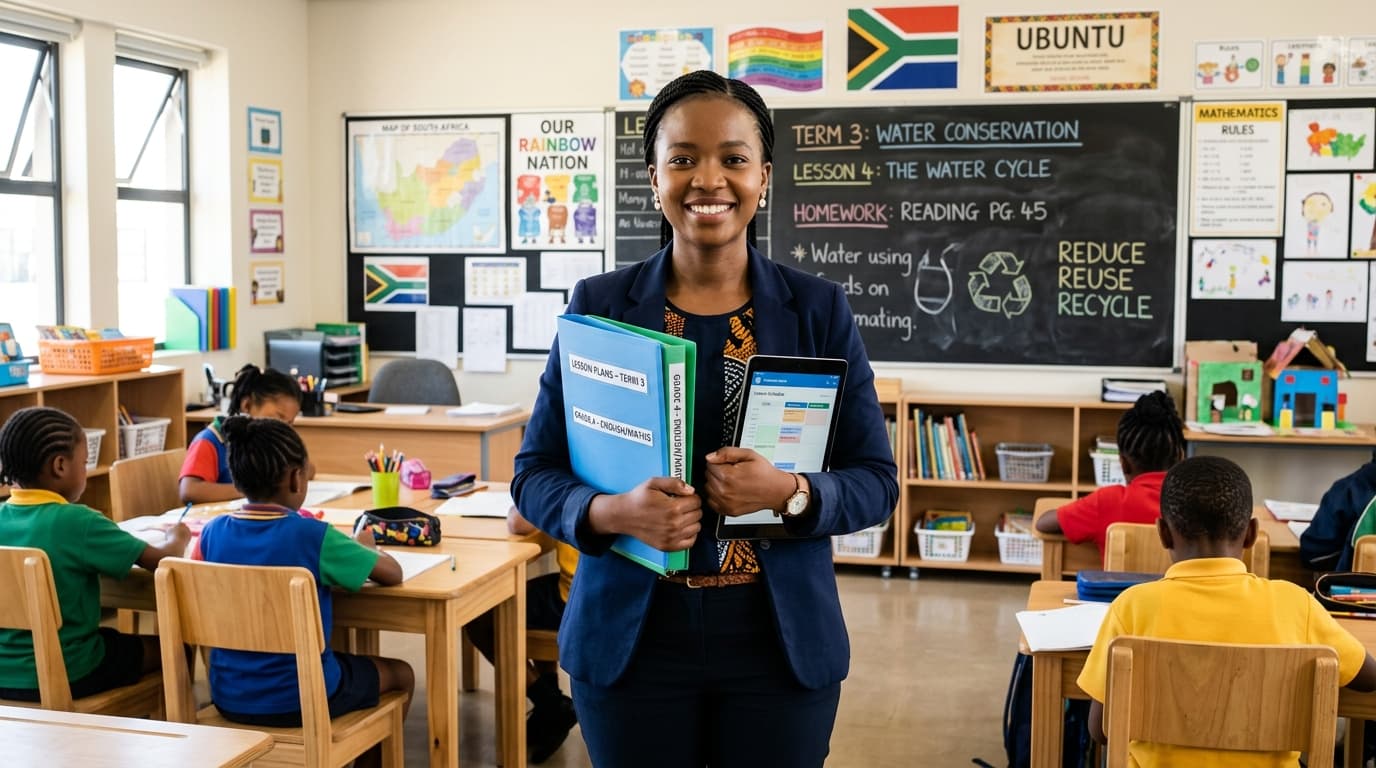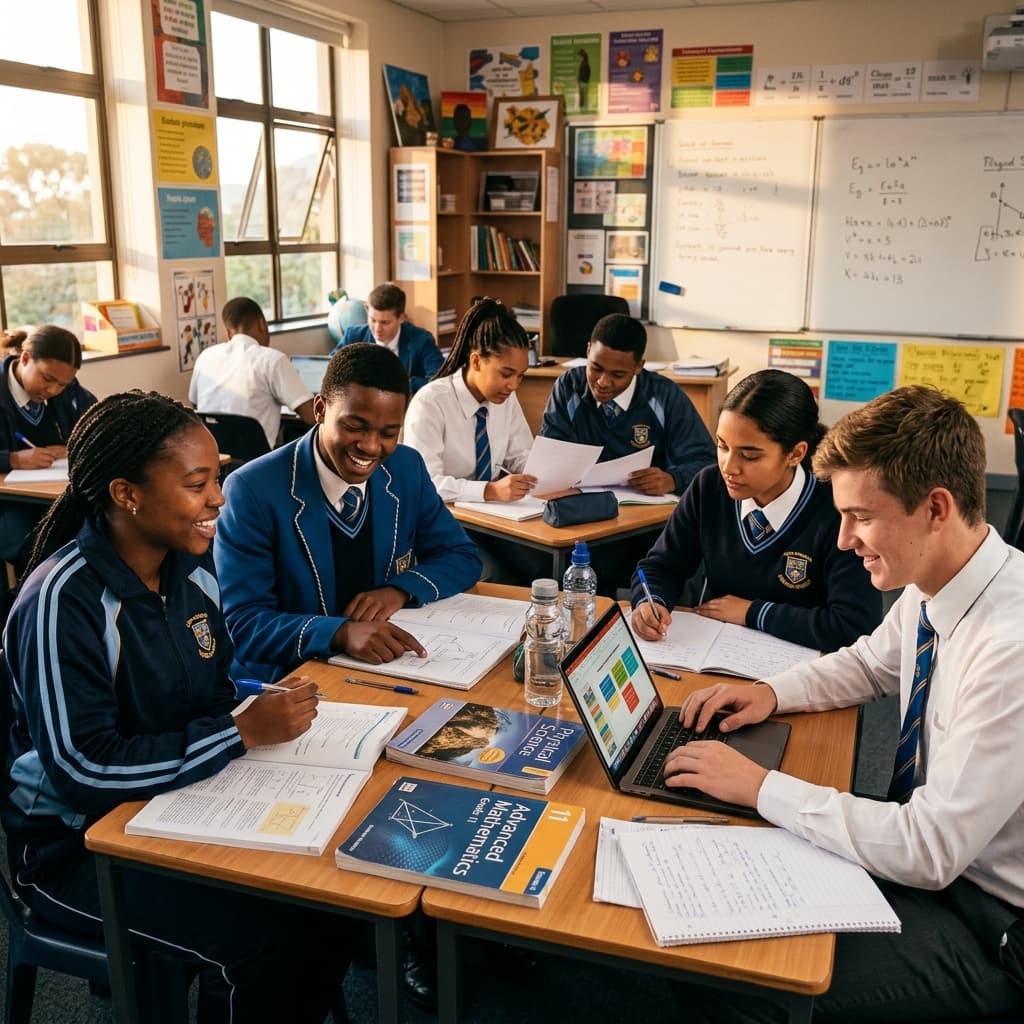
The bustling energy of a large South African classroom is something we, as dedicated educators, know intimately. We understand the unique blend of challenges and immense potential that comes with teaching a significant number of learners within often resource-constrained environments. In this dynamic setting, the idea of group work can sometimes feel daunting, conjuring images of chaos rather than collaboration. Yet, effective group work is not just a 'nice-to-have'; it's a powerful pedagogical tool, deeply aligned with the CAPS curriculum and essential for fostering 21st-century skills.
As experienced teachers, we recognise the value of moving beyond teacher-centric instruction to learner-centred approaches. Group work, when strategically implemented, transforms the classroom from a passive learning space into a vibrant hub of discovery, critical thinking, and social development. It allows learners to grapple with concepts, articulate their understanding, and learn from their peers, often solidifying knowledge in ways direct instruction simply cannot.
This comprehensive guide is designed to empower you with practical, actionable strategies to not only manage but thrive with group work in your large South African classroom. We'll navigate the common hurdles, explore proven planning techniques, and provide implementation tips that resonate with our local context and the demands of the CAPS curriculum. Let's make group work an engaging and impactful component of your teaching toolkit.
Why Group Work Isn't Just a "Nice-to-Have" in SA Classrooms
In our unique educational landscape, group work serves multiple crucial purposes, extending far beyond simply keeping learners busy. It's a foundational element for fostering holistic development and preparing learners for their future.
Aligned with CAPS Principles
The Curriculum and Assessment Policy Statement (CAPS) consistently advocates for active learning, critical thinking, and the development of problem-solving skills. Group work directly supports these pillars:
- Active Learning: Instead of passively receiving information, learners are actively constructing knowledge, debating ideas, and engaging with content on a deeper level. In a Grade 10 Physical Sciences class, for instance, a group designing an experiment to test Newton's Laws of Motion is far more engaged than simply reading about them.
- Critical Thinking and Problem-Solving: Many CAPS subjects, from Mathematics to Life Sciences, require learners to apply knowledge to real-world problems. Group work provides a safe space for learners to collaboratively analyse complex scenarios, brainstorm solutions, and evaluate different approaches. Imagine a Grade 7 Maths class working in groups to calculate the best value for money when buying groceries – a practical application of ratios and percentages.
- Development of Social and Communication Skills: CAPS emphasises the development of well-rounded individuals. Group work inherently fosters essential communication, negotiation, and conflict resolution skills. Learners learn to listen, articulate their viewpoints respectfully, and contribute to a shared goal. This is invaluable, whether they're discussing historical interpretations in Grade 11 History or collaborating on a creative writing piece in Grade 8 English Home Language.
- Differentiation and Peer Learning: In large classes with diverse learning needs, group work allows for natural differentiation. Learners can support each other, with stronger learners scaffolding their peers and those who grasp concepts quickly having opportunities to consolidate their understanding by explaining it to others. A Grade 6 group tackling a complex reading comprehension passage can benefit from different members focusing on vocabulary, main ideas, or inference, then sharing their insights.
Addressing Diverse Learning Needs
Our classrooms are microcosms of our diverse society. Learners come with varying backgrounds, prior knowledge, learning styles, and language proficiencies. Group work can be a powerful equaliser:
- Peer Support and Scaffolding: Learners often find it easier to ask questions or seek clarification from a peer than from the teacher. This peer interaction can bridge gaps in understanding, especially for learners who may be shy or struggling with the language of instruction.
- Opportunity for Different Roles: Group tasks can be structured to allow learners to utilise their strengths. A learner who struggles with writing might excel at visual design, while another might be a natural leader or a meticulous researcher. This builds confidence and ensures everyone contributes meaningfully.
- Reducing Teacher-Centric Instruction: In a large class, it's impossible for a teacher to individually attend to every learner's needs simultaneously. Group work shifts some of the instructional burden to the learners themselves, freeing up the teacher to circulate, observe, and provide targeted support where it's most needed.
Building 21st-Century Skills
Beyond the CAPS curriculum, group work is instrumental in developing the essential 21st-century skills that prepare our learners for a rapidly changing world:
- Collaboration: Working effectively with others is a fundamental skill in any future career or civic role.
- Communication: Articulating ideas clearly, listening actively, and providing constructive feedback are honed through regular group interaction.
- Critical Thinking: Analysing information, solving problems, and making informed decisions are at the heart of meaningful group tasks.
- Creativity: Brainstorming and developing innovative solutions are often enhanced in a collaborative environment where diverse perspectives are shared.
Common Challenges of Group Work in Large SA Classes (and how to anticipate them)
Let's be honest: envisioning a perfectly harmonious, productive group work session in a classroom of 40+ learners can feel like a pipe dream. We’ve all been there – the noise levels rise, some learners disengage, and the meticulously planned activity veers off course. However, by anticipating these common hurdles, we can implement proactive strategies to mitigate them.
Classroom Management & Noise Levels
This is often the biggest concern for teachers in large classes.
- "Herd Mentality": When one group gets too loud, others often follow suit, escalating the overall noise level.
- Discipline Issues: With increased movement and interaction, minor discipline issues can quickly become major distractions if not addressed promptly. It's harder to keep an eye on every learner in a bustling group setting.
- Limited Space: Desks pushed together, learners moving around – a crowded classroom can feel even more chaotic during group activities.
Uneven Participation & "Social Loafing"
This is a universal challenge, amplified in larger groups where it's easier for individuals to hide.
- Dominant Learners vs. Quiet Ones: Some learners naturally take over, while others, often shy or less confident, recede into the background, contributing little.
- Learners Not Pulling Their Weight: The dreaded "free-rider" syndrome, where a few members do most of the work, while others enjoy the benefits without effort. This breeds resentment and diminishes the learning experience for everyone.
Resource Constraints
A reality in many South African schools.
- Limited Space: Our classroom layouts are often fixed and designed for individual desks, not flexible group arrangements.
- Limited Materials: Not enough textbooks, dictionaries, charts, or stationery for every group to have their own set. This can lead to delays and conflicts.
- Lack of Technology: While some schools are well-equipped, many still rely on traditional resources, making certain interactive group activities challenging.
Time Management
Effective group work requires careful pacing.
- Setting Up: Forming groups, distributing materials, and explaining instructions can consume valuable time, especially with a large class.
- Monitoring: Circulating, checking in with each group, and providing feedback takes time and effort.
- Debriefing: Bringing the class back together, sharing findings, and consolidating learning requires structured time. If not managed well, it can feel rushed or incomplete.
Assessment Difficulties
How do we fairly assess individual learning within a collaborative task?
- Individual Contribution: It can be challenging to determine who did what and how much each learner understood when the output is a single group product.
- Subjectivity: Group assessment can feel subjective without clear criteria for individual accountability.
By acknowledging these potential pitfalls upfront, we can integrate preventative measures into our planning and execution.
Strategic Planning: Laying the Groundwork for Success
The key to successful group work in large classes lies not in hoping for the best, but in meticulous preparation. Just like a well-structured lesson plan, strategic planning for group work creates a framework that guides learners towards productive collaboration and meaningful learning.
Clear Learning Outcomes
Before even thinking about group formation, ask yourself:
- What specific knowledge or skills do I want learners to acquire or demonstrate through this activity? Connect this directly to your CAPS specific aims and content.
- How will this group task help them achieve those outcomes better than individual work or direct instruction?
- What will the product of their group work look like? (e.g., a poster, a presentation, a written report, a solved problem, a debate outline).
Having clear, measurable learning outcomes ensures that the activity is purposeful and not just a time-filler. For example, if the CAPS outcome is for Grade 9 Social Sciences learners to "analyse the causes and consequences of rural-urban migration in South Africa," a group task might be to create a mini-report detailing one cause and its impact on both rural and urban areas.
Thoughtful Group Formation
Lesson Planner
Generate comprehensive, CAPS-aligned lesson plans in seconds.
How you group your learners can make or break the activity. There's no single "best" method; the choice depends on your learning objectives.
Heterogeneous Groups (Mixed-Ability/Diversity): These are often most effective for promoting peer learning and supporting diverse needs.
- Pros: Stronger learners can mentor weaker ones, diverse perspectives enrich discussions, promotes social cohesion.
- Cons: Stronger learners might feel held back, weaker learners might disengage if not adequately supported.
- Practical Methods for Large Classes:
- Counting Off: Quickest method. "1, 2, 3, 4, 1, 2, 3, 4..." then all the 1s are a group, all the 2s are a group, etc. Easy, but random.
- Numbered Heads Together: Assign each learner in a group a number (1-4). When you call a number, only that numbered person can answer for the group. Excellent for ensuring individual accountability.
- Teacher-Assigned (Pre-planned): Based on your knowledge of learners' abilities, personalities, and social dynamics. This requires more upfront effort but allows for balanced groups. Consider mixing those who struggle with communication with those who are articulate, or pairing learners with complementary skills.
- Interest Groups: For project-based learning, allow learners to choose a topic or aspect of a topic they're genuinely interested in. This boosts motivation.
Homogeneous Groups (Similar Ability/Interest): Useful for targeted interventions or extension activities.
- Pros: Allows you to differentiate tasks more easily (e.g., provide a more challenging task for high-ability groups, or focused support for struggling groups).
- Cons: Can reinforce existing ability gaps, less opportunity for peer scaffolding.
Example for Grade 7 Natural Sciences investigation: For a practical investigation on plant growth, you might use teacher-assigned heterogeneous groups. This ensures each group has a mix of learners who are good at observation, recording data, critical thinking, and presenting, leading to a more robust investigation. You could assign roles based on their strengths, too.
Defining Roles and Responsibilities
This is CRITICAL for managing large groups and ensuring equitable participation. Without clear roles, dominant learners will take over and others will disengage.
- Assign Specific Roles:
- Leader/Facilitator: Keeps the group on track, encourages participation, manages discussion.
- Recorder/Scribe: Writes down key ideas, decisions, or answers.
- Timekeeper: Monitors the time, ensures the group paces itself.
- Resource Manager: Collects and organises materials, ensures respectful use.
- Reporter/Presenter: Communicates the group's findings to the class.
- Rotate Roles: Encourage learners to experience different responsibilities over time. This builds a range of skills and prevents typecasting.
- Create Role Cards/Checklists: Provide small, laminated cards outlining the responsibilities for each role. This serves as a constant reminder.
- Example for Grade 9 EMS Business Plan Project: For a group task creating a mini-business plan, roles could include:
- Market Researcher: Gathers information on target audience, competitors.
- Financial Manager: Budgets, calculates potential profit/loss.
- Product Developer: Designs the product/service, outlines its features.
- Marketing Specialist: Plans how to promote the business.
- Each learner would have a clear contribution to the final product, fostering accountability.
Explicit Instructions and Expectations
Never assume learners understand what to do, especially in a large, potentially noisy environment.
- Written and Verbal Instructions: Project instructions on the board, write them on chart paper, or provide a printed handout. Then, read through them aloud, clarifying as you go.
- Model the Task: Briefly demonstrate what the group activity should look like. If they are creating a mind map, show a simple example. If they are debating, model a short exchange.
- Check for Understanding: Don't just ask, "Does everyone understand?" Instead, use specific checks: "Tell your elbow partner the first step in this activity," or "What is the most important thing your group needs to produce by the end of this session?"
- Visual Rubric or Checklist: Provide a simple rubric or checklist that outlines the success criteria for the task and for effective group collaboration. "Did everyone in your group contribute?" "Was your discussion respectful?"
This level of preparation might seem time-consuming initially, but it saves immense time and frustration during the actual activity, especially in a large classroom.
Implementation & Monitoring: Making Group Work Work
Once your planning is solid, the next stage is bringing it to life in the classroom. This phase focuses on effective management during the activity, ensuring learners stay on task and receive the support they need.
Classroom Layout & Movement
With large classes, optimising space is crucial, even if it feels restrictive.
- Flexible Arrangements (where possible): If your classroom allows, consider pushing desks into clusters (groups of 4-6 desks facing each other). If not, learners can turn their chairs to face each other or simply rotate to form a small circle around a few desks.
- Utilise Corners & Walls: If groups need space for larger tasks (e.g., making posters), designate specific wall sections or floor areas where they can spread out.
- Pathways for Teacher Movement: Ensure there are clear aisles for you to move freely among the groups. You need to be able to reach every group quickly and quietly.
- Managing Noise: "Inside Voices": Explicitly teach and practice the concept of "inside voices" – speaking loudly enough for group members to hear, but not so loudly that other groups are disturbed. Use non-verbal cues (e.g., raising your hand) to signal for quiet, and practice a "level 0" (silent) or "level 1" (whisper) signal. Reward groups that manage their noise levels effectively. A simple visual noise meter on the board can also be helpful.
Effective Teacher Facilitation
Your role shifts from primary instructor to facilitator and guide.
- Circulate Strategically: Don't just stand at the front. Move continuously among the groups. Your presence is often enough to keep learners on task.
- Targeted Questioning, Not Just Answering: When a group asks for help, resist the urge to give them the answer directly. Instead, ask probing questions: "What have you tried so far?" "Where in your notes might you find a clue?" "What do you think is the next logical step?" This encourages independent thinking.
- Intervening Without Taking Over: If a group is stuck or off-task, intervene briefly to redirect them. "Group 3, remember your timekeeper role – you have X minutes left. What's your next priority?" "Group 2, I notice you're discussing the latest soccer match. Let's bring it back to our topic about the causes of the First World War."
- "Two Before Me": Encourage groups to try to solve their own problems for a few minutes, or to consult another group, before calling on you. This fosters self-reliance.
- Example: What to say when you see a group struggling: Instead of "Here's the answer," try: "I see you're grappling with this equation. Remember the formula we discussed yesterday? How could you apply that here?" Or, if a group is experiencing conflict: "It sounds like there are different ideas here. Leader, how can you help ensure everyone gets a chance to share their perspective respectfully?"
Time Management & Pacing
Keeping large groups on schedule is paramount.
- Visual Timers: Use a digital timer projected on the board or a simple egg timer for each group. Visual cues help learners track their progress.
- Breaking Tasks into Manageable Chunks: Don't assign a 45-minute task without built-in checkpoints. "You have 15 minutes to brainstorm ideas, then we'll check in. Then 20 minutes to create your poster, and 10 minutes for practice."
- Buffer Time: Always allow a few extra minutes for transitions, distribution of materials, and unexpected delays.
- "Transition Signals": Use clear signals to indicate when time is up or when it's time to transition. A bell, a specific phrase ("Hands on heads in 3, 2, 1..."), or flashing the lights can work.
Promoting Accountability
Ensuring everyone contributes and learns is key.
- Individual Contribution within Group Tasks: Design tasks so that each learner must contribute a specific part to the overall group product. For example, in a Grade 8 English group story writing task, one learner writes the opening, another develops the conflict, a third introduces a new character, and a fourth writes the resolution.
- Peer Assessment: Provide simple peer assessment forms where learners can rate their group members' participation, effort, and contribution to the task. This encourages self-monitoring and healthy group dynamics.
- Self-Assessment: Learners reflect on their own contributions and learning within the group.
- Group Contracts: Before starting a major group project, have groups collaboratively create a "contract" outlining their shared expectations for behaviour, participation, and conflict resolution. They all sign it.
- "Plus-Delta" Feedback: At the end of a group session, each group quickly shares one "plus" (something that worked well) and one "delta" (something they would change or improve next time). This fosters a culture of continuous improvement.
Debriefing & Reflection: Solidifying Learning
The learning from group work doesn't stop when the activity ends. The debriefing and reflection phase is crucial for consolidating understanding, addressing misconceptions, and connecting the activity back to the overall learning objectives. This is where the real "aha!" moments often happen.
Structured Reporting Out
With a large class, having every group present their full findings can be time-consuming and repetitive. Use varied, structured methods:
- Gallery Walk: Groups display their work (posters, written responses) around the classroom. Other groups walk around, silently observing and leaving feedback (e.g., sticky notes with "I like..." and "I wonder..."). This allows everyone to see all the work efficiently.
- Jigsaw Reporting: If groups worked on different aspects of a larger topic (e.g., Group A researched causes, Group B researched effects, Group C researched solutions), re-group learners so that each new group has an expert from each original group. They then teach each other their findings. This is highly effective for comprehensive understanding.
- Short Presentations/Spokesperson: Instead of a long presentation from each group, have a designated spokesperson (whose role was explicitly defined earlier) share 1-2 key findings or challenges. Set a strict time limit (e.g., 60 seconds per group).
- "One Takeaway": Ask each group to share only one significant learning or one unanswered question they still have. This keeps reporting concise and focused.
- Focus on Process and Learning, Not Just Product: When groups report, ask questions not just about what they produced, but how they produced it. "What challenges did your group face, and how did you overcome them?" "What did you learn from your group members?"
Whole-Class Discussion
After the reporting out, lead a guided discussion to synthesise the various findings.
- Synthesising Findings: Highlight common themes, divergent viewpoints, and new insights. "Many groups identified X as a major cause – why do you think that was so prominent?"
- Addressing Misconceptions: This is your opportunity to clarify any misunderstandings that arose during the group work. If several groups made a similar error, address it explicitly with the whole class.
- Connecting Back to Learning Objectives: Explicitly link the group activity back to the initial learning outcomes. "Remember at the start, our goal was to understand Y. How did your group work help you achieve that?" This reinforces the purpose of the activity.
Reflective Practice
Encourage both individual and group reflection. This metacognitive process helps learners understand how they learn and how to improve their collaborative skills.
- Individual Reflection Questions (written or discussed):
- "What worked well in our group today? What could we improve next time?"
- "What was my biggest contribution to the group's success?"
- "How did working in a group help me understand this concept better than if I had worked alone?"
- "What did I learn about working with others?"
- Group Reflection: Have groups discuss their own "Plus-Delta" feedback (as mentioned earlier) and set a goal for their next group activity.
By dedicating time to debriefing and reflection, you elevate group work from merely an activity to a profound learning experience, solidifying knowledge and enhancing critical social skills essential for our learners' future.
Practical Tips for the SA Classroom (Quick Wins)
Here are some additional, quick-to-implement tips specifically for our local context:
- Start Small: Don't jump into a complex, long-term group project immediately. Begin with short, low-stakes activities (e.g., 5-minute "turn and talk" pairs, 10-minute problem-solving in fours) to build routines and confidence.
- Use Inexpensive, Readily Available Materials: You don't need fancy resources. Old newspapers, scrap paper, cardboard, bottle tops, or even just whiteboards and markers can be excellent tools for collaborative tasks. Encourage learners to bring their own (e.g., pencils, rulers) if possible.
- Leverage Learner Leaders: Identify natural leaders in your class and assign them as initial group facilitators. Train them on how to encourage participation and manage minor disagreements.
- Embrace the "Controlled Buzz": Recognise that group work will be noisier than individual work. Set clear boundaries for acceptable noise levels and use signals to bring the volume down, but don't aim for complete silence – that's often a sign of disengagement during collaborative tasks.
- Regular Reflection is Key: Even a 2-minute "what went well/what could be better" discussion at the end of a group task can significantly improve future sessions.
Empowering learners through effective group work is a cornerstone of preparing them for the complexities of the 21st century. While the challenges of large classes in South Africa are undeniable, they are not insurmountable. By approaching group work with thoughtful planning, clear expectations, and supportive facilitation, we can transform our classrooms into dynamic hubs of collaborative learning.
Remember, every small step towards effective group work is a victory. Don't be afraid to experiment, reflect on what works (and what doesn't), and adjust your strategies. Your learners will not only deepen their understanding of the CAPS curriculum but also develop invaluable social and critical thinking skills that will serve them long after they leave your classroom. Let's embrace the potential of our large, vibrant classes and foster a culture of active, collaborative learning.
Andile. M
Dedicated to empowering South African teachers through modern AI strategies, research-backed pedagogy, and policy insights.