Flipping the Script: A Practical Guide to Adapting the Flipped Classroom for the South African Context
In the dynamic and often challenging landscape of South African education, educators are constantly seeking innovative pedagogical strategies to enhance learner engagement and improve academic outcomes. We are tasked with delivering the comprehensive CAPS curriculum, often in large, diverse classrooms with limited resources. Amidst this pressure, the Flipped Classroom model emerges not as a foreign, tech-heavy novelty, but as a powerful, adaptable framework perfectly suited to address our unique national challenges.
This is not a theoretical discussion. This is a practical, in-depth guide for South African teachers, Heads of Department (HODs), and School Management Teams (SMTs) on how to successfully adapt and implement the flipped classroom model in a way that is realistic, resource-aware, and aligned with the demands of our educational system. It’s about moving beyond the hype to find the high-impact, low-barrier strategies that can genuinely transform our teaching and learning environments.
What is the Flipped Classroom, Really? Beyond the Hype
Before we dive into the South African context, it's crucial to demystify the flipped classroom. At its core, the model is deceptively simple: it inverts the traditional teaching sequence.
- Traditional Model: The teacher delivers new content in class (the "lecture"). Learners then go home to practice and apply this knowledge through homework, often in isolation and without immediate support.
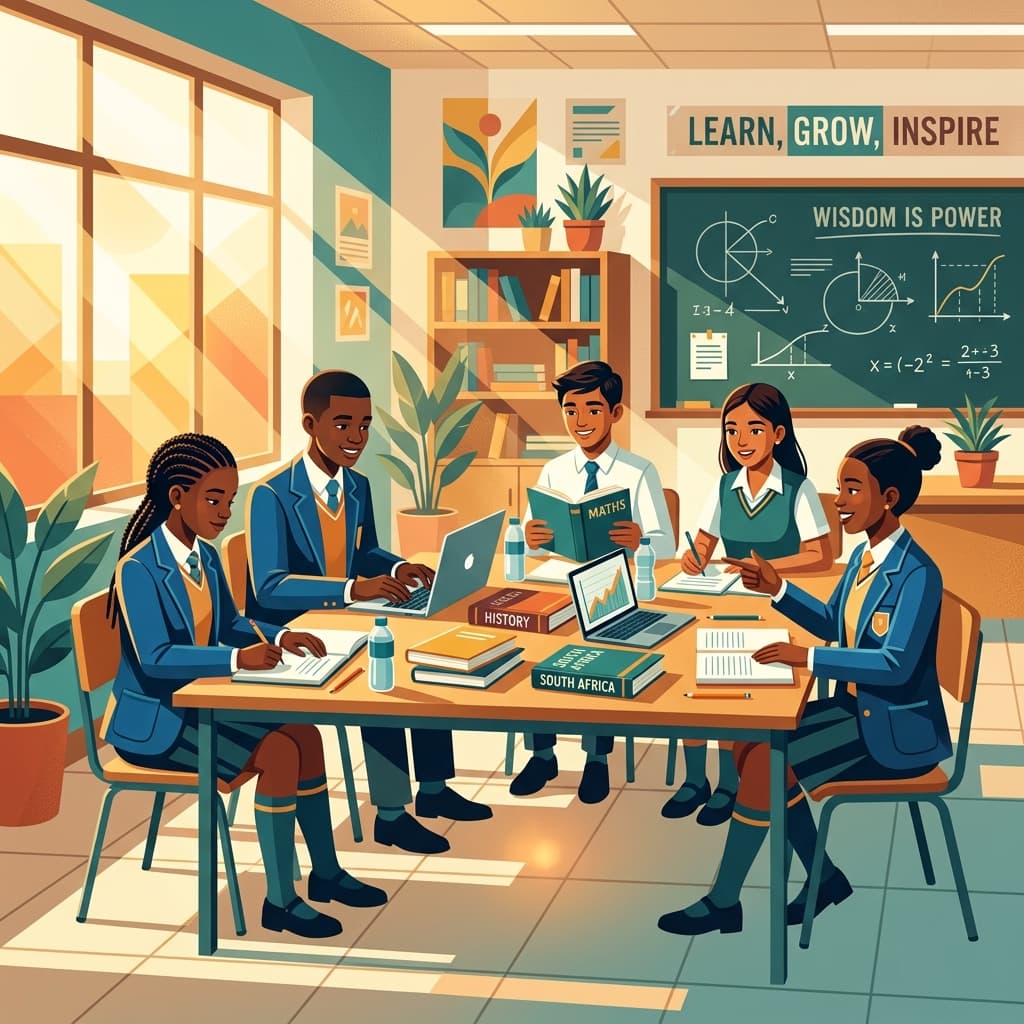
- Flipped Model: The learner is first exposed to new content outside the classroom, at their own pace. This is the "direct instruction" phase. The precious in-class time is then dedicated to active learning: applying the knowledge, collaborating with peers, and receiving direct, personalised support from the educator.
The true power of this model lies not in the technology used to deliver the content, but in the repurposing of classroom time. It fundamentally shifts the teacher's role from the "sage on the stage" to the "guide on the side." The classroom transforms from a passive space of content consumption into an active hub of inquiry, problem-solving, and skills development—precisely the higher-order thinking skills that the CAPS curriculum advocates for.
The South African Reality Check: Why a 'Copy-and-Paste' Approach Will Fail
Any educator in South Africa knows that a pedagogical model designed in a well-resourced, first-world context cannot be simply copy-and-pasted into our classrooms. To adapt the flipped classroom successfully, we must first honestly and pragmatically confront our unique set of challenges. These are not insurmountable obstacles; they are design constraints that demand creative, local solutions.
The Digital Divide: Data Costs and Device Access
The most significant barrier is the stark reality of the digital divide. While smartphone penetration is high, consistent access to affordable, high-speed internet is a luxury many of our learners cannot afford. Assuming every learner can stream a 30-minute HD video lecture every night is a non-starter. We have learners in Quintile 1-3 schools who may share a single smartphone amongst family members and rely on precarious Wi-Fi hotspots, alongside learners in Quintile 5 schools with uncapped fibre at home. A one-size-fits-all digital approach is doomed to fail.
The Energy Crisis: Navigating Load Shedding
Even for learners with devices and data, the pervasive reality of load shedding presents a major hurdle. A learner cannot charge their device or access online content if the power is out for hours. This unpredictability means any flipped learning strategy reliant on real-time online access or consistent power is inherently fragile. Our solutions must be robust enough to function offline and accommodate these interruptions.
Diverse Learning Environments: Language, Class Size, and Support
Our classrooms are a microcosm of our nation's diversity. A single Grade 10 Physical Sciences class could have 45 learners with varying levels of foundational knowledge, multiple home languages, and diverse learning needs. The traditional lecture format struggles to cater to this reality. The flipped classroom presents an opportunity here, but the pre-learning content must be accessible, comprehensible, and sensitive to this linguistic and academic diversity.
Curriculum Pressure: The Weight of CAPS and the NSC
South African educators are under immense pressure to complete the demanding CAPS curriculum, particularly in the FET phase leading to the National Senior Certificate (NSC) examinations. The fear of "not finishing the syllabus" can make any deviation from traditional teaching feel risky. Any proposed adaptation of the flipped classroom must clearly demonstrate how it facilitates, rather than hinders, effective curriculum coverage and prepares learners for high-stakes assessments.
Practical Strategies for Flipping the SA Classroom: The Low-Tech, High-Impact Approach
Acknowledging our challenges is the first step. The second is to innovate. Here are actionable, context-aware strategies to make the flipped classroom work in South Africa.
Leveraging What Learners Already Have: The Power of WhatsApp
Forget fancy Learning Management Systems (LMS). The most powerful educational tool many of our learners possess is WhatsApp. It's data-efficient, familiar, and widely used.
- Audio Notes: Instead of a video, record a 5-minute audio note explaining a key concept (e.g., photosynthesis, factoring a trinomial, the causes of the Mfecane). This is a tiny file size and can be listened to multiple times.
- Compressed Videos: If you create a video, use a free online tool to compress it to the smallest possible size before sharing. Keep it short (under 5 minutes) and to the point.
- PDF Summaries & Worksheets: Create a one-page PDF summary of the core concepts. Most smartphones can open PDFs. This provides a text-based option that uses minimal data to download.
- Voice Note Questions: Encourage learners to send you questions via voice note. This overcomes literacy or typing barriers and fosters a direct line of communication.
The 'Analogue' Flip: Using Print with a Purpose
The "flip" does not have to be digital. The core principle is moving direct instruction out of the group learning space. Print is a powerful, equitable way to achieve this.
- Targeted Pre-Reading: Instead of "read Chapter 5," guide the learners. Provide a worksheet with 3-5 specific questions they must answer from the textbook reading. For example: "Read pages 78-80 on the water cycle and define evaporation, condensation, and precipitation in your own words."
- Concept Worksheets: Provide learners with a worksheet on a Monday that summarises the key definitions, formulae, or concepts for the week. Their "homework" is to familiarise themselves with this content before the relevant lesson.
- Newspaper Articles & Case Studies: For subjects like Life Orientation, Business Studies, or History, provide a relevant newspaper article or a printed case study. The pre-learning task is to read and highlight key points, preparing them for an in-class debate or analysis.
Lesson Planner
Generate comprehensive, CAPS-aligned lesson plans in seconds.
Creating Content That Works for SA Learners
When creating content, whether digital or analogue, keep accessibility at the forefront.
- Use Local Examples: When explaining economic principles, talk about spaza shops and Eskom. When teaching biology, use examples of local flora and fauna from the fynbos or the bushveld. This makes learning relevant and memorable.
- Code-Switching and Mother Tongue: If you are in a classroom where most learners share a home language, consider recording an audio note that explains a difficult concept in English and then clarifies it in isiZulu or isiXhosa. This is a powerful scaffolding technique.
- Visuals Over Text: Use simple diagrams, flowcharts, and mind maps in your PDF summaries. A picture can often explain a process more effectively than a dense paragraph of text.
Tapping into Zero-Rated and Free Resources
Leverage the growing number of zero-rated educational websites in South Africa. This completely bypasses the data cost barrier for learners with network access.
- DBE Cloud & Woza Matrics: The Department of Basic Education has a wealth of resources, including past papers and study guides, available on its zero-rated platforms. Direct learners to specific resources here.
- Network Provider Platforms: Vodacom e-School and the MTN Online School are often zero-rated for their respective users and contain CAPS-aligned content. Investigate these and integrate them into your planning.
- Khan Academy & YouTube (with caution): While not zero-rated, many learners have access to YouTube. Find short, high-quality, CAPS-aligned videos and share the direct links. Advise learners to download them when they have access to Wi-Fi.
Reimagining In-Class Time: The Heart of the Flipped Model
Flipping the content delivery is only half the battle. The real magic happens when you transform your classroom activities. This is where you accelerate learning, address misconceptions, and foster the skills our learners desperately need.
From 'Sage on the Stage' to 'Guide on the Side'
Your role fundamentally changes. You are no longer the primary source of information. You are now a facilitator, a coach, and a mentor. You'll spend your time:
- Moving between groups, listening to their discussions.
- Posing probing questions to deepen their understanding.
- Working one-on-one with a learner who is struggling with a foundational concept.
- Challenging your high-achieving learners with extension problems.
Activities Aligned with CAPS Application Skills
Your in-class activities must demand that learners use the content they engaged with at home. This creates accountability and brings the learning to life.
- Problem-Based Learning (PBL): In Mathematics or Physical Sciences, present a complex, multi-step problem that requires the application of the pre-learned formulae or concepts. Learners work in groups to solve it.
- Source-Based Analysis: In History, after learners have pre-read about a historical event, provide them with primary source documents (cartoons, letters, photographs) in class. Their task is to analyse these sources and draw conclusions.
- Peer Tutoring and Explanation: Group learners and give them a task where they have to explain the concept to each other. The act of teaching solidifies one's own understanding.
- Practical Experiments and Simulations: In Life Sciences or Natural Sciences, the pre-learning can cover the theory and safety procedures of an experiment. The entire class period can then be dedicated to hands-on practical work.
- Socratic Seminars and Debates: In English or Life Orientation, the pre-learning content (a poem, an article, a case study) serves as the foundation for a structured in-class discussion or debate, fostering critical thinking and communication skills.
A Roadmap for School Leadership: HODs and SMTs
For the flipped classroom model to be sustainable, it requires institutional support. HODs and SMTs are critical in creating an enabling environment.
Fostering a Culture of Innovation and Support
- Start with Volunteers: Do not mandate a school-wide flip. Identify a few willing and innovative teachers to pilot the approach.
- Provide Time: Acknowledge that creating new resources, even low-tech ones, takes time. Look for ways to provide teachers with administrative relief or collaborative planning time.
- Celebrate Efforts, Not Just Results: Recognise and celebrate the teachers who are trying new things, even if the execution isn't perfect. This builds a culture where it's safe to innovate.
Facilitating Professional Development and Peer Support
- Internal PLCs (Professional Learning Communities): Create regular, structured opportunities for teachers who are flipping their classrooms to meet, share what's working, troubleshoot challenges, and share resources. A successful WhatsApp strategy from a Grade 8 Maths teacher could be adapted by a Grade 11 History teacher.
- Skill-Building Workshops: Host practical workshops on topics like "Creating engaging audio notes," "Finding zero-rated CAPS resources," or "Facilitating group work effectively."
Strategic Resource Allocation
- Invest in Connectivity (for the School): While learners' home access is varied, ensure the school has reliable Wi-Fi. This allows teachers to download and share resources and enables learners to download content at school for later offline use.
- The "Analogue" Budget: Ensure there is a sufficient budget for printing worksheets and supplementary materials, recognising that this is a cornerstone of an equitable flipped approach.
- Advocate with SGBs: Work with the School Governing Body to explore policies like providing data bundles for top-performing or at-risk learners, making the digital option more accessible.
Conclusion: A Pedagogy of Possibility for South Africa
Adapting the flipped classroom for the South African context is not about acquiring expensive technology. It is a pedagogical shift in mindset. It's about valuing in-class time as our most precious resource and dedicating it to active, engaging, and supportive learning. It’s about being pragmatic and resourceful, using the tools our learners already have—be it a smartphone with WhatsApp or a simple printed worksheet and a textbook.
By embracing a low-tech, high-impact, and context-aware approach, we can leverage the core principles of the flipped classroom to address the very challenges we face. We can differentiate instruction in our large classrooms, foster the critical thinking skills demanded by the CAPS curriculum, and empower our learners to take ownership of their education. The flip is not a magic bullet, but it is a flexible and powerful framework that, when adapted with wisdom and creativity, offers a real possibility to change the educational script for thousands of South African learners.
Siyanda. M
Dedicated to empowering South African teachers through modern AI strategies, research-backed pedagogy, and policy insights.