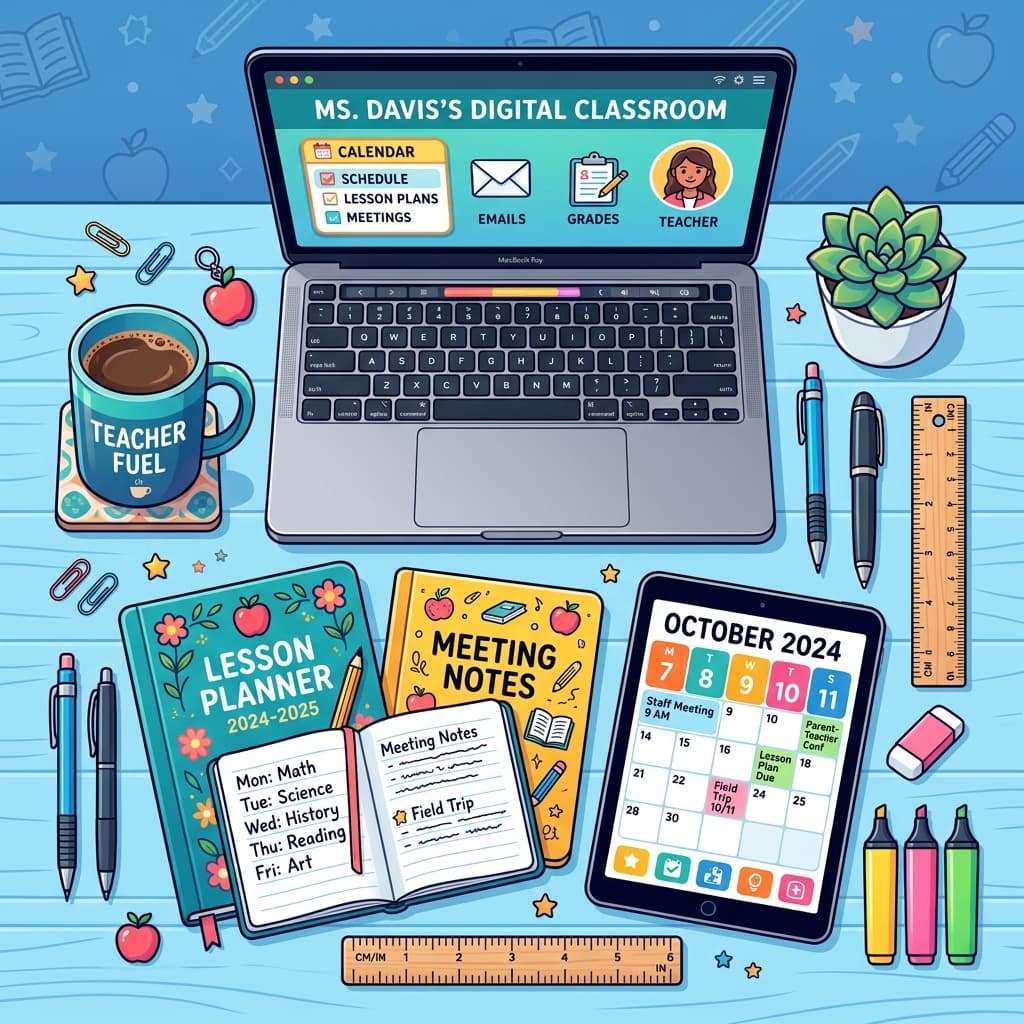
The Heart of the South African Classroom: From Management to Leadership
Every South African educator knows the feeling of walking into a classroom on a Monday morning. Whether you are teaching a Foundation Phase class in a bustling suburban school or an FET (Further Education and Training) Phase Mathematical Literacy class in a rural setting, the challenges are often similar: large class sizes, diverse learning needs, and the relentless pressure of the Annual Teaching Plans (ATPs).
In this environment, "classroom management" is a term we hear frequently. However, there is a profound difference between managing a classroom and leading one. Management is about maintaining order, ticking boxes, and ensuring the syllabus is covered. Leadership, on the other hand, is about influence, inspiration, and creating an environment where students feel empowered to take ownership of their learning.
To build strong classroom leadership skills, you must move beyond the administrative burden that often bogs us down. By integrating modern technology and AI-powered tools from SA Teachers, you can reclaim your time and focus on what truly matters: the pedagogical and emotional leadership of your learners.
1. Establishing a Vision through Intentional Planning
A leader without a plan is simply a wanderer. In the context of the South African Department of Basic Education (DBE), our "map" is the Curriculum and Assessment Policy Statement (CAPS). However, translating a dense CAPS document into an engaging, leadership-driven lesson is a mammoth task.
Strong classroom leadership begins with clarity. When you know exactly where you are going, your students feel secure. This is where the CAPS-Aligned Lesson Planner on SA Teachers becomes your most valuable deputy. Instead of spending hours manually aligning your objectives with the correct week in the ATP, the AI tool does the heavy lifting for you.
How it builds leadership:
When you use an automated lesson planner, you aren't just saving time; you are ensuring that your instructional leadership is evidence-based and curriculum-compliant. It allows you to walk into the room with a clear "Vision of the Day," which reduces student anxiety and builds your authority as a subject matter expert.
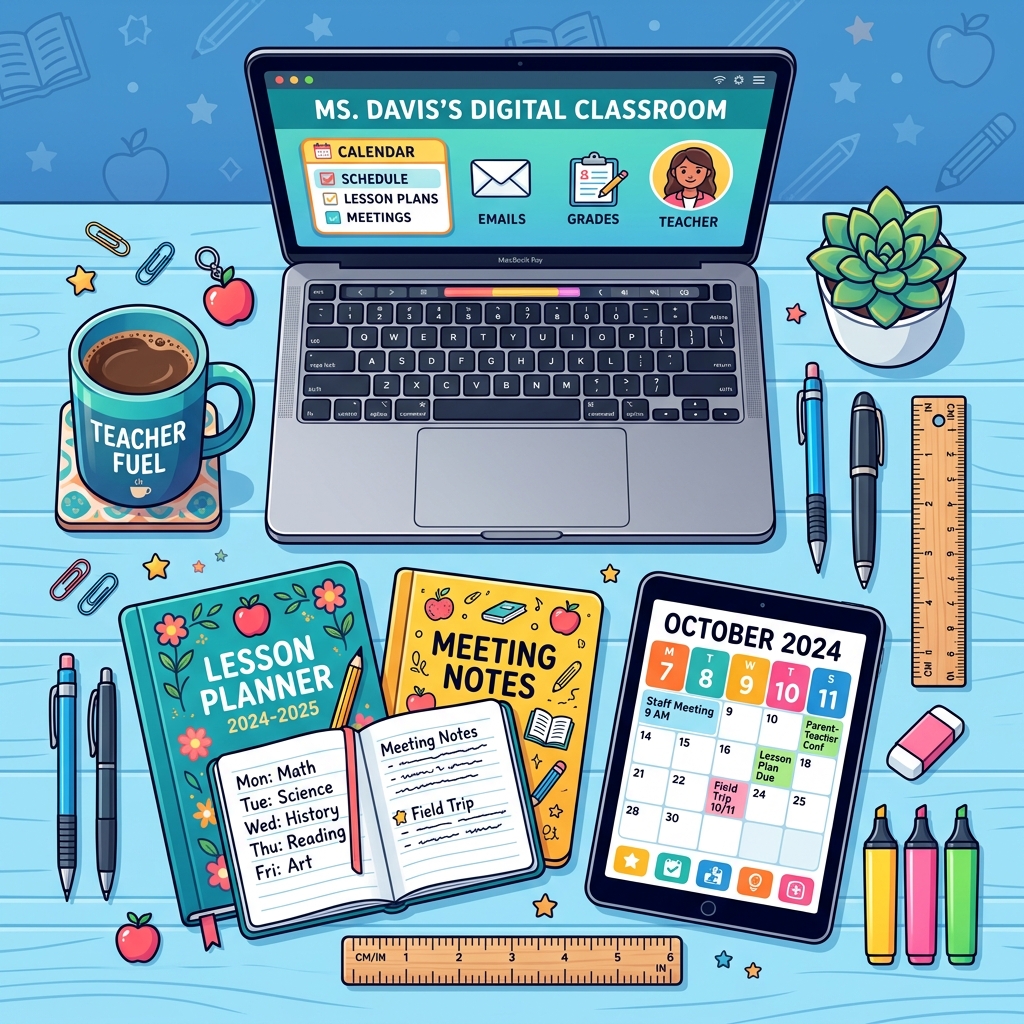
2. Cultivating the Spirit of Ubuntu: Relational Leadership
In South Africa, the concept of Ubuntu—"I am because we are"—is central to our social fabric. In the classroom, leadership is inherently relational. You cannot lead students you do not know, and you cannot inspire students who do not feel seen.
Relational leadership involves:
- Consistency: Applying rules fairly across all learner profiles.
- Empathy: Understanding the socio-economic challenges that might affect a learner’s performance.
- Communication: Providing feedback that is constructive rather than punitive.
One of the greatest drains on a teacher's ability to build relationships is the "admin mountain." When you are exhausted from writing hundreds of report comments or marking stacks of essays, your patience wears thin. The Report Comments Generator on sateachers.co.za helps you maintain your relational leadership by providing personalised, professional, and encouraging feedback for every student in a fraction of the time. This ensures that every child receives the recognition they deserve, reinforcing their sense of belonging in your "classroom community."
3. Instructional Leadership and the Power of Differentiation
A true leader ensures that no one is left behind. However, with classes often exceeding 40 learners, providing individualised attention is nearly impossible without help. Differentiation is the hallmark of advanced classroom leadership. It shows your students that you value their individual pace and style of learning.
To lead effectively, you need to provide resources that cater to different cognitive levels—from those struggling with foundational concepts to those needing enrichment.
Integrating AI for Differentiation:
- Worksheet & Exam Generators: Instead of giving the same generic worksheet to everyone, you can quickly generate varied assessments that target different Bloom’s Taxonomy levels, ensuring CAPS compliance while meeting learners where they are.
- Study Guide Creator: Leaders empower their followers with tools for success. By using the Study Guide Creator, you can provide your Grade 12s with bespoke revision materials that focus on high-weightage topics in the final examinations, showing them that you are invested in their future.
- AI Tutor: As a leader, you can’t be in five places at once. By introducing the SA Teachers AI Tutor to your learners, you provide them with a "digital teaching assistant" that can answer questions and clarify concepts in real-time, even when you are busy working with a small group of learners who need intensive support.

4. Setting High Expectations through Transparent Assessment
Leadership is about setting a standard and helping others reach it. In the South African school system, assessment can often feel like a "gotcha" moment rather than a learning tool. Strong classroom leaders flip this script by being transparent about expectations.
The Essay Grader & Rubric Creator is a game-changer for leadership in the FET phase. When you provide a learner with a clear, AI-generated rubric before they start an assignment, you are giving them the "Success Criteria" upfront.
Moreover, the speed of feedback is a critical leadership trait. If a student waits three weeks for a marked essay, the learning moment has passed. By using the Essay Grader, you can return high-quality, rubric-aligned feedback within minutes. This reinforces a culture of excellence and shows your students that you value their effort enough to provide timely guidance.
5. Conflict Management and Assertive Leadership
Classroom leadership is tested most during moments of conflict. Whether it’s a disruption in a Grade 8 classroom or a disagreement between peers, how you handle it defines your leadership style.
An effective leader remains the "calm centre" of the storm. This requires:
- Proactive Discipline: Establishing routines that prevent chaos before it starts.
- De-escalation: Using a low, firm voice rather than shouting.
- Restorative Justice: Focusing on repairing the relationship rather than just punishing the act.
By using the time saved through SA Teachers' automation tools, you can dedicate more energy to "scanning" the room and noticing the subtle shifts in student mood. A leader who isn't buried in a textbook or a marking pile is a leader who can intervene before a small disruption becomes a major incident.
6. Leading by Example: Professionalism and Lifelong Learning
In the South African teaching profession, we are often reminded of our role as lifelong learners. You cannot expect your students to be curious and disciplined if you do not model those traits yourself.
Leading by example means staying updated with pedagogical trends and technological advancements. Embracing AI in the classroom isn't just about efficiency; it's a leadership statement. It tells your students: "I am adapting to the 4IR (Fourth Industrial Revolution) world, and I am preparing you to do the same."
Scenario: The Tech-Forward Leader
Imagine a staff meeting where the School Management Team (SMT) is concerned about the latest ATP deadlines. A teacher who uses SA Teachers can lead by showing their colleagues how they have already mapped their term, generated their assessments, and set up their study guides. This is "Leadership from the Middle"—influencing your peers and the school culture for the better.
7. Overcoming the "Administrative Trap"
Many talented South African teachers leave the profession not because they don't love teaching, but because they are burnt out by "The Admin." Burnout is the enemy of leadership. You cannot lead from an empty cup.
To build strong leadership skills, you must consciously decide to delegate your most repetitive tasks to AI. Let’s look at how the SA Teachers ecosystem supports this:
STRATEGIC PLAYBOOK
The Administrative Problem & The Leadership Solution (SA Teachers Tools)
5 Key Sections
|
The Administrative Problem
|
The Leadership Solution (SA Teachers Tools)
|
|
Hours spent aligning lessons to ATPs
|
CAPS-Aligned Lesson Planner
|
|
Struggling to create fair, high-quality tests
|
Worksheet & Exam Generators
|
|
Delayed feedback on written work
|
Essay Grader & Rubric Creator
|
|
Generic, unhelpful report comments
|
Report Comments Generator
|
|
Learners falling behind without 1-on-1 help
|
AI Tutor & Study Guide Creator
|
By utilising these tools, you move from a state of "surviving" to a state of "leading." You have the mental bandwidth to innovate, to mentor junior teachers, and to truly engage with your learners' parents and the wider community.
8. Practical Steps to Implementation
If you are ready to elevate your classroom leadership, follow these steps:
Phase 1: Audit Your Time
For one week, track how much time you spend on paperwork versus actual instruction or student interaction. You will likely find that administrative tasks are eating 40-60% of your day.
Phase 2: Automate the Routine
Pick one tool on sateachers.co.za to master this week. Perhaps start with the Worksheet Generator. Input your specific CAPS topic and let the AI create a balanced assessment. Notice how much more energy you have for the actual lesson when you haven't spent your Sunday night typing out questions.
Phase 3: Focus on Presence
With your planning and resources sorted, focus on your physical and emotional presence in the classroom. Walk around the desks. Make eye contact. Use the "positive narration" technique where you lead by highlighting what is going right rather than just correcting what is going wrong.
Conclusion: You Are the Leader Your Students Need
Strong classroom leadership in South Africa is not about being a "boss"; it is about being a beacon of stability, knowledge, and hope. It is about navigating the complexities of our education system with grace and efficiency.
The digital revolution is here, and for South African educators, it offers a lifeline. Tools like the CAPS-Aligned Lesson Planner, Essay Grader, and AI Tutor are not meant to replace the teacher. On the contrary, they are meant to free the teacher to be the leader they were always meant to be.
As you head into the next term, ask yourself: "Am I just managing the chaos, or am I leading the future?" With the right mindset and the power of AI-assisted tools from SA Teachers, you can build a classroom where leadership thrives, and every learner has the opportunity to succeed.
Ready to transform your classroom leadership? Explore the full suite of AI tools at sateachers.co.za and start reclaiming your time for what matters most—inspiring the next generation of South Africans.
SA
Dedicated to empowering South African teachers through modern AI strategies, research-backed pedagogy, and policy insights.