The Heart of Pedagogy: Why Relationships Matter in South Africa
In the South African educational landscape, we often find ourselves caught in a relentless cycle of administrative demands. Between meeting the strict requirements of the Annual Teaching Plans (ATPs), conducting School-Based Assessments (SBA), and preparing learners for high-stakes examinations, the human element of teaching can sometimes feel like a luxury we cannot afford. However, any experienced educator from Cape Town to Polokwane will tell you the same thing: learners do not learn from people they do not like or trust.
Building stronger classroom relationships isn't just a "nice-to-have" soft skill; it is a fundamental prerequisite for academic achievement. In a country marked by diverse socio-economic backgrounds, multiple home languages, and varying levels of support at home, the teacher-learner bond serves as the primary bridge to learning. When a learner feels seen, heard, and respected, their affective filter drops, allowing cognitive processes to function at their peak.
This guide explores how you can cultivate these vital connections while managing the heavy workload of the CAPS curriculum, specifically by using AI-powered tools from SA Teachers to streamline your administration and focus on what truly matters: your students.
1. Radical Empathy and the "Ubuntu" Approach
The philosophy of Ubuntu—"I am because we are"—is the perfect framework for a South African classroom. To build a relationship, you must first understand the context of the child. Many of our learners face significant challenges outside the school gates, from food insecurity to long commutes on public transport.
Practical Strategies for Connection:
- The Threshold Greeting: Start every period by standing at the door. Greet learners by name as they enter. This simple three-second interaction allows you to "scan" their emotional state. Is Sipho looking down today? Does Amara seem particularly energetic? This data is more valuable than any pre-test.
- The Two-Minute Intervention: Identify the most "difficult" learner in your class—the one who frequently disrupts or disengages. For two minutes a day, for ten consecutive days, talk to them about something not related to school. Ask about their favourite soccer team, their music, or their family. This humanises you in their eyes and signals that you care about them as a person, not just a mark on a spreadsheet.

2. Creating Space for Relationships by Automating Admin
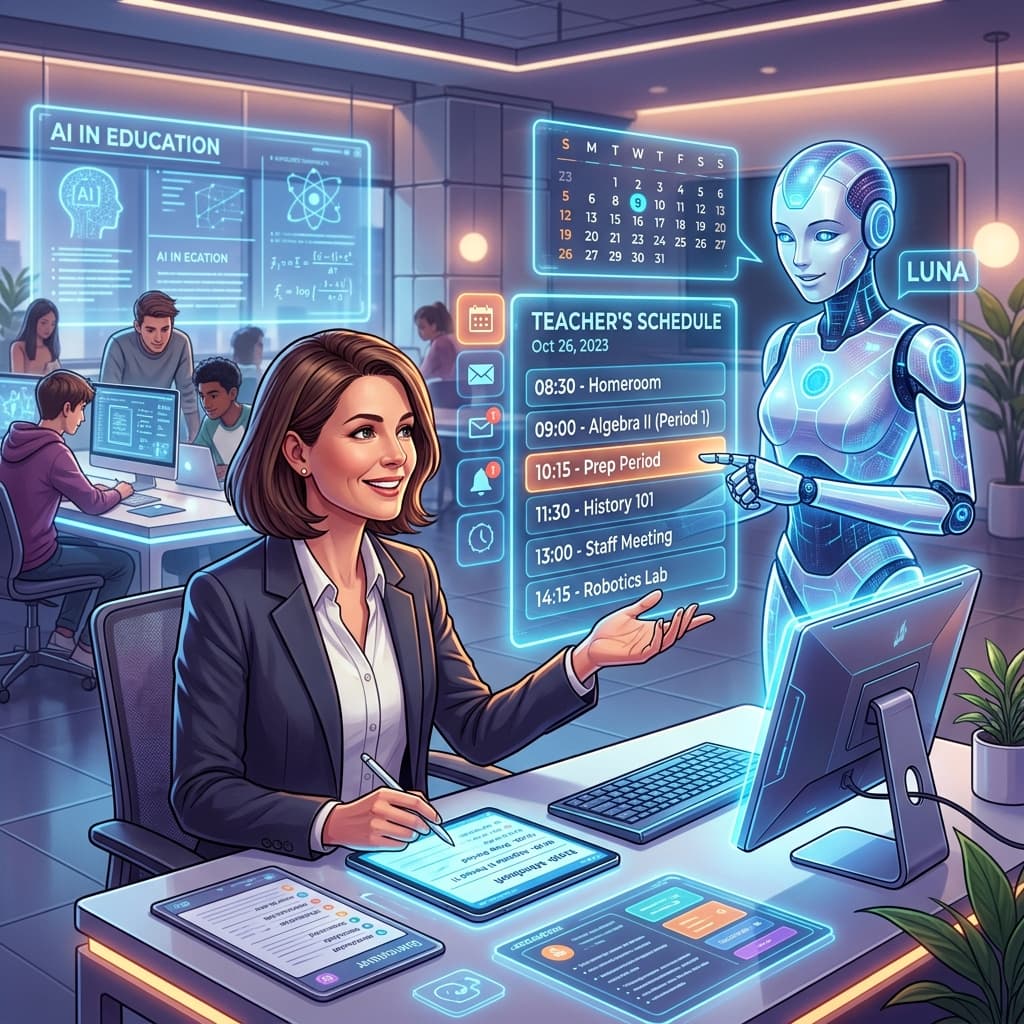
One of the biggest barriers to relationship-building is "Teacher Burnout." When you are drowning in lesson planning and marking, you lack the emotional bandwidth to be present for your learners. This is where the SA Teachers CAPS-Aligned Lesson Planner becomes a relationship-building tool.
By using the Lesson Planner, you can generate comprehensive, CAPS-compliant plans in seconds. Instead of spending your Sunday evening hunched over a laptop trying to align your activities with the specific sub-topics of the ATP, the AI does the heavy lifting for you.
How this helps relationships:
When your planning is automated and precise, you enter the classroom feeling prepared and calm. A calm teacher creates a safe environment. You have the mental "margin" to handle a learner's emotional outburst or to spend an extra five minutes explaining a difficult concept in Natural Sciences or Mathematics because you aren't rushing to finish a poorly-structured lesson.
There is a misconception that "good relationships" mean being a "soft" teacher. In reality, South African learners respect teachers who hold them to high standards. Rigour is a form of respect; it signals to the learner that you believe they are capable of greatness.
However, high expectations must be paired with high support. You cannot demand an excellent Grade 12 English First Added Language (FAL) essay if you haven't provided the scaffolding for them to succeed.
Using the Study Guide Creator and Worksheet Generator
To support your learners, you can use the SA Teachers Worksheet & Exam Generators and the Study Guide Creator.
- Worksheet Generator: Create differentiated tasks. For learners struggling with basic concepts, generate foundational worksheets. For your high-flyers, generate extension activities. This shows the learners that you are paying attention to their individual needs.
- Study Guide Creator: Generate bespoke summaries for your specific class. If you notice your Grade 9s are struggling with the transition from Arithmetic to Algebra, create a targeted study guide that speaks directly to the gaps you've identified.
When learners see that you have gone the extra mile to create resources specifically for them, the "relational capital" in your classroom grows. They begin to see you as a partner in their success rather than an obstacle to be avoided.
4. Fair and Transparent Feedback: The Trust Builder
Nothing damages a teacher-learner relationship faster than perceived unfairness in grading. In the FET Phase, where marks determine university entrance, the stakes are incredibly high. Learners need to know exactly why they received a specific mark and how they can improve.
The SA Teachers Essay Grader & Rubric Creator is a game-changer for building trust.
- Consistency: The tool ensures that every essay is graded against the same rigorous standards, eliminating the "mood factor" that can sometimes affect manual marking.
- Detailed Feedback: The AI provides constructive, specific feedback that goes beyond "Good work" or "Needs more detail."
- Transparency: Use the Rubric Creator to generate clear, CAPS-aligned rubrics before the assignment starts. Share these with your learners so they understand the "rules of the game."
When a learner receives a graded essay back within 24 hours (possible when you use AI assistance) with detailed notes on how to improve their structure or tone, they feel valued. They see that you are invested in their growth, which is a powerful relationship builder.

5. Bridging the Language and Ability Gap with the AI Tutor
South African classrooms are often multi-grade or contain a wide range of academic abilities. It is incredibly difficult for one teacher to maintain a relationship with 40+ learners when 10 are bored and 10 are completely lost.
Integrating the SA Teachers AI Tutor into your classroom strategy allows for "Personalised Learning at Scale."
- For the Learner: They can ask the AI Tutor questions they might be too embarrassed to ask in front of their peers. "What does 'photosynthesis' mean exactly?" or "Can you explain this South African History timeline again?"
- For the Teacher: The AI Tutor acts as your "digital teaching assistant." While the AI helps a group of learners with drill-and-practice or basic definitions, you are free to pull a small group of learners aside for a deep-dive discussion or to check in on a student who seems withdrawn.
6. Cultural Competency and Inclusivity
In our "Rainbow Nation," cultural misunderstandings can often create friction. A learner might not make eye contact out of respect, while a teacher might interpret this as defiance. Building relationships requires a commitment to learning about the cultures and languages represented in your classroom.
The Power of "Small Talk" and Local Context
Use the Worksheet Generator to incorporate local context into your problems. Instead of a generic word problem about "John buying apples," create a problem about "Thembeka buying vetkoek at the local taxi rank." When learners see their lived reality reflected in your curriculum, they feel a sense of belonging. This inclusivity is the bedrock of a strong classroom culture.
Relationships extend beyond the learner to the parents and guardians. A positive relationship with a parent often translates to better behaviour and performance from the learner. However, writing 200+ unique report comments at the end of Term 2 is an exhausting task that often leads to generic, "copy-paste" remarks.
The SA Teachers Report Comments Generator allows you to produce professional, personalised, and encouraging comments in a fraction of the time.
- The Positive Sandwich: The AI helps you frame feedback by starting with a strength, identifying an area for growth, and ending with an encouraging outlook.
- Specificity: Instead of saying "He must work harder," the tool helps you generate comments like, "While Sipho shows a keen interest in Life Sciences, he needs to focus on his application of scientific terminology in his SBA tasks."
When a parent reads a comment that accurately reflects their child’s personality and academic journey, it builds a bridge of trust between the home and the school. The parent becomes an ally, and the learner feels that their efforts are being truly noticed.
8. Navigating Conflict with Restorative Justice
Even with the best relationships, conflicts will occur. A learner might disrupt a lesson or fail to submit a project. How you handle these moments determines whether the relationship is strengthened or broken.
Instead of purely punitive measures (detention, demerits), try a restorative approach:
- The "What Happened?" Conversation: Ask the learner to explain the situation from their perspective without interrupting.
- Impact Awareness: Ask, "Who was affected by your choice today?" This helps develop empathy.
- Making it Right: Ask, "What do you think needs to happen to fix this?"
This approach aligns with the Department of Basic Education’s focus on positive discipline. It keeps the relationship intact by separating the behaviour from the child.
9. Consistency: The "Secret Sauce"
Ultimately, relationships are built on the "predictability" of the teacher. Learners need to know that you will be the same person every Monday morning, regardless of how you feel.
Using AI tools to manage your workload helps maintain this consistency. When you aren't overwhelmed by the "admin monster," you are less likely to be irritable, impatient, or inconsistent with your discipline. You become a "warm demander"—a teacher who provides a high level of emotional warmth while demanding a high level of academic effort.
Conclusion: Investing in the Future
Building stronger classroom relationships in the South African context is a marathon, not a sprint. It requires intentionality, empathy, and—most importantly—time.
By leveraging the AI-powered tools at SA Teachers, you aren't "replacing" the human element of teaching. On the contrary, you are using technology to strip away the repetitive, soul-crushing administrative tasks that keep you stuck behind a desk.
When the CAPS-Aligned Lesson Planner handles your prep, the Essay Grader handles your marking, and the Worksheet Generator handles your resources, you are finally free to do what you were called to do: inspire, mentor, and connect with the next generation of South Africans.
Start today. Log in to sateachers.co.za, automate your admin, and spend those extra minutes tomorrow morning talking to the learner in the back row who hasn't smiled all week. That conversation might be the most important lesson they learn all year.
SA
Dedicated to empowering South African teachers through modern AI strategies, research-backed pedagogy, and policy insights.