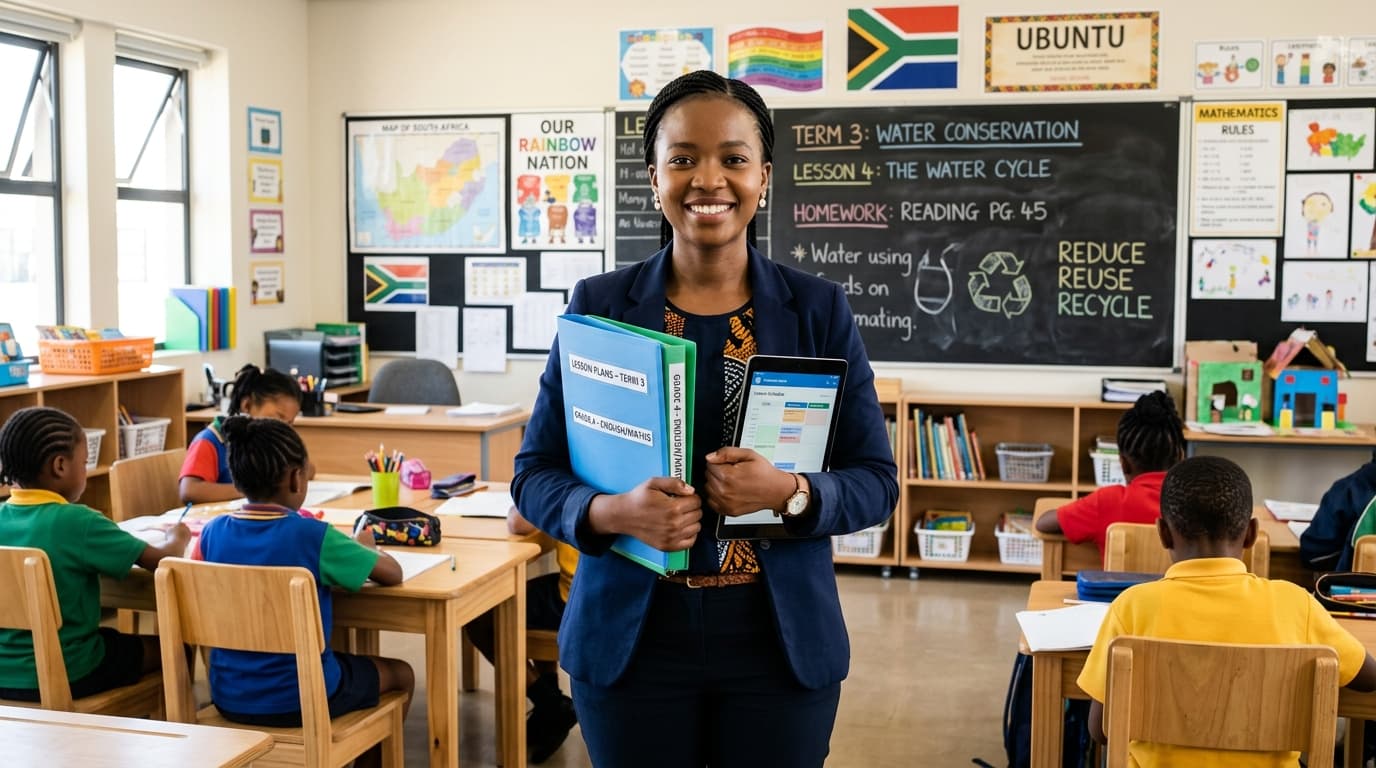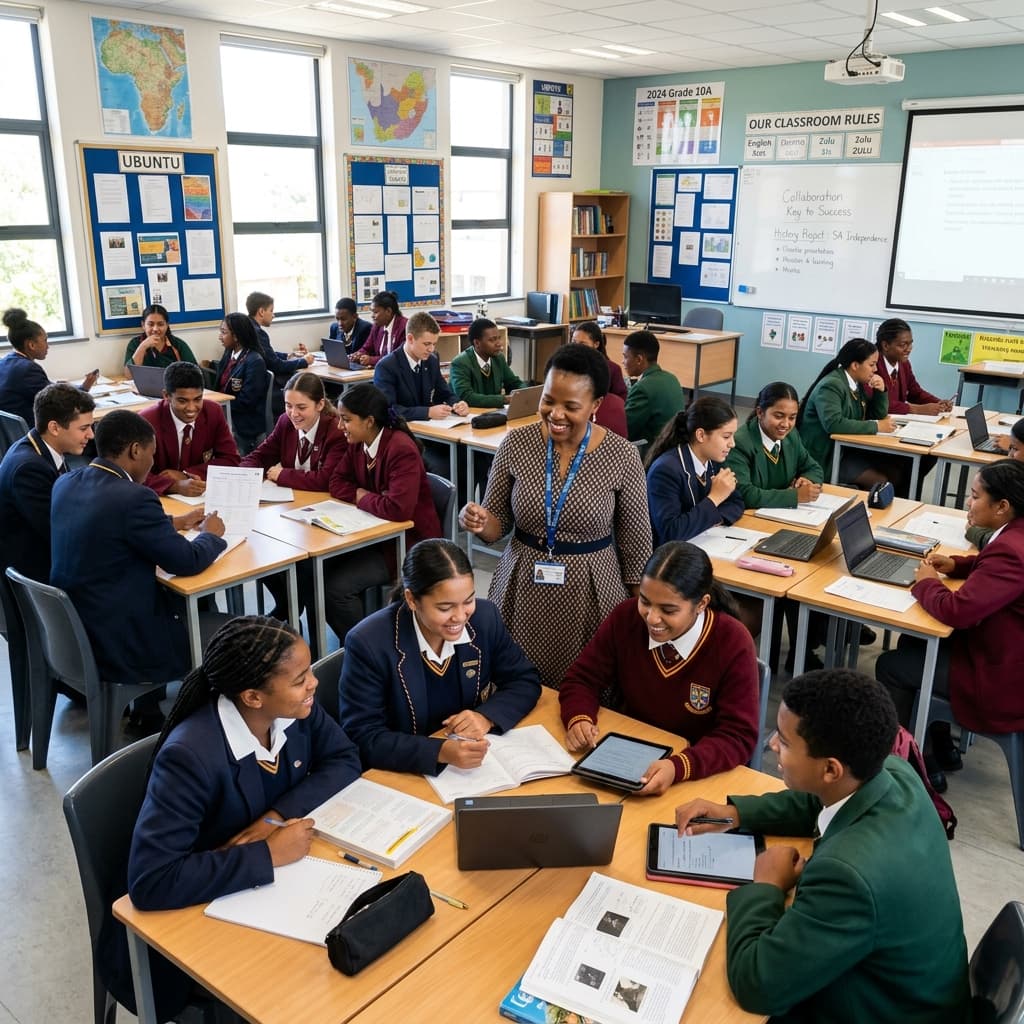
It’s a familiar scenario for many of us in South African classrooms: a grand vision for a lesson, perhaps sparked by a fantastic idea from a workshop or an online video, only to be met with the stark reality of limited resources. The perfectly laminated flashcards, the interactive smartboard, the expensive science kits – they often remain just that: a vision. Yet, despite these challenges, our learners deserve the very best education, and we deserve to teach with confidence and conviction.
This post isn't about wishing for more; it's about empowering you to teach exceptionally with what you already have, fostering a deep belief in your own capabilities, and ultimately, making a profound impact on your learners' lives. Your confidence isn't derived from a budget; it stems from your pedagogy, your ingenuity, and your unwavering dedication.
Redefining "Resources": Your Greatest Assets Are Already Present
Before we even begin to look for physical items, let's fundamentally shift our perspective on what constitutes a "resource." Often, we equate resources with tangible, purchased items. However, the most powerful resources in your classroom are already there, waiting to be fully tapped.
The Teacher: Your Expertise, Your Passion, Your Voice
You are the primary resource. Your knowledge of the CAPS curriculum, your pedagogical skills, your ability to connect with learners, your life experiences, and your passion for education are invaluable.
- Your Expertise: You've studied, you've trained, and you understand the foundational principles of teaching and learning. Trust in that knowledge.
- Your Pedagogical Skills: Your ability to explain complex concepts simply, to facilitate discussions, to manage a diverse classroom, and to adapt on the fly are skills honed over time – they are profound resources.
- Your Voice: Storytelling, clear instructions, questioning, affirmation, and explanation – your voice is a versatile and cost-free tool for engagement and instruction.
The Learners: Their Experiences, Their Curiosity, Their Collective Knowledge
Every child who walks into your classroom brings a unique set of experiences, prior knowledge, and an innate curiosity. This collective pool of information is a powerful, untapped resource.
- Prior Knowledge: Link new concepts to what learners already know. This makes learning relevant and builds confidence. For example, when teaching about nutrition in Life Skills (CAPS Grade 4-6), ask learners what they eat at home and build on their understanding of healthy and unhealthy foods.
- Experiences: Learners from different backgrounds can offer diverse perspectives that enrich discussions, especially in subjects like Social Sciences or Home Language.
- Peer-to-Peer Learning: Encourage collaboration. When learners teach each other, they solidify their own understanding and build communication skills. Pair learners with different strengths, allowing them to support one another.
The Immediate Environment: The Classroom, The School Grounds, The Community
The physical space around you, both inside and outside the classroom, is rich with learning opportunities that require no financial outlay.
- The Classroom: Every poster, every chart, every piece of furniture can be a learning aid. Is there a calendar? Use it for Maths (time, dates). Are there rules displayed? Use them for Language (imperatives, sentence structure).
- The School Grounds: The garden, the playground, the sports field, even the admin block – all can be used for practical learning. This is especially potent for subjects like Natural Sciences, Technology, and Mathematics.
- The Community: Local businesses, natural landmarks, community elders – these can provide real-world examples and context for learning, or even serve as guest speakers.
By viewing these inherent assets as your core resources, you immediately shift from a mindset of scarcity to one of abundance.
Harnessing Your Pedagogical Power: The Core of Confident Teaching
True confidence in teaching doesn't come from the quantity of expensive resources you possess, but from the quality of your pedagogical approach. When you are well-prepared, articulate, and adept at managing your classroom, you naturally exude confidence.
Planning & Preparation: Your Blueprint for Success
Thorough planning aligned with CAPS is your most potent tool against uncertainty. It allows you to anticipate challenges, structure engaging lessons, and ensure all learning objectives are met, regardless of external resources.
Deep Dive into CAPS:
- Unpack the Annual Teaching Plans (ATPs): Understand the scope and sequence for your grade and subject.
- Master the Content: Don't just read the textbook; understand the concepts deeply. If you're confident in the content, your delivery will be too.
- Focus on Specific Aims & Skills: Identify what learners need to know, understand, and be able to do. This clarity helps you design activities that are targeted and effective. For example, in Grade 5 Natural Sciences, if the aim is to "investigate materials and their properties," you don't need a lab kit; you need common materials and a structured observation task.
- Understand Assessment Standards: Know exactly what you need to assess and how. This guides your teaching and helps you create meaningful activities.
Strategic Lesson Design:
- Clear Objectives: Begin each lesson with a clear, learner-centric objective. "By the end of this lesson, learners will be able to..."
- Active Learning: Design activities where learners are doing, discussing, creating, and problem-solving, rather than passively listening. This naturally reduces reliance on flashy teacher-led presentations.
- Differentiation: Plan for the diverse needs in your classroom. How will you support struggling learners? How will you challenge those who grasp concepts quickly? This might involve peer support, different levels of questioning, or varied tasks.
- Engagement Strategies: Think about how to hook learners. A compelling question, a short story, a problem to solve, a familiar song – these are free and powerful engagement tools.
Classroom Management: Creating a Conducive Learning Environment
A well-managed classroom is a prerequisite for effective learning, especially when physical resources are sparse. Your ability to create a calm, respectful, and focused environment is a testament to your skill and builds your confidence.
- Establish Clear Routines: From entering the classroom to handing in work, consistent routines minimise disruptions and maximise learning time.
- Set Clear Expectations: Articulate what is expected in terms of behaviour, participation, and effort. Display these expectations visually if possible (even on a simple chart you made).
- Positive Reinforcement: Focus on acknowledging and rewarding desired behaviours. A word of praise, a smile, or a quick note home can be more impactful than any material reward.
- Engaging Activities: A well-planned, active lesson naturally reduces opportunities for misbehaviour. If learners are engaged, they are less likely to seek distractions.
Effective Communication: Your Voice as Your Strongest Tool
Your ability to communicate effectively is perhaps your most powerful, free resource. It's how you transmit knowledge, inspire curiosity, and manage interactions.
- Masterful Questioning Techniques:
- Open-ended Questions: Encourage deeper thought and discussion ("Why do you think...?", "How might this relate to...?").
- Probing Questions: Dig deeper into learner responses ("Can you explain further?", "What evidence supports that idea?").
- Wait Time: Allow learners sufficient time to think before responding. This encourages more thoughtful answers.
- Targeted Questions: Direct questions to specific learners to assess understanding and encourage participation.
- Active Listening: Pay close attention to learner responses. It shows respect, helps you gauge understanding, and allows you to tailor your next steps.
- Clear and Concise Instructions: Avoid jargon. Break down multi-step instructions into smaller, manageable chunks. Model what you expect.
- Constructive Feedback: Provide specific, actionable feedback that helps learners understand where they went right, where they went wrong, and how to improve. This builds learner agency and confidence.
Unlocking the Power of What You *Do* Have: Everyday Genius
Look around you. Your classroom, your school, and even your home are filled with potential learning resources. The key is to see them with an educator's eye – an eye that transforms the ordinary into the extraordinary.
The Classroom as a Laboratory: Repurposing Everyday Items
Your classroom can become a hub of creativity and learning by simply repurposing common, often discarded, items.
- Recyclables:
- Cardboard Boxes/Cartons: Excellent for making 3D shapes (Maths), building models of houses/structures (Technology, Social Sciences), creating visual aids, or even puppet theatres for storytelling (Home Language).
- Plastic Bottles/Containers: Measuring volume (Maths, Natural Sciences), creating simple musical instruments (Creative Arts), or demonstrating buoyancy.
- Newspaper/Magazines: Cutting out letters for word building (Home Language), making collages for themes (Creative Arts, Social Sciences), or for papier-mâché projects.
- Toilet Paper/Paper Towel Rolls: Telescopes for observation (Natural Sciences), counting tools, or craft projects.
- Natural Materials:
- Leaves, Twigs, Flowers: Grouping and sorting by size, colour, texture (Maths, Natural Sciences), creating patterns, or for art activities.
- Stones/Pebbles: Counting, sorting, sequencing (Maths), creating patterns, or exploring different textures.
- Soil/Sand: Demonstrating erosion, plant growth experiments (Natural Sciences), or for tactile learning.
- Water: Exploring states of matter, density, mixing substances (Natural Sciences).
- Found Objects:
- Bottle Tops: Perfect for counting, sorting, creating patterns, or representing fractions (Maths).
- Old Clothes/Fabric Scraps: Role-play costumes (Life Skills, Home Language), creating simple puppets, or exploring different textures.
- Cans/Tins: Used for measuring (volume), creating sound in Creative Arts, or as containers for other small items.
Practical Examples Across Subjects:
- Mathematics (CAPS Grade 1-9):
- Counting & Operations: Use bottle tops, stones, or sticks for concrete counting, addition, and subtraction.
- Measurement: Learners can measure classroom objects using hand spans, paces, or string (before introducing formal units). Use different sized bottles to compare volumes of water.
- Geometry: Cut out 2D shapes from old cereal boxes; build 3D shapes with paper or cardboard.
- Natural Sciences & Technology (CAPS Grade 4-9):
- Life & Living: Collect leaves and flowers to observe plant parts and life cycles. Plant seeds in recycled containers to watch germination.
- Matter & Materials: Test which materials absorb water using fabric scraps, newspaper, and plastic. Investigate density with water and oil in a clear bottle.
- Energy & Change: Build simple circuits with old batteries, wire, and a small bulb (if available, or focus on concepts with drawings).
- Structures: Challenge learners to build the tallest, strongest structure using only newspaper and tape, or cardboard boxes.
- Home Language (CAPS Foundation/Intermediate Phase):
- Storytelling: Create characters from socks or cardboard for puppet shows. Use natural items to represent story elements (e.g., a stick is a magic wand).
- Word Building: Cut letters from old magazines to form words; use bottle tops with letters written on them to spell.
- Social Sciences (CAPS Intermediate/Senior Phase):
- Map Skills: Draw a map of the classroom or school grounds on a large sheet of newspaper. Use small stones or leaves to represent landmarks.
- History: Use old photos (if available from community) or create timelines on the floor with paper segments.
- Life Skills (CAPS Foundation/Intermediate Phase):
- Role-play: Use old clothes or props for dramatic play scenarios related to community roles, safety, or social situations.
The key is to encourage creativity and let learners be part of the resource creation process. Their ownership will boost engagement.
The School Environment & Community: Extending the Classroom Walls
Your learning space doesn't stop at the classroom door. The broader environment offers a wealth of free learning opportunities.
- School Grounds:
- Natural Sciences: Observe insects, birds, and plants. Collect samples for identification. Study weather patterns.
- Mathematics: Measure distances on the sports field. Calculate areas of different sections. Count trees or windows.
- Social Sciences: Map the school layout, identifying different functional areas. Discuss the history of the school.
- Physical Education: Utilise open spaces for movement and traditional games.
- Community Engagement:
- Guest Speakers: Invite community members (e.g., a local farmer to speak about crops, a nurse about health, an elder about local history, a builder about structures) to share their expertise. This costs nothing but coordination and offers invaluable real-world connections.
- Local Businesses/Organisations: A brief, supervised walk to a nearby shop can be a Maths lesson (money, quantities) or a Life Skills lesson (safety, community roles).
- Parent/Guardian Involvement: Ask parents if they have spare recyclables, old clothes, or skills they'd be willing to share. Many are eager to support.
Lesson Planner
Generate comprehensive, CAPS-aligned lesson plans in seconds.
Leveraging Technology (Even Basic Tech): Smart & Free
While expensive tech might be out of reach, don't underestimate the power of basic technology, even a simple feature phone or limited access to a computer lab.
Smartphones/Basic Cell Phones (Yours or the School's)
Many teachers have a basic smartphone, and with careful management, it can be a surprisingly effective teaching aid.
- Camera & Video Recorder:
- Documenting Work: Take photos of excellent learner work or group projects to share, celebrate, and showcase examples.
- Recording Instructions/Explanations: For struggling learners, a short audio or video clip explaining a concept or giving instructions can be a valuable revision tool.
- Capturing Real-World Examples: Take photos or short videos of local flora, fauna, or community activities to bring into the classroom for discussions (Natural Sciences, Social Sciences).
- Creating 'Virtual Field Trips': Take photos or videos of local landmarks or features that learners can't visit in person, then discuss them.
- Voice Recorder:
- Storytelling/Poetry: Learners can record their own stories, poems, or speeches.
- Language Practice: Record short dialogues for listen-and-repeat exercises.
- Feedback: Record verbal feedback for learners, which can sometimes be more personal and detailed than written feedback.
- Alarm/Timer: Useful for managing activities, group work, or transitions.
Important Note: Always be mindful of school policies on cell phone use and learner privacy. Use your own device responsibly and professionally.
School Computer Lab (If Available, Even with Limited Access)
If your school has even an old computer lab with basic internet access, it's a goldmine.
- Free Online Educational Platforms:
- Siyavula: Aligned with CAPS, offering free textbooks and practice questions in Maths and Physical Sciences.
- Khan Academy: Offers a vast library of free tutorials and practice exercises across various subjects.
- Department of Basic Education (DBE) Website: A treasure trove of CAPS documents, past exam papers, study guides, and additional resources.
- Wikipedia/Simple English Wikipedia: For research on various topics, particularly Social Sciences and Natural Sciences.
- YouTube (with supervision): Can be used for short, educational videos or demonstrations that are difficult to conduct in class (e.g., complex science experiments, historical footage).
- Basic Software:
- Word Processing: Learners can type stories, essays, or reports.
- Spreadsheets: Introduce basic data organisation and graphing skills.
- Presentation Software: Learners can create simple presentations to share their research or projects.
Radio/Television (If Applicable)
Some schools still have access to radios or TVs. Educational broadcasts can be a fantastic supplementary resource. Check local listings for programmes aligned with the CAPS curriculum.
Cultivating a Culture of Resourcefulness & Collaboration
You don't have to navigate resource scarcity alone. Building a supportive network and fostering a resourceful mindset within your school community can amplify your impact.
Teacher Collaboration: Shared Ideas, Shared Burden
Working with your colleagues is one of the most powerful, free professional development tools available.
- Departmental Meetings: Use these not just for administrative tasks, but for sharing successful low-cost strategies, brainstorming solutions to resource challenges, and jointly developing materials.
- Cluster Workshops/Teacher Networks: Connect with teachers from other schools facing similar challenges. Sharing resources, lesson plans, and teaching aids (even handmade ones) can significantly lighten individual workloads.
- Informal Chats: A quick conversation over tea can spark an idea or lead to a solution you hadn't considered.
- Resource Swaps: Set up a system where teachers can borrow, share, or swap resources they've created or collected.
Learner Involvement: Empowering Them to Create
When learners are involved in creating their own learning materials, they develop a deeper understanding and take ownership of their learning.
- Project-Based Learning: Assign projects where learners have to research a topic and present their findings using self-made visual aids, models from recyclables, or even short skits.
- Design Challenges: "Using only these 5 items, create a tool that can lift a small stone." This fosters critical thinking and resourcefulness.
- Classroom Decor: Let learners contribute to making charts, posters, and displays that reinforce learning. This decor becomes an ongoing, interactive resource.
Parent/Community Engagement: A Network of Support
Don't be afraid to reach out to parents, guardians, and the wider community.
- Requests for Donations: Send a polite note home asking for specific items like cardboard boxes, old newspapers, plastic bottles, fabric scraps, or even empty egg cartons. Many families are happy to clear out items they would otherwise discard.
- Skills & Expertise: Some parents might have skills (e.g., carpentry, sewing, gardening) or professional backgrounds that could be useful. They might be willing to help fix something, build a simple shelf, or even volunteer as a guest speaker.
Mindset Matters: Building Inner Confidence
Ultimately, the most expensive resource in any classroom is a teacher who lacks confidence. Your mindset is crucial. Believe in your ability to teach effectively, even when circumstances are challenging.
Focus on Impact, Not Perfection
It's easy to get discouraged when you see idealised classrooms online. Remember that your primary goal is to facilitate learning and growth.
- Celebrate Small Wins: Acknowledge when a learner grasps a concept, when a group works well together, or when you find a creative solution to a problem. These small successes build your confidence.
- Prioritise Learning: A lesson that deeply engages learners using simple materials is far more effective than a high-tech lesson where learners are passive observers.
Continuous Learning: Your Lifelong Journey
Professional development isn't just about attending workshops; it's a daily practice.
- Read & Research: Explore free online articles, educational blogs, or professional journals to learn new strategies.
- Reflect on Your Practice: After each lesson, ask yourself: What went well? What could be improved? What did I learn about my learners?
- Seek Feedback: Ask a trusted colleague to observe your lesson and offer constructive feedback.
Reflect & Adapt: The Mark of a Master Teacher
No lesson is perfect, especially in a resource-constrained environment. What matters is your ability to reflect and adapt.
- Be Flexible: Sometimes, your planned activity might not work as expected. Be ready to pivot, simplify, or try a different approach. Your adaptability shows confidence and resilience.
- Learn from Challenges: View resource limitations not as obstacles, but as opportunities to innovate and think creatively.
Positive Self-Talk: Acknowledge Your Dedication and Skill
You are doing incredibly important work under demanding conditions. Give yourself credit.
- Remind Yourself of Your Strengths: What are you good at? What do your learners enjoy about your class? Focus on these positives.
- Connect with Your "Why": Why did you become a teacher? Reconnecting with your core motivation can rekindle your passion and boost your self-belief.
In the challenging yet rewarding landscape of South African education, your ability to teach confidently without expensive resources is not just a skill – it's a superpower. It transforms limitations into opportunities, fosters ingenuity, and most importantly, models resilience and resourcefulness for your learners.
Your confidence isn't found in a budget line item; it's forged in your preparation, refined in your pedagogy, and shines through in your dedication to every child. Embrace your incredible capacity to inspire, to educate, and to shape futures, knowing that you possess the most valuable resources of all: your passion, your skills, and your unwavering belief in your learners. You are enough, and you are doing brilliantly. Now go, teach confidently!
Tyler. M
Dedicated to empowering South African teachers through modern AI strategies, research-backed pedagogy, and policy insights.