Navigating the Reality of the South African Classroom
In South Africa, the educational landscape is one of stark contrasts. While some schools boast world-class facilities, many of our dedicated educators operate in "low-resource" environments. These are classrooms characterized by overcrowding, a lack of updated textbooks, limited access to stable internet, and a shortage of basic stationery. From the rural villages of the Eastern Cape to the bustling townships of Gauteng, teaching in these conditions is not merely a job—it is an act of high-level problem-solving and profound resilience.
However, a lack of physical resources does not have to mean a lack of educational quality. Success in a low-resource school is about shifting the focus from what you don't have to how you can maximize what you do have. By combining traditional pedagogical wisdom with modern, AI-powered efficiency, South African teachers can bridge the gap between the Department of Basic Education (DBE) requirements and the daily reality of their learners.
This guide explores the strategies, mindsets, and tools—specifically those available on the SA Teachers platform—that empower educators to thrive and deliver the Curriculum and Assessment Policy Statement (CAPS) effectively, even when the odds are stacked against them.
1. Mastering the ATP: Strategic Lesson Planning
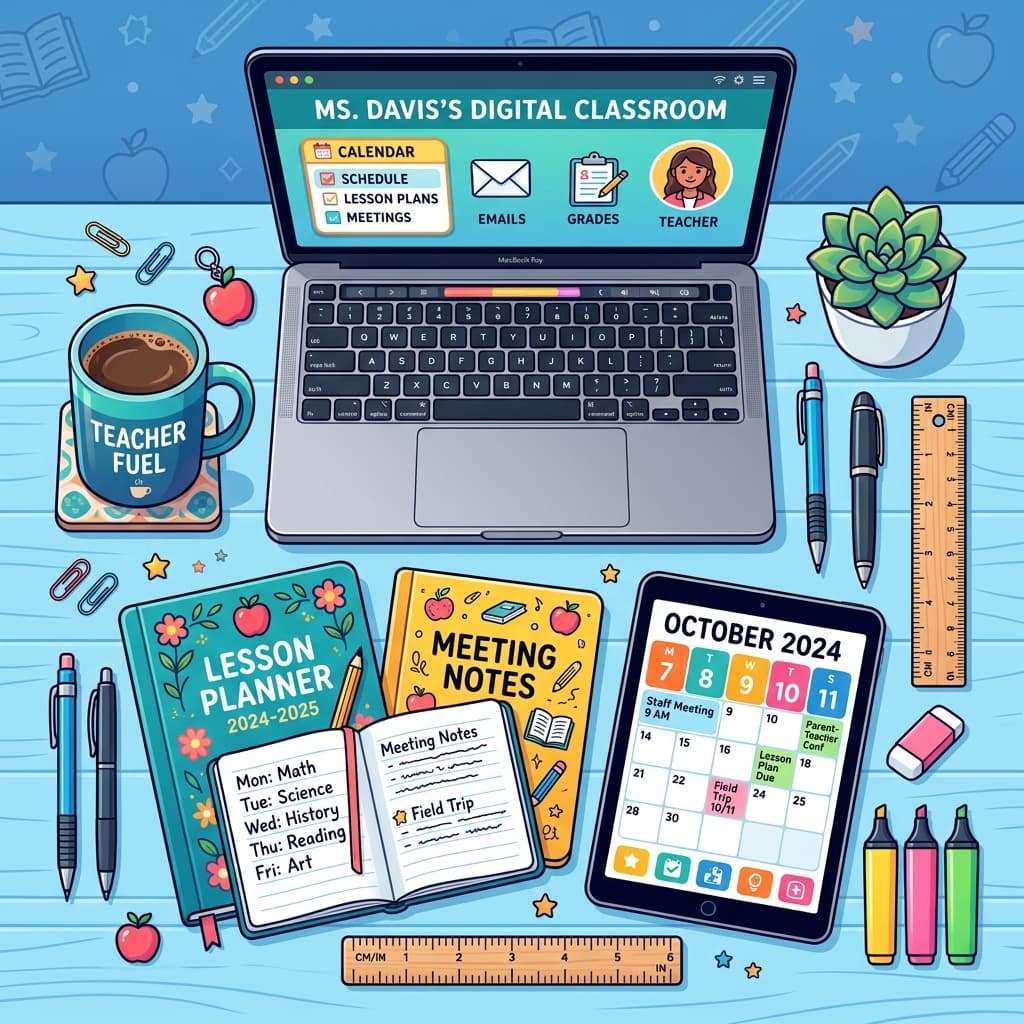
The Annual Teaching Plan (ATP) is the heartbeat of the South African classroom. In a low-resource school, time is often your most scarce resource. Interruptions, large class sizes, and administrative burdens can easily cause a teacher to fall behind. To teach successfully, you must become a master of "trimming the fat" while ensuring core competencies are met.
Traditional lesson planning involves hours of manual drafting, cross-referencing CAPS documents, and ensuring Bloom’s Taxonomy is correctly applied. In an under-resourced environment, you cannot afford to spend your entire evening doing this.
How SA Teachers Solves This: CAPS-Aligned Lesson Planner
The CAPS-Aligned Lesson Planner on sateachers.co.za is a game-changer for the time-strapped educator. Instead of starting from a blank page, you can generate comprehensive, curriculum-aligned lesson plans in seconds. The AI understands the specific requirements of each phase—from Foundation Phase literacy to FET Phase Physical Sciences.
By using this tool, you ensure that even if you lack a physical Teacher’s Guide, your lessons remain academically rigorous and perfectly aligned with the pace set by the DBE. This allows you to focus your energy on how to deliver the content to 60 learners, rather than worrying about what the content should be.
2. Creative Resourcefulness: DIY Teaching Aids
When textbooks are shared between three or four learners, the chalkboard and the teacher's voice become the primary tools for instruction. However, successful teaching requires visual and tactile stimuli.
- The "Junk" Box: Start a collection of recycled materials. Bottle caps become counters for Foundation Phase Mathematics; old newspapers become the basis for language analysis in Grade 9 English; and plastic 2-litre bottles can be transformed into science experiments.
- Community Integration: Engage the School Management Team (SMT) and local businesses. Often, local shops have discarded cardboard or posters that can be repurposed as classroom displays.
- The Power of Summary: In the absence of individual textbooks, providing learners with concise, high-impact summaries is vital.
How SA Teachers Solves This: Study Guide Creator
If your learners don't have access to the latest prescribed books, you can use the Study Guide Creator to develop bespoke, simplified revision booklets. By inputting the core topics for the term, the AI generates structured notes that you can print or write onto the board. This ensures that every learner has the "core" of the lesson, regardless of whether they have a textbook at home.
3. Managing Large Classrooms and Overcrowding
One of the most significant hurdles in South African low-resource schools is the learner-to-teacher ratio. Managing 50 to 70 learners in a space designed for 30 requires more than just discipline; it requires a structural shift in how the classroom functions.
- The "Buddy System": Pair stronger learners with those who are struggling. This peer-to-peer tutoring lightens the load on you and reinforces the content for the "tutor."
- Fixed Routines: In a crowded room, chaos is the enemy. Establish non-negotiable routines for entering the room, handing out workbooks, and sharpening pencils.
- Micro-Group Instruction: While the whole class works on a task, pull a small group of 5 learners to your desk for intensive support.

4. Assessment Strategy: Working Smarter, Not Harder
In a low-resource school, assessment often becomes a bottleneck. Marking 200 essays or 200 math tests by hand every week is a recipe for burnout. Yet, without regular feedback, learners cannot improve.
Successful teachers in these environments use "formative assessment" constantly. Use "thumbs up/thumbs down" checks, or have learners write their answers on small individual chalkboards (or even laminated pieces of white paper) so you can scan the room for understanding instantly.
To handle the heavy lifting of formal assessments, the SA Teachers platform provides three essential tools:
- Worksheet & Exam Generators: Stop spending hours trying to format a professional-looking exam paper. This tool generates CAPS-compliant questions and memos instantly. You can choose the difficulty level to match your learners' needs, ensuring that your assessments are both fair and challenging.
- Essay Grader & Rubric Creator: For Language and Social Science teachers, marking creative writing or long-form essays is the most time-consuming task. The Rubric Creator helps you build clear, DBE-aligned criteria. The Essay Grader can then assist in providing consistent, high-quality feedback, ensuring that even with a high volume of scripts, your feedback is meaningful.
- AI Tutor: You can encourage learners (who have access to a single smartphone at home or in a computer lab) to use the AI Tutor feature. It acts as a 24/7 teaching assistant that can explain complex concepts in simple terms, effectively providing the individual attention that is impossible in a class of 60.
5. Bridging the Language Gap
Many low-resource schools are also English First Additional Language (EFAL) environments, where learners are being taught complex subjects (like Natural Science or History) in a language that isn't their mother tongue.
To teach successfully, you must be a language teacher regardless of your subject. This means:
- Pre-teaching "tier 2" vocabulary (words like analyse, contrast, determine).
- Using code-switching strategically to explain difficult concepts before reverting to English.
- Using visual cues and gestures to reinforce meaning.
6. Parent and Community Engagement
In many under-resourced areas, parents may feel intimidated by the school system or may be working long hours, making involvement difficult. However, a teacher who communicates effectively with the community often sees better discipline and learner motivation.
Instead of only contacting parents when something is wrong, try to send home "positive reports." In a low-resource environment, the psychological boost of a teacher noticing a child's effort is immeasurable.
The end of the term is often the most stressful time for South African teachers. Writing 300 unique, constructive report comments is physically and mentally exhausting. The Report Comments Generator allows you to input a few key traits about a learner and produces professional, encouraging, and CAPS-aligned comments in seconds. This saves you days of work, allowing you to finish the term with your mental health intact while still providing parents with the personalized feedback they deserve.
7. Maintaining Teacher Wellness and Resilience
You cannot pour from an empty cup. Teaching in a low-resource school is emotionally taxing. You are often not just a teacher, but a social worker, a nurse, and a counselor.
- Set Boundaries: Decide on a time when "school work" ends.
- Find a Support Network: Use the staffroom as a place for mutual support rather than just complaining.
- Celebrate Small Wins: In these environments, success isn't always a 90% pass rate. Sometimes, success is a learner who finally understands long division or a quiet student who finds the confidence to speak in class.
The tools provided by SA Teachers are designed specifically to combat "admin fatigue." By automating the repetitive parts of the job—lesson planning, worksheet creation, and marking—you reclaim the time you need for your own well-being.
Conclusion: The Teacher as a Catalyst for Change
Teaching successfully in a low-resource school is one of the most challenging career paths one can choose, but it is also the most rewarding. In the South African context, you are not just delivering a curriculum; you are providing a ladder out of poverty and a window into a broader world.
By embracing "Pedagogical Resourcefulness" and leveraging AI tools like those on sateachers.co.za, you can overcome the physical limitations of your classroom. You can provide your learners with high-quality, CAPS-aligned education that rivals that of any top-tier school.
The future of South Africa is sitting in our classrooms today—overcrowded or not. With the right mindset and the right tools, you have the power to shape that future, one lesson at a time.
Are you ready to transform your teaching experience?
Visit SA Teachers today to access our CAPS-Aligned Lesson Planner, Worksheet Generators, and AI Essay Grader. Join thousands of South African educators who are working smarter, not harder, to build a brighter future for our learners.
SA
Dedicated to empowering South African teachers through modern AI strategies, research-backed pedagogy, and policy insights.