Integrating Indigenous Knowledge Systems in Science: Case Study 10 for South African Educators
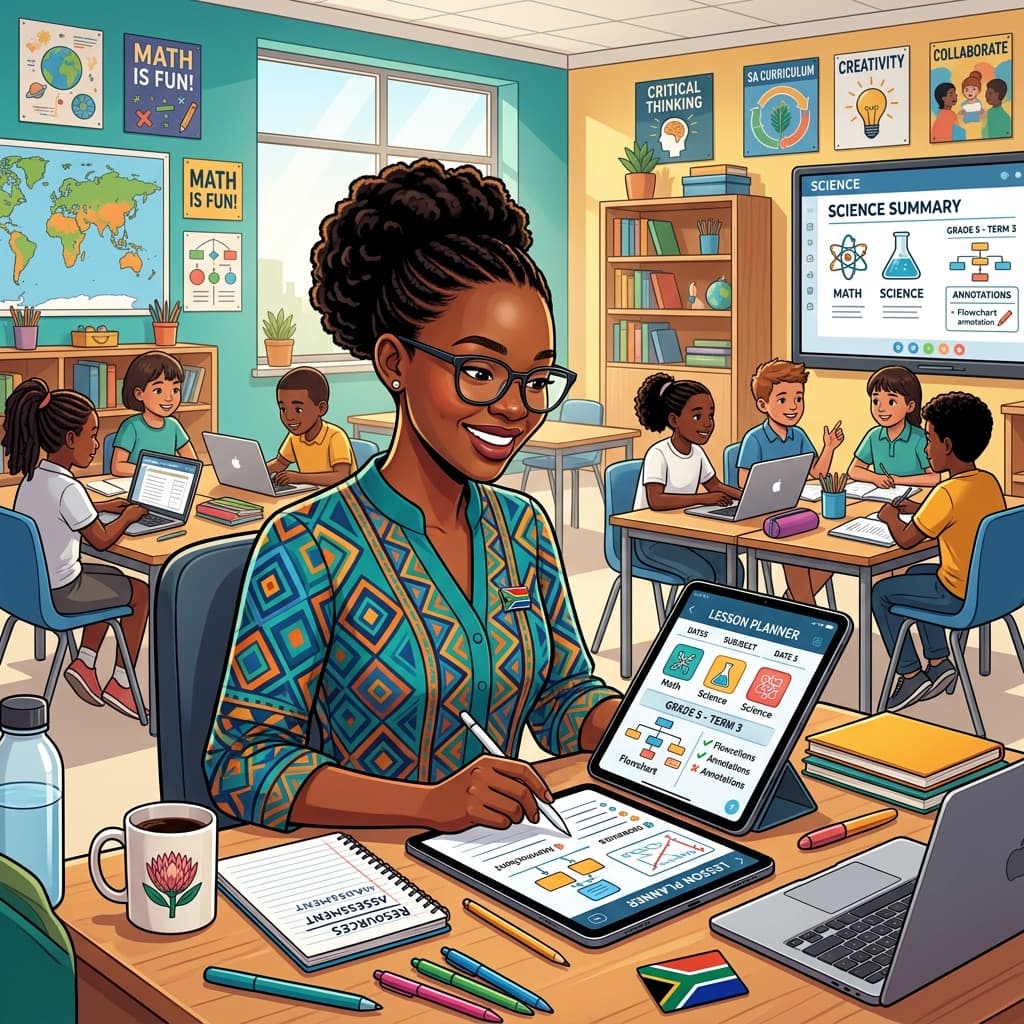
As South African educators, we are uniquely positioned to foster a science education that is not only rigorous and globally relevant but also deeply rooted in our rich heritage. The Curriculum and Assessment Policy Statement (CAPS), while a national framework, provides ample space for local adaptation and the infusion of Indigenous Knowledge Systems (IKS). This blog post, part of our ongoing series, delves into "Case Study 10," offering practical insights and concrete examples of how to seamlessly weave IKS into the fabric of science teaching for Grades R-12 across our diverse nation.
We understand the realities of South African classrooms: limited resources, diverse learner backgrounds, and the constant need to make science relatable and engaging. This is precisely where IKS shines. It offers a wealth of context, explanation, and practical application that resonates with learners, bridging the perceived gap between abstract scientific concepts and their lived experiences.
The Imperative of IKS in South African Science Education
Why is integrating IKS so crucial for our learners?
- Relevance and Ownership: IKS connects scientific principles to familiar phenomena, local environments, and ancestral wisdom. This fosters a sense of relevance and ownership, transforming science from a foreign subject into something intrinsically theirs. Learners are more likely to engage and persevere when they see themselves and their communities reflected in the curriculum.
- Holistic Understanding: Many IKS approaches are inherently holistic, viewing the world as interconnected. This contrasts with a purely reductionist Western scientific approach. By integrating IKS, we encourage learners to develop a more nuanced and comprehensive understanding of scientific phenomena. For example, understanding plant growth might involve not just photosynthesis but also traditional agricultural practices, soil conservation methods passed down through generations, and the spiritual significance of certain plants in local cultures.
- Problem-Solving Skills: IKS offers a rich repository of traditional problem-solving strategies, particularly in areas like agriculture, medicine, and environmental management. Examining these strategies can expose learners to alternative, effective, and often sustainable solutions that have stood the test of time.
- Cultural Preservation and Respect: Education is a powerful tool for cultural transmission. By incorporating IKS, we actively contribute to the preservation of indigenous knowledge, demonstrating respect for diverse cultural heritage and promoting intercultural understanding among learners.
- Bridging the Knowledge Gap: For many learners, particularly those from rural or previously disadvantaged communities, IKS may be their primary entry point to scientific understanding. By acknowledging and validating this knowledge, we create a more inclusive and equitable learning environment.
Case Study 10: Practical Applications Across Grade Levels
Let's explore how IKS can be integrated into science lessons, keeping CAPS objectives and South African realities in mind.
Foundation Phase (Grades R-3): Exploring the Natural World Through Local Lenses
At this level, the focus is on observation, exploration, and developing a sense of wonder.
Life Sciences (Biological Sciences):
- Plant Identification and Uses: Instead of just learning about leaves and roots, learners can be introduced to indigenous plants in their schoolyard or local community. Ask learners to bring in examples of plants their families use for food, medicine, or building materials. Discuss traditional names and uses. For example, exploring the Aloe ferox (Cape Aloe) beyond its medicinal properties to understand its ecological role and traditional cultivation practices.
- Animal Tracks and Habitats: Engage learners in identifying common local animal tracks (e.g., dassies, mongooses, birds) and discussing their traditional names and significance in folklore. This connects to animal behaviour and ecological niches.
- Weather Patterns: Discuss local weather phenomena through the lens of traditional knowledge. For instance, how did elders predict rain or the changing seasons? Are there traditional proverbs or observations about clouds, wind, or animal behaviour that indicate weather shifts? This links to understanding atmospheric science.
Physical Sciences:
- Properties of Materials: Explore the properties of natural materials used traditionally. For example, discuss the strength and flexibility of reeds used for building or weaving, or the insulating properties of certain soils used for traditional homes. This connects to concepts of materials science and engineering.
- Light and Shadow: Use traditional games or stories that involve shadows to explore the concept of light. How did traditional storytellers use firelight and shadows to create captivating narratives?
Intermediate Phase (Grades 4-6): Building Conceptual Understanding with Local Context
This phase sees learners developing more abstract thinking skills. IKS can provide concrete anchors for these new concepts.
Life Sciences (Biological Sciences):
- Ecosystems and Interdependence: Study local ecosystems (e.g., a river, a wetland, a specific type of grassland) through the lens of traditional knowledge. How did indigenous communities manage these resources sustainably? Discuss traditional methods of farming that worked in harmony with the environment, like crop rotation or companion planting, linking to ecological principles.
- Food Chains and Webs: Explore traditional diets and the plants and animals that formed the basis of these diets. Discuss how indigenous communities understood the interconnectedness of food sources. For example, understanding the role of insects in pollination or as a food source.
Earth and Space Sciences:
- Water Cycle and Conservation: Discuss traditional methods of water harvesting and conservation. How did indigenous communities manage water resources in arid or semi-arid regions? This connects to hydrological cycles and sustainable resource management.
- Soil Types and Fertility: Explore traditional knowledge about soil types, their properties, and methods for improving soil fertility without synthetic fertilisers. This links to geology and soil science.
Physical Sciences:
- Simple Machines: Examine traditional tools and implements that utilize principles of simple machines (levers, pulleys, inclined planes). For instance, how were traditional grinding stones used (lever and wheel-and-axle)? How were heavy objects moved using logs or ramps?
Further Education and Training (FET) Phase (Grades 7-12): Deeper Conceptual Exploration and Critical Inquiry
At this stage, learners can engage with more complex scientific theories and methodologies, with IKS serving as a point of comparison and critical analysis.
Life Sciences (Biological Sciences):
- Ethnobotany and Ethnomedicine: This is a rich area. Learners can research indigenous plants used for medicinal purposes, exploring their active compounds and how they align with or differ from modern pharmacology. This requires careful ethical considerations and emphasis on responsible research. Discuss the concept of traditional healing practices and their social and cultural context.
- Sustainable Agriculture and Food Security: Compare and contrast traditional sustainable farming practices (e.g., permaculture principles embedded in IKS) with modern agricultural techniques. Discuss their environmental impact, yields, and suitability for local contexts.
Physical Sciences:
- Materials Science and Engineering: Investigate the properties and applications of traditional materials like clay for pottery, natural fibres for textiles, or bone for tools. How do these materials perform compared to modern synthetic alternatives? Discuss the science behind traditional construction techniques (e.g., the thermal properties of adobe).
- Traditional Astronomy: Explore how indigenous communities observed the stars, planets, and celestial events for navigation, timekeeping, and calendrical purposes. Connect this to modern astronomy, discussing the scientific accuracy of some traditional observations and the cultural significance of star lore.
- Basic Mechanics and Physics: Examine the physics behind traditional technologies like the isagquma (a type of lever used for grinding) or the construction of traditional musical instruments.
Environmental Sciences:
- Conservation and Biodiversity Management: Discuss traditional ecological knowledge (TEK) related to biodiversity conservation. How did indigenous communities manage hunting, fishing, and land use to ensure sustainability? This can inform modern conservation strategies.
- Climate Change Adaptation and Mitigation: Explore how indigenous communities have historically adapted to climatic variations and how their traditional practices might offer insights into current climate change adaptation and mitigation strategies.
Practical Implementation Strategies for South African Teachers
- Consult Local IKS Holders: The most authentic integration comes from engaging with local elders, traditional healers, farmers, artisans, and community members. This requires building respectful relationships.
- Leverage Local Resources: Utilize your school's surroundings. Is there a nearby wetland, forest, or agricultural area? Does your school have a garden? These are living laboratories.
- Curriculum Mapping: Carefully review the CAPS for each grade and subject. Identify natural links where IKS can enrich or contextualize existing learning objectives. Don't force it; seek organic connections.
- Learner-Led Inquiry: Encourage learners to share their own family's IKS related to science topics. This empowers them and validates their knowledge.
- Cross-Curricular Collaboration: Collaborate with colleagues in History, Social Sciences, Arts, and Languages to create interdisciplinary projects that explore IKS.
- Resource Creation: Develop simple, low-cost teaching aids using local natural materials. This aligns with resource constraints and reinforces the IKS theme.
- Ethical Considerations: When dealing with sensitive IKS, particularly medicinal knowledge, emphasize respect, confidentiality, and the importance of consulting with knowledge holders and relevant authorities. Avoid trivialising or appropriating knowledge.
- Teacher Professional Development: Seek out workshops or training opportunities focused on integrating IKS in education. Share your experiences and learn from colleagues.
- Start Small and Build: Don't feel overwhelmed. Begin with one or two well-chosen IKS elements that resonate with your learners and your local context. Gradually expand as you gain confidence and experience.
Conclusion: Towards a More Inclusive and Meaningful Science Education
Integrating Indigenous Knowledge Systems into science education is not merely an add-on; it is a fundamental step towards creating a more relevant, equitable, and culturally responsive science curriculum for all South African learners. By embracing the wisdom embedded in our diverse IKS, we empower our students with a deeper understanding of the scientific world and foster a lifelong appreciation for the interconnectedness of knowledge, culture, and the environment. Case Study 10 is a testament to the boundless possibilities that await when we open our classrooms to the rich tapestry of South African indigenous knowledge. Let us continue this vital journey of discovery together.
Siyanda M.
Dedicated to empowering South African teachers through modern AI strategies, research-backed pedagogy, and policy insights.