The Paradigm Shift: From Play to Pedagogy
In the bustling hallways of South African schools—from the high-tech corridors of private institutions in Sandton to the resilient, under-resourced classrooms in rural Limpopo—a quiet revolution is brewing. As school leaders, we are constantly besieged by the "next big thing" in Educational Technology (EdTech). However, Game-Based Learning (GBL) is not merely a trend; it is a cognitive necessity.
In our current educational landscape, we face a dual challenge: the pressure to meet the rigorous requirements of the Curriculum and Assessment Policy Statement (CAPS) and the struggle to maintain learner engagement in an era of digital distraction. The solution does not lie in banning the "play" instinct but in harnessing it. When we strategically integrate educational games into our management strategies, we aren't just making school "fun"—we are optimizing the neural pathways for retention, critical thinking, and problem-solving.
Understanding the South African Context: Challenges and Opportunities
Before a principal or SGB (School Governing Body) can implement a GBL strategy, we must acknowledge our unique terrain. We operate in a country defined by the digital divide. Loadshedding, high data costs, and varying levels of teacher digital literacy are not excuses—they are the parameters within which we must innovate.
The Myth of the "High-Tech Only" Approach
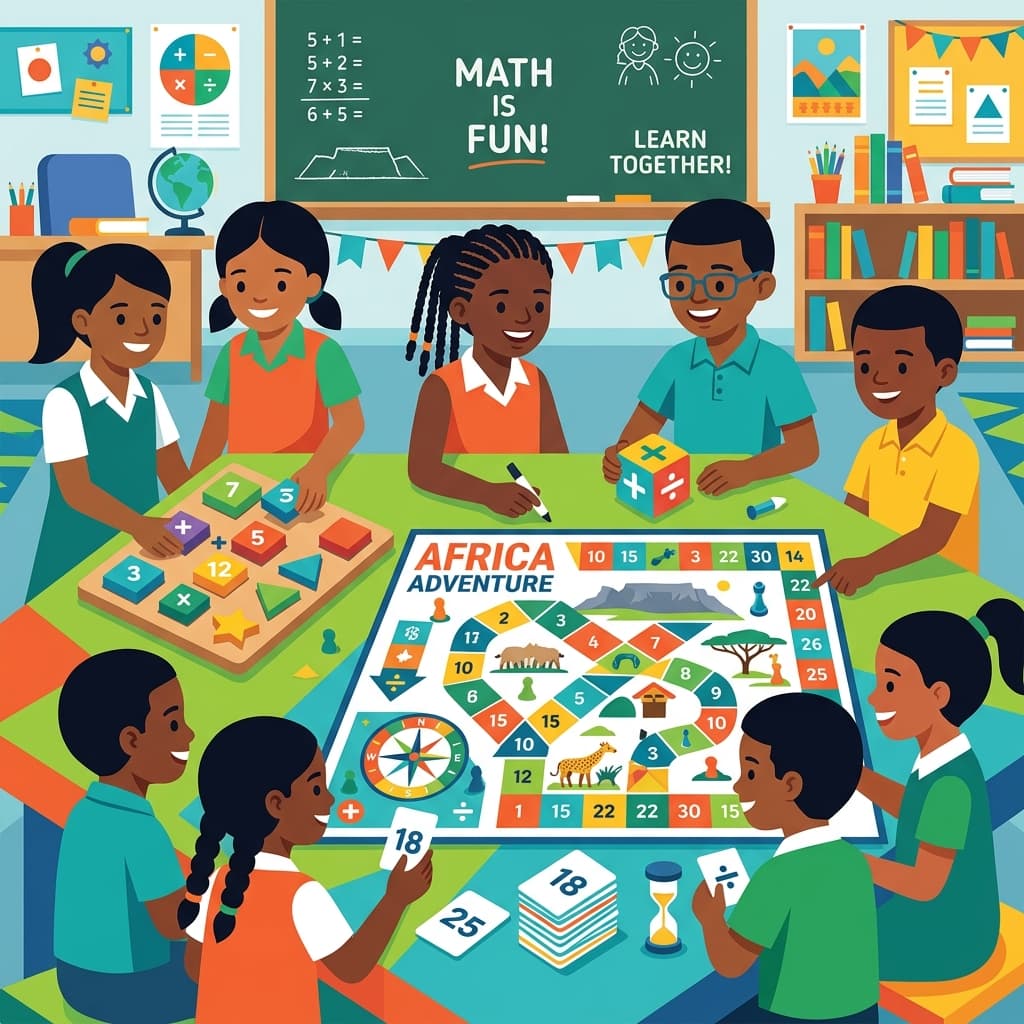
Many South African school leaders mistakenly believe that Game-Based Learning requires a 1-to-1 tablet ratio or high-speed fibre. While digital tools like Kahoot!, Roblox Education, or Minecraft: Education Edition are powerful, GBL is a methodology, not a hardware requirement. A strategic leader recognizes that "gamification" (applying game elements like points and leaderboards to the classroom) and "game-based learning" (using actual games to teach a concept) can happen offline through physical simulation games, structured role-play, and board-based strategic puzzles that mirror CAPS outcomes.
Bridging the Inequality Gap
As leaders, our strategy must be inclusive. If we only introduce GBL in wealthy Quintile 5 schools, we widen the achievement gap. A robust leadership strategy involves seeking out zero-rated educational platforms and investing in offline local area networks (LANs) where game content can be cached, ensuring that learning continues even when the grid goes dark.
Aligning Games with the CAPS Framework
The greatest concern for any South African HOD (Head of Department) is "time on task." How do we play games when the Grade 12s are struggling to finish the syllabus? The secret lies in alignment, not addition.
Mapping Games to Cognitive Demands
The CAPS documents emphasize a taxonomy of cognitive demand—ranging from basic recall to high-order evaluation. Games are uniquely suited for the "middle and top" of this pyramid. For example:
- Mathematics (FET Phase): Using simulation games to understand financial mathematics and compound interest allows learners to see the real-world consequences of fiscal decisions, moving beyond rote formula memorization.
- Natural Sciences (Senior Phase): Virtual labs and "escape room" style challenges can require learners to apply the scientific method to "unlock" the next level, directly addressing the investigative focus of the curriculum.
- Languages: Gamified storytelling platforms encourage narrative construction and grammatical precision in a way that traditional essays often fail to spark.
Assessment for Learning (AfL)
From a management perspective, the most valuable aspect of GBL is the data. Traditional School-Based Assessment (SBA) often provides a "post-mortem" of learning—we find out a student failed after the test is over. Educational games provide real-time, formative data. A principal can look at a dashboard and see exactly which percentage of Grade 9s are struggling with quadratic equations before they reach the June exams.
The Strategic Roadmap: A 5-Step Implementation Plan
For a school leader, implementation is where the "rubber hits the road." Here is a professional framework for rolling out GBL successfully.
1. Audit and Needs Analysis
Do not buy software first. Instead, audit your current staff capacity and infrastructure. Which departments are already experimenting with interactive methods? Where are the lowest pass rates? Focus your GBL pilot on the subjects with the highest "attrition" rates—usually Mathematics and Physical Sciences in the South African context.
2. Curating the "South African Toolkit"
Select tools that respect our local constraints. Focus on:
- Low-Data/No-Data Options: Tools that allow for offline play.
- Contextual Relevance: Look for games that reflect South African reality—using local currency (Rand), local geography, and diverse avatars.
- CAPS Mapping: Prioritize platforms that explicitly state their alignment with South African curriculum standards.
Lesson Planner
Generate comprehensive, CAPS-aligned lesson plans in seconds.
3. Professional Development (The Andragogy Factor)
The biggest barrier to GBL isn't the students; it's teacher anxiety. A leadership strategy must include "Play-to-Learn" workshops for staff. If teachers don't feel the joy and efficacy of the game themselves, they will view it as an administrative burden. Shift the narrative from "teaching with games" to "facilitating through games."
4. The 70/30 Integration Model
As a management strategy, recommend that GBL occupies approximately 30% of the instructional time for a specific topic—specifically the "Consolidation" phase. This ensures that the foundational direct instruction remains intact while the game provides the necessary "deep dive" and application.
5. Community and Parent Buy-in
In many South African communities, there is a cultural perception that "play is not learning." School leaders must proactively communicate the science behind GBL to parents. Use parent-teacher evenings to demonstrate how a game improved the average mark of a specific section by 15%. When parents see the data, they become allies rather than critics.
Overcoming the "Loadshedding" of Progress: Practical Workarounds
We cannot discuss South African education strategy without addressing the energy crisis. A resilient school management plan for GBL includes:
- Paper-Based Gamification: Using "Quest Cards" and physical experience points (XP) to track progress in a curriculum. This mirrors game mechanics without requiring electricity.
- Station-Based Learning: If a school has limited devices, use a rotational model. One group works with the teacher, one does written work, and one uses the "Game Station" powered by a small UPS (Uninterruptible Power Supply).
- BYOD (Bring Your Own Device): In schools where learners have smartphones, use zero-rated platforms like the Department of Basic Education's (DBE) own digital resources to ensure data costs don't fall on the parents.
The Evidence: Why This Works for the South African Brain
South African learners often struggle with "Learned Helplessness"—a psychological state where they stop trying because the material feels insurmountable. Games are the antidote. In a game, "failing" is just a "respawn." It builds the Grit and Resilience that are central to our national identity.
Neurobiologically, games trigger the release of dopamine, which enhances memory encoding. In a classroom environment where many learners may be dealing with external stressors (poverty, safety concerns), the "safe space" of a game allows the brain to move from a state of survival (the amygdala) to a state of high-level cognition (the prefrontal cortex). As leaders, we are not just managing marks; we are managing the emotional state of our learning environment.
Measuring the Impact: Beyond the Marks
How does a principal know if the GBL strategy is working? Look for these "Soft Indicators" that lead to "Hard Outcomes":
- Reduced Absenteeism: Learners show up when they are excited to participate.
- Peer-to-Peer Teaching: Watch how learners start explaining game mechanics (and thus curriculum concepts) to one another.
- Improved SBA Quality: Notice if the "application" questions in formal assessments show more depth and creativity.
Conclusion: Leading with Vision
The future of South African education depends on our ability to modernize without losing our soul. Game-Based Learning is not a luxury for the elite; it is a powerful tool for equity. It meets the learner where they are—in a world of interaction, feedback, and agency—and bridges them to where they need to be: masters of the CAPS curriculum and ready for the 4th Industrial Revolution.
As school leaders, our role is to move from being "gatekeepers of the syllabus" to "architects of the learning experience." By strategically integrating games, we aren't just preparing our children for an exam; we are teaching them how to play the most important game of all: the game of life, with all its challenges, strategies, and eventual triumphs.
Let us stop asking "Should we use games?" and start asking "Which game will unlock the potential of this child today?"
The school bell is ringing. It’s time to play, to learn, and to lead.
Siyanda M.
Dedicated to empowering South African teachers through modern AI strategies, research-backed pedagogy, and policy insights.