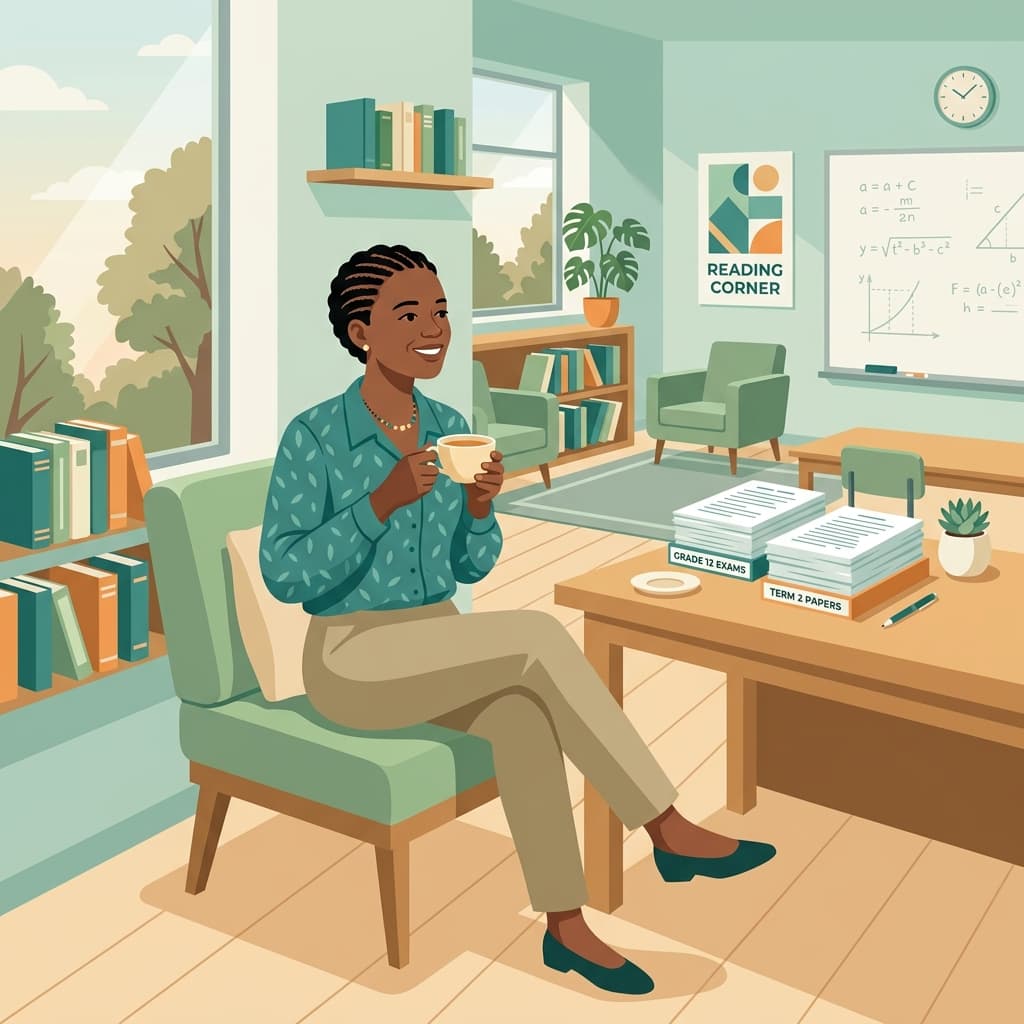
The Crisis at the Chalkface: Why 'Self-Care' Needs a Rebrand
In the South African educational landscape, the term "self-care" is often met with a weary roll of the eyes. For a Grade 12 Life Sciences teacher facing a classroom of 50 learners, or a Foundation Phase educator navigating the complexities of multi-grade teaching in a rural quintile 1 school, the suggestion of a "bubble bath" or "mindfulness app" feels not only inadequate but insulting.
As school leaders and management teams (SMTs), we must acknowledge a hard truth: South African teachers are operating in a high-pressure environment characterized by the rigorous demands of the CAPS curriculum, the administrative weight of Annual Teaching Plans (ATPs), and the secondary trauma of supporting learners through systemic poverty and violence.
When we talk about self-care from a leadership perspective, we are not talking about "pampering." We are talking about operational sustainability. We are talking about protecting our most valuable asset—the human beings who deliver the curriculum. Genuine self-care is a management strategy that shifts the burden from the individual teacher to the institutional culture.
1. Radical Curriculum Prioritization: Managing the CAPS Weight
The primary source of stress for South African educators is the sheer volume of the CAPS curriculum and the associated administrative compliance. To make a difference, leadership must move from being "compliance enforcers" to "instructional facilitators."
Streamlining the ATPs
The Department of Basic Education (DBE) provides Annual Teaching Plans, but the way we implement them at a school level can either stifle or support a teacher. Strategic self-care involves SMTs helping teachers identify "high-leverage" content.
Instead of demanding every single activity in a textbook be marked and recorded, leaders should advocate for quality over quantity. Implementing "focused marking" strategies—where only specific assessment tasks are deeply critiqued while others are peer-reviewed or checked for completion—can save a teacher five to seven hours of work per week. This isn't laziness; it’s cognitive load management.
The 'Admin Audit'
Every year, school management should conduct an "Admin Audit." Ask: Is this specific form or report required by the District, or is it a legacy requirement we’ve kept "just because"? By stripping away redundant internal reporting, we give teachers back their most precious resource: time.
2. Institutionalizing Psychological Safety and Secondary Trauma Support
South African teachers are often the first responders to social crises. They deal with learners facing food insecurity, abuse, and bereavement. This leads to Compassion Fatigue, a state where the teacher's own emotional reservoirs are completely depleted.
Peer Support Cells
Instead of traditional, top-down staff meetings that focus solely on logistics, we should implement "Peer Support Cells." These are small, cross-departmental groups that meet once a month for thirty minutes to discuss the emotional challenges of the term.
As a leader, your role is to formalize these groups so they don't feel like "just another meeting." When the school schedule allocates time for teachers to vent and validate each other’s experiences, it reduces the isolation that leads to burnout.
Trauma-Informed Leadership
School leaders must be trained to recognize the signs of secondary traumatic stress. When a teacher is "difficult," "unproductive," or "frequently absent," a strategic leader looks for burnout before they look for disciplinary measures. Offering access to Employee Assistance Programs (EAPs) or partnering with local NGOs for staff counseling is an investment in staff retention.
3. The Power of "No" and the End of the "Vocation Trap"
There is a dangerous narrative in South African schools that teaching is a "calling," and therefore, teachers should be willing to sacrifice their health and personal lives for the "sake of the children." While teaching is indeed a noble profession, treating it as a martyr’s path is unsustainable.
Setting Digital Boundaries
In the age of WhatsApp, many teachers find their "home time" invaded by parent queries, SGB concerns, and departmental instructions. Strategic self-care requires an institutional Digital Communication Policy.
For example, a school-wide rule that no work-related WhatsApps or emails are to be sent after 17:00 or on weekends (except for emergencies) can transform a teacher’s mental state. When the SMT models this behavior by not sending instructions on a Sunday night, they grant the staff permission to disconnect and recharge.
Strategic "No-Zones"
School leaders should encourage teachers to pick one extracurricular or committee they are passionate about, rather than forcing them into three. By allowing teachers to say "no" to non-essential tasks, you ensure that their "yes" to the classroom remains high-energy and effective.
Lesson Planner
Generate comprehensive, CAPS-aligned lesson plans in seconds.
4. Reclaiming the Staffroom: Environment and Culture
In many South African schools, the staffroom has become a place of frantic marking or "moaning." From a management perspective, the physical and social environment of the staffroom is a key lever for wellbeing.
The "No-Work" Zone
Designate a portion of the staffroom—even if it’s just one corner—as a "No-Work Zone." No marking, no CAPS talk, no learner disciplinary discussions. This creates a psychological sanctuary where the brain can switch off for twenty minutes.
Celebrating Small Wins (The "Joy Audit")
In the rush to finish the syllabus, we often forget to celebrate. A strategic leader integrates "micro-celebrations" into the school calendar. This isn't about expensive parties; it’s about a five-minute shout-out in the morning briefing for a teacher who handled a difficult parent well, or a "Teacher of the Month" parking spot. In the SA context, where teachers often feel undervalued by the public, internal validation is a potent form of self-care.
5. Professional Agency as Self-Care
Burnout often stems from a feeling of powerlessness. When teachers feel like "cogs in a machine" merely delivering DBE directives, their morale plummets.
Autonomy in the Classroom
While we must follow CAPS, there is still room for pedagogical creativity. Leaders who encourage teachers to experiment with new methods (like Gamification or Project-Based Learning) actually foster self-care. Why? Because professional growth is energizing. When a teacher feels like an expert rather than a clerk, their resilience increases.
SACE Points with Purpose
Help teachers use their CPTD (Continuing Professional Teacher Development) points for topics that actually interest them, rather than just what is convenient. When professional development aligns with a teacher's personal interests, it feels like an investment in their future rather than a chore to be ticked off for SACE.
6. Physical Wellbeing in the SA Context: Energy and Safety
We cannot ignore the physical realities of teaching in South Africa. Load shedding, water interruptions, and safety concerns are daily stressors.
The "Flexible" Mindset
When the lights go out and the photocopier stops, a teacher’s stress levels spike. Management can mitigate this by having "Low-Tech Toolkits" ready—pre-printed, evergreen resources that don't require technology.
Furthermore, prioritizing physical safety on campus—ensuring secure parking and well-lit corridors—is a fundamental precursor to mental wellbeing. A teacher cannot practice "mindfulness" if they are worried about their car being stolen or their personal safety in the classroom.
7. The Role of the SMT: Leading by Example
The most effective self-care tip for any teacher is to have a leader who practices it themselves. If the Principal is the first to arrive, the last to leave, and never takes a lunch break, they are setting a toxic standard that the rest of the staff will feel pressured to follow.
Vulnerability in Leadership
When a member of the SMT admits, "I’m feeling overwhelmed this week, so I’m going to take a walk during break," it humanizes the leadership. It signals to the staff that it is okay to be human.
The "Mental Health Day" Protocol
Normalize the use of "Family Responsibility" or "Sick Leave" for mental health. In South Africa, there is a stigma around "stress leave." Leaders can break this by explicitly stating that mental health is health. If a teacher is on the verge of a breakdown, encouraging them to take two days off now will prevent a two-month medical leave later.
Conclusion: A Sustainable Future for SA Education
Teacher self-care in South Africa is not about escaping the reality of our schools; it’s about building the internal and institutional strength to thrive within them.
As leaders, we must stop viewing teacher wellbeing as a "soft" issue. It is a hard, strategic necessity. When we reduce the administrative burden, protect our teachers' time, acknowledge their secondary trauma, and foster a culture of professional agency, we do more than just "fix" burnout. We create a school environment where teachers can do what they were meant to do: inspire the next generation of South Africans.
Self-care is not a luxury. In the context of our evolving educational system, it is an act of professional resistance against the tide of exhaustion. Let us lead the way in making our schools not just places of learning for our children, but places of sustainable growth for our educators.
Siyanda M.
Dedicated to empowering South African teachers through modern AI strategies, research-backed pedagogy, and policy insights.