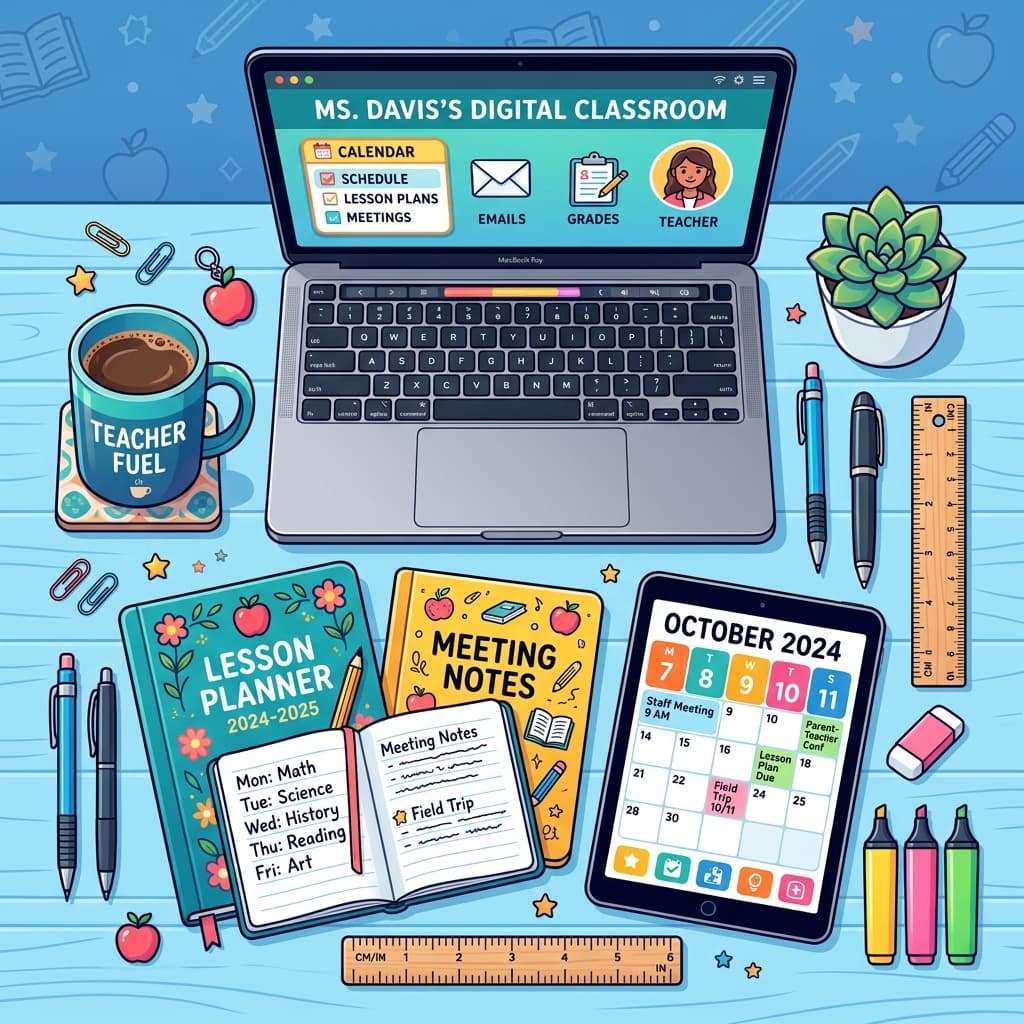
Mastering the Art: Lesson Planning Strategies for Large Classrooms in South Africa
The 7:30 AM bell rings. You take a deep breath, clutching your coffee and your meticulously prepared lesson plan. You walk into your classroom, and the familiar, vibrant chaos of 50-plus learners greets you. Desks are cramped, the air is thick with energy, and you have exactly 45 minutes to deliver a concept, ensure understanding, and somehow cater to a vast spectrum of learning needs. This is the daily reality for thousands of dedicated South African teachers. In this high-stakes environment, your lesson plan isn't just a document for your HOD; it's your lifeline, your roadmap through the beautiful complexity of an overcrowded South African classroom.
But let's be honest. The standard lesson plan template often feels disconnected from this reality. It asks for neat boxes to be filled, but it doesn’t tell you how to manage the learners at the back who can’t see the board, the advanced learner who is bored, and the struggling learner who is completely lost. The pressure to remain strictly CAPS-compliant while managing a large class can feel overwhelming, turning the vital process of lesson planning for teachers into a daunting administrative task.
This comprehensive guide is here to change that. We will dive deep into practical, actionable lesson planning strategies specifically designed for the South African context. We'll explore how to transform your CAPS lesson plan from a static document into a dynamic tool that empowers you to teach effectively, manage your classroom with confidence, and meet the diverse needs of every single learner, even when there are more than 50 of them.
The CAPS Conundrum: Why a Standard Lesson Plan Template Isn't Enough
The Curriculum and Assessment Policy Statement (CAPS) is the bedrock of our education system. It provides structure, standardisation, and clear goals, ensuring that learners across the country receive a comparable education. A well-structured CAPS lesson plan is non-negotiable; it demonstrates your professionalism and your commitment to the curriculum set out by the Department of Basic Education (DBE).
However, the CAPS document outlines the "what" and "when" of teaching, but it offers limited guidance on the "how"—especially the "how" in a classroom with 50 learners, varying language proficiencies, and limited resources. A generic lesson plan template might ask for "Learner Activities," but it doesn't account for the logistical challenges of facilitating an activity with that many students.
The key is to view your lesson plan not as a rigid script, but as a flexible strategic guide. It must be built on a foundation of methodologies that inherently work for large groups. Your planning needs to be intentional, proactive, and focused on engagement and management from the very first line.
Core Strategies for Bulletproof Lesson Planning in Large Classes
Before you even open your lesson plan document, you need a toolkit of strategies. Integrating these approaches into your planning phase will revolutionise your teaching and classroom dynamics.
1. Chunking and Strategic Pacing
In a large class, attention is a precious and finite resource. A long, monolithic lecture is a recipe for disengagement and disruption.
- What is it? Chunking involves breaking down a large topic or a long lesson into smaller, digestible segments of 10-15 minutes. Each "chunk" focuses on a single concept or skill.
- How to plan for it: In your CAPS lesson plan under "Lesson Steps" or "Teacher Activities," don't just write "Explain photosynthesis." Instead, break it down:
- Chunk 1 (10 mins): Introduction & Hook. Engage learners with a question: "Where do trees get their food?" Elicit prior knowledge.
- Chunk 2 (15 mins): Direct Instruction. Explain the core concept of sunlight and chlorophyll using clear, simple language and visual aids.
- Chunk 3 (10 mins): Active Engagement. Learners perform a quick "Think-Pair-Share" to discuss the two most important things they just learned.
- Chunk 4 (10 mins): Consolidation & Check for Understanding. Short, low-stakes quiz or exit ticket.
- Why it works: This method creates multiple entry points for learners to re-engage, prevents cognitive overload, and makes the lesson feel more dynamic and manageable for both you and the students.
2. The Power of Cooperative and Group Learning
This is the single most effective strategy for managing and engaging a large class. It shifts the dynamic from one teacher addressing 50 individuals to small, manageable groups where peer-to-peer learning can flourish.
- What is it? Structuring activities so learners work together to achieve a common goal. This is not simply telling them to "get into groups." It requires clear roles, specific tasks, and accountability.
- How to plan for it: Your lesson planning for teachers must explicitly detail the group work structure.
- Think-Pair-Share: A simple yet powerful technique. You pose a question, learners think individually, discuss with a partner, and then share with the class. This ensures everyone is thinking.
- Jigsaw Method: Divide a topic into smaller parts. Each "home group" member becomes an "expert" on one part by meeting with experts from other groups. They then return to their home group to teach their part to their peers. This is fantastic for content-heavy subjects in the Intersen and FET phases.
- Numbered Heads Together: Assign each student in a group a number (1-4). You ask a question, the group discusses the answer together, and then you call out a number. The student with that number must answer for the group. This promotes individual accountability within the group.
- Why it works: It reduces your burden of being the sole source of information, encourages active participation, develops communication skills, and allows you to circulate and provide targeted support to struggling groups.
3. Differentiated Instruction: A Practical Approach
Differentiation in a class of 50+ can seem impossible, but it doesn't have to mean creating 50 different lesson plans. It's about offering variety and choice in how learners access content, process information, and demonstrate what they've learned.
- What is it? Adjusting your teaching to meet the needs of different learners.
- How to plan for it: Build differentiation directly into your lesson plan template.
- Tiered Activities: Create a core activity that everyone does, but with different levels of complexity. For a Maths lesson on fractions, some learners might be identifying fractions from pictures, others might be adding simple fractions, and an advanced group could be tackling mixed numbers.
- Flexible Grouping: Use a mix of grouping strategies. Sometimes learners are grouped by ability for targeted instruction; other times, they are in mixed-ability groups where peer-tutoring can occur.
- Choice Boards (Tic-Tac-Toe): Create a grid of nine activities. Learners must choose three activities to complete in a row. You can design the board so that no matter which path they choose, they engage with the key concepts.
- Why it works: It ensures that high-flyers are challenged and struggling learners are supported, reducing both boredom and frustration—two major causes of classroom disruption.
4. Leveraging Routine, Structure, and Clear Instructions
Lesson Planner
Generate comprehensive, CAPS-aligned lesson plans in seconds.
In a large, bustling classroom, predictability is your best friend. Well-established routines reduce chaos and cognitive load, freeing up mental space for learning.
- How to plan for it: Your lesson plan should incorporate these routines.
- The "Do Now" / Bell-Ringer: Have a short activity on the board that learners begin the moment they walk in. This immediately focuses the class and gives you a few crucial minutes to take the register and get organised.
- Instruction Protocol: Use a consistent method for giving instructions. For example, "Eyes on me, voices off." Wait for 100% silence. Give clear, simple, numbered instructions. Ask a student to repeat them back. This minimises the "I don't know what to do" problem.
- The Plenary / Exit Ticket: Always plan the last 5 minutes of your lesson for consolidation. An "exit ticket" where learners answer one or two key questions on a scrap of paper is a powerful tool for quick, class-wide assessment.
- Why it works: Routines automate classroom management, saving you time and energy that is better spent on instruction.
The Ultimate Solution: Streamline Your Planning with the SA Teachers Lesson Planner
We've discussed the strategies, but the reality remains: documenting all of this in a professional, compliant format is incredibly time-consuming. You can spend hours ensuring your plan ticks every box for CAPS, includes all the required sections, and is formatted correctly for your file, your HOD, and potential SACE or DBE evaluations.
This is where technology becomes a teacher's greatest ally.
Imagine being able to implement all these powerful strategies—differentiated activities, group work structures, and chunked lesson flows—and capturing them in a perfectly formatted, 100% CAPS lesson plan in a fraction of the time.
This is exactly what the automated Lesson Planner tool from SA Teachers was designed to do.
Built by South African educators for South African educators, the SA Teachers Lesson Planner is a game-changing tool that takes the administrative burnout out of lesson planning. It is the premier solution for teachers who need to create professional, compliant lesson plans quickly and efficiently.
Why Every South African Teacher Needs the SA Teachers Lesson Planner:
- Guaranteed CAPS Alignment: The tool is structured around the official requirements. It prompts you for all the necessary components—from learning objectives and assessment methods to teacher and learner activities—ensuring your plan is always compliant. You no longer have to second-guess if you've missed a critical section.
- Professional, Standardised Documents: Say goodbye to messy Word documents and inconsistent formatting. The Lesson Planner generates a clean, professional, and standardised PDF that is ready for your files or for submission to management. It presents your hard work in the best possible light.
- Incredible Time-Saving: By automating the structure and formatting, the tool allows you to focus your mental energy on the content of your lesson, not the layout of the document. What used to take an hour can now be done in 15-20 minutes, giving you back your precious evenings and weekends.
- Designed for Our Reality: The tool understands the language and structure of South African education. The fields and prompts are tailored to the exact lesson plan template expected in our schools.
- Build Your Digital Portfolio: Effortlessly save, store, and organise all your lesson plans in one secure place. You can easily access, adapt, and reuse plans from previous years, creating a powerful digital portfolio of your work.
Stop letting the paperwork of lesson planning for teachers drain your passion. It's time to work smarter, not harder. The SA Teachers Lesson Planner empowers you to be the strategic, impactful educator you are, while it handles the administrative heavy lifting.
Putting It All Together: A Sample Scenario
Let's see how this works in practice.
Teacher: Mrs. Naidoo, Grade 6 Social Sciences (History) Class Size: 58 learners Topic: The Causes of the South African War
The Old Way (Without a strategy and tool): Mrs. Naidoo plans a 45-minute lecture, gets through half of it, a few students at the front answer questions, and the rest of the class is restless. Her handwritten lesson plan is brief and doesn't show how she's managing the class size.
The New Way (With strategies and the SA Teachers Lesson Planner):
- Strategy: Mrs. Naidoo decides to use the Jigsaw method. She chunks the topic into four sub-topics: (1) The Discovery of Gold, (2) The Jameson Raid, (3) The British Annexation of the Transvaal, (4) The Boer Ultimatum.
- Planning in the Tool: She opens the SA Teachers Lesson Planner.
- Lesson Objectives: She quickly types in the CAPS-aligned objectives.
- Teacher Activities: She outlines the steps: "Introduce topic (5 mins). Form 'expert' groups and assign sub-topics (5 mins). Facilitate 'expert' group discussion and research (15 mins). Facilitate 'home' group teaching (15 mins)."
- Learner Activities: She details the Jigsaw process: "Learners move to expert groups to read a short text and summarise key points. Learners return to home groups to teach their sub-topic to their peers. Each learner completes a summary table with information from all four sub-topics." This clearly documents a highly effective, differentiated group activity.
- Assessment: She plans an Exit Ticket: "Name two major causes of the war that you learned about today." This will give her a quick snapshot of understanding from all 58 learners.
- Outcome: The lesson is highly engaging. All learners are active participants. Mrs. Naidoo can circulate and support groups. And in just 20 minutes, she has generated a professional, detailed, and compliant CAPS lesson plan that truly reflects the excellent teaching happening in her classroom.
Conclusion: Reclaiming Your Craft
Teaching in a large South African classroom is a challenging, yet deeply rewarding, profession. Your impact is immense, but your time and energy are not infinite. Effective lesson planning for teachers is not about creating more work for yourself; it's about being strategic, proactive, and leveraging the right tools to make your life easier.
By embracing strategies like chunking, cooperative learning, and practical differentiation, you can transform your classroom from a crowd to a community of engaged learners. And by adopting the SA Teachers Lesson Planner, you can ensure that your planning process is as efficient and professional as your teaching. You can finally create the high-quality CAPS lesson plan that your HOD requires and your learners deserve, without sacrificing your valuable time.
Invest in your craft. Invest in your well-being. Take control of your planning and empower your teaching today.
Tyler M.
Dedicated to empowering South African teachers through modern AI strategies, research-backed pedagogy, and policy insights.