Coding for Change: How Programming Skills Solve Real-Life Problems
Many people associate "programming" with a person sitting in a dark room, typing incomprehensible strings of text into a black screen. While that might have been the stereotype of the past, the reality of programming in 2026 is far more visionary. Programming—the art of giving precise instructions to a computer—is arguably the most important problem-solving tool of our time. In South Africa, where we face unique logistical, educational, and social challenges, the ability to code allows us to build bespoke solutions that global software often overlooks.
Programming as a Language of Logic
At its core, programming is not about memorizing syntax in Delphi, Python, or Java. It is about Computational Thinking. This is the process of taking a large, complex problem and breaking it down into smaller, manageable parts. It involves identifying patterns, focusing on the most important information, and designing step-by-step instructions to reach a solution.
When a learner learns to code, they aren't just learning a career skill; they are learning how to look at the world through a lens of efficiency and innovation.
Solving Real-Life Problems in South African Schools
Our education system is ripe for innovation through programming. For years, teachers have been buried under administrative paperwork—a problem begging for a programmatic solution.
1. Automated School Management Systems
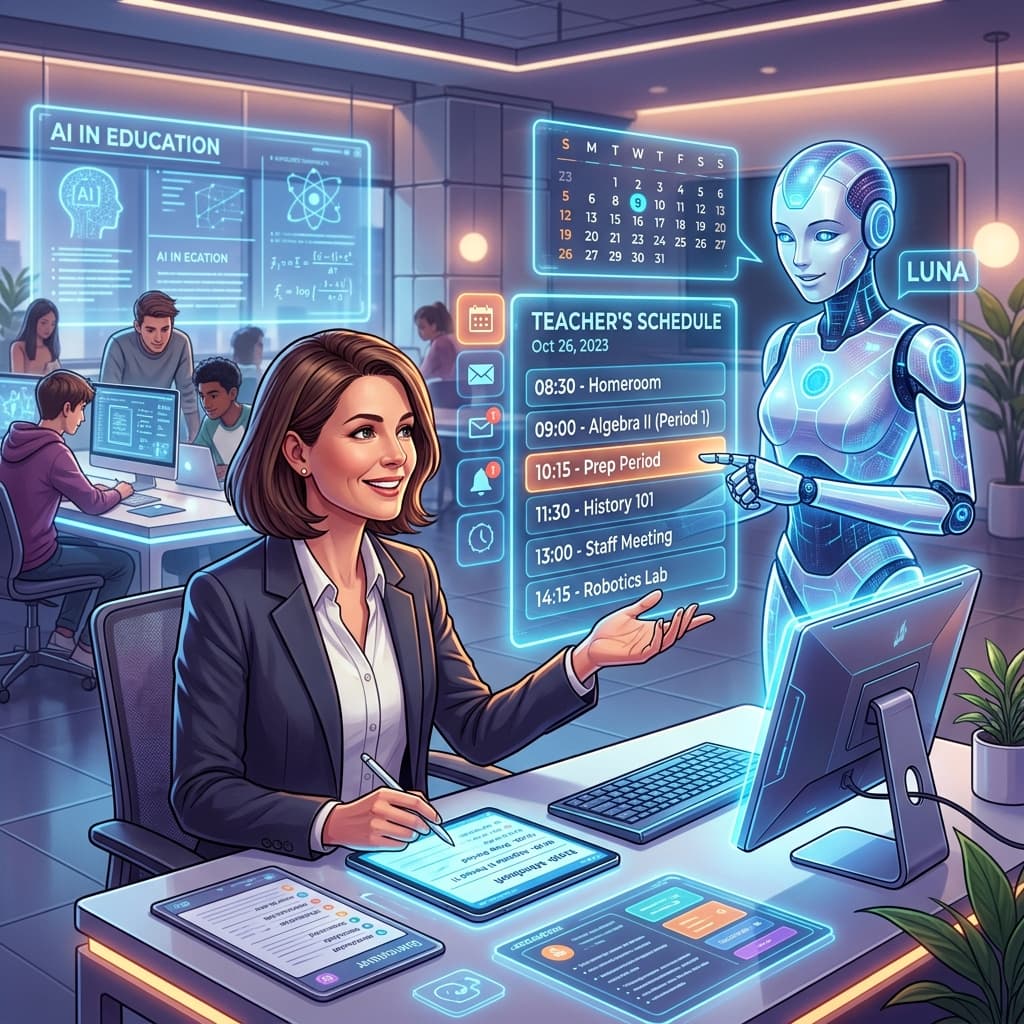
Imagine a school that uses a custom-built system to track attendance, manage library logs, and generate report cards automatically. By writing a relatively simple script, we can save a school secretary hours of manual entry every day. At SA Teachers, this is exactly where our passion lies—using code to handle the routine, so educators can handle the human.
2. Personalized Learning Apps
Every learner in a South African classroom has a different level of understanding. A programmer can build an application that adapts to a learner's pace. If a student struggles with Algebra, the code can detect this pattern and present more foundational exercises before moving on. This level of personalized attention is physically impossible for one teacher in a class of forty, but it's a standard task for a well-written algorithm.
3. Bridging the Language Gap
South Africa has eleven official languages. Programming can be used to build translation tools and multilingual educational content that helps learners grasp difficult concepts in their mother tongue before transitioning to English for assessments.
Impacting Communities through Mobile Innovation
In South Africa, the mobile phone is the most important piece of technology. According to recent data, there are more active SIM cards in South Africa than there are people. This creates a massive opportunity for mobile app development.
1. Safety and Security Apps
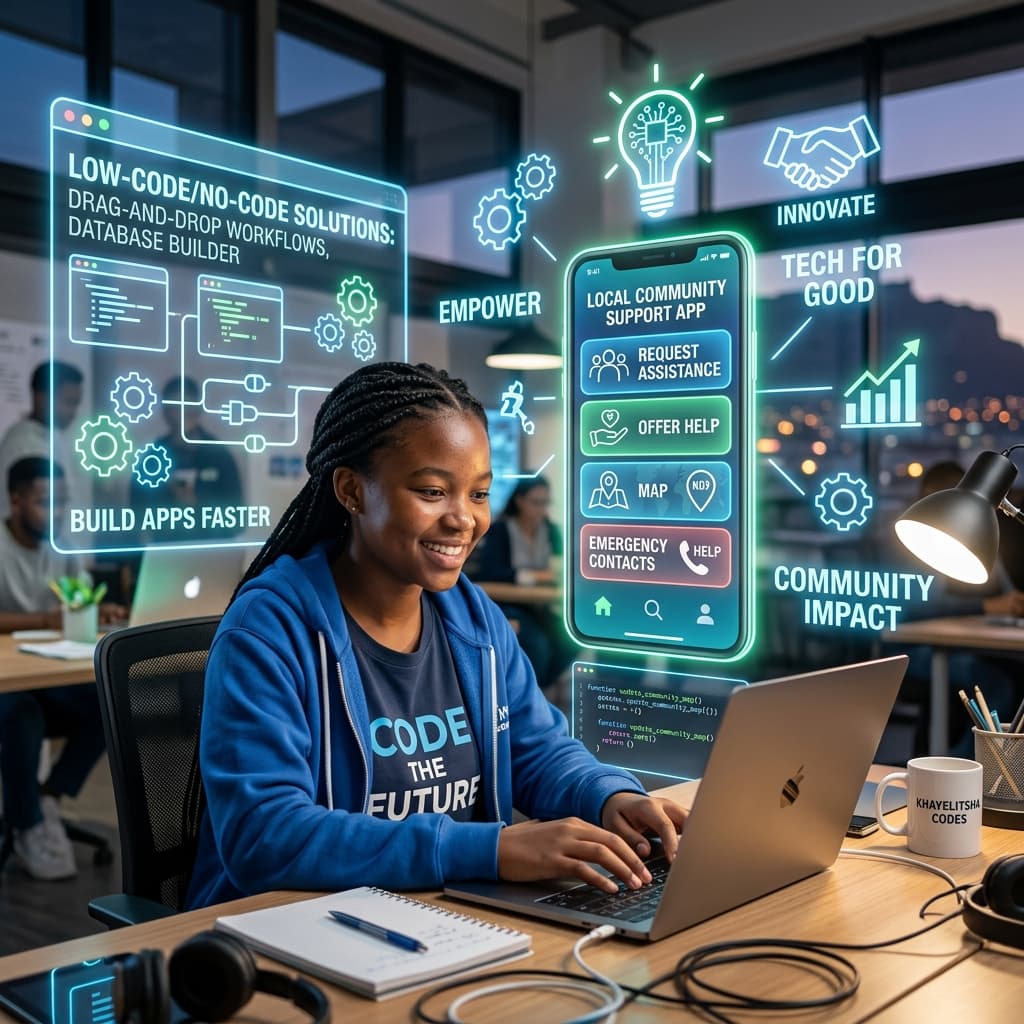
Local developers have built apps that allow community members to report incidents, share safety alerts, and request emergency assistance with the touch of a button. These apps leverage GPS and real-time networking—features made possible through programming.
2. Financial Inclusion (FinTech)
Programming has revolutionized how South Africans manage money. Apps like Capitec, TymeBank, and various digital wallets allow people who previously had no access to traditional banking to save, transfer money, and pay for services securely.
3. Load Shedding Solutions
Perhaps the most famous example of "coding for a local problem" is the various load shedding notification apps. By gathering data from Eskom and local municipalities and presenting it in a user-friendly way, programmers helped an entire nation plan their lives around power outages.
The Power of Automation
Many of the tasks we do every day are repetitive and prone to human error. Programming allows us to automate these tasks.
- For the Teacher: Automatically generating thirty different versions of the same exam to prevent cheating.
- For the Business Owner: Automatically sending invoices and payment reminders to clients.
- For the Farmer: Using IoT sensors to monitor soil moisture and automatically trigger irrigation systems only when needed.
Automation isn't about replacing humans; it's about freeing them from the "drudgery" of routine tasks so they can focus on creativity, strategy, and empathy.
Why We Teach Coding in Schools (Delphi and Beyond)
Many South African schools include Information Technology (IT) as a subject, often using languages like Delphi. While some might consider Delphi "old school," it is an excellent pedagogical tool for several reasons:
- Strong Typing: It forces learners to be precise and disciplined in how they handle data.
- Structured Logic: It provides a clear, readable structure that mirrors the logical steps of problem-solving.
- Visual Programming: The ability to build a Graphical User Interface (GUI) quickly gives learners immediate visual feedback on their work.
Whether a learner eventually switches to Python, JavaScript, or C#, the logical foundation they build in high school IT remains with them for life.
Conclusion: You Can Be the Solution
The message for the next generation of South African learners is clear: Don't just be a consumer of technology—be a creator of it.
Programming is the ultimate democratizer. You don't need a massive factory or a thousand employees to change the world. You need a laptop, an internet connection, and a problem you are passionate about solving. Whether you are building an app to help people find clean water or a system to help your school manage its resources, your code has the power to make a real-life impact.
At SA Teachers, we celebrate the power of programming every day. It is the magic that allows us to build the tools we share with you. To the aspiring coders out there: keep typing, keep debugging, and keep solving.
Trust Molai is the Founder of SA Teachers and a veteran programmer. He started his journey with Delphi and has spent over a decade building software solutions for the South African education sector.
Trust Molai
Founder of SA Teachers. Passionate about educational technology, programming, and empowering the next generation of South African learners.