Embracing a New Paradigm: Sustainable Teaching for Enhanced Learning
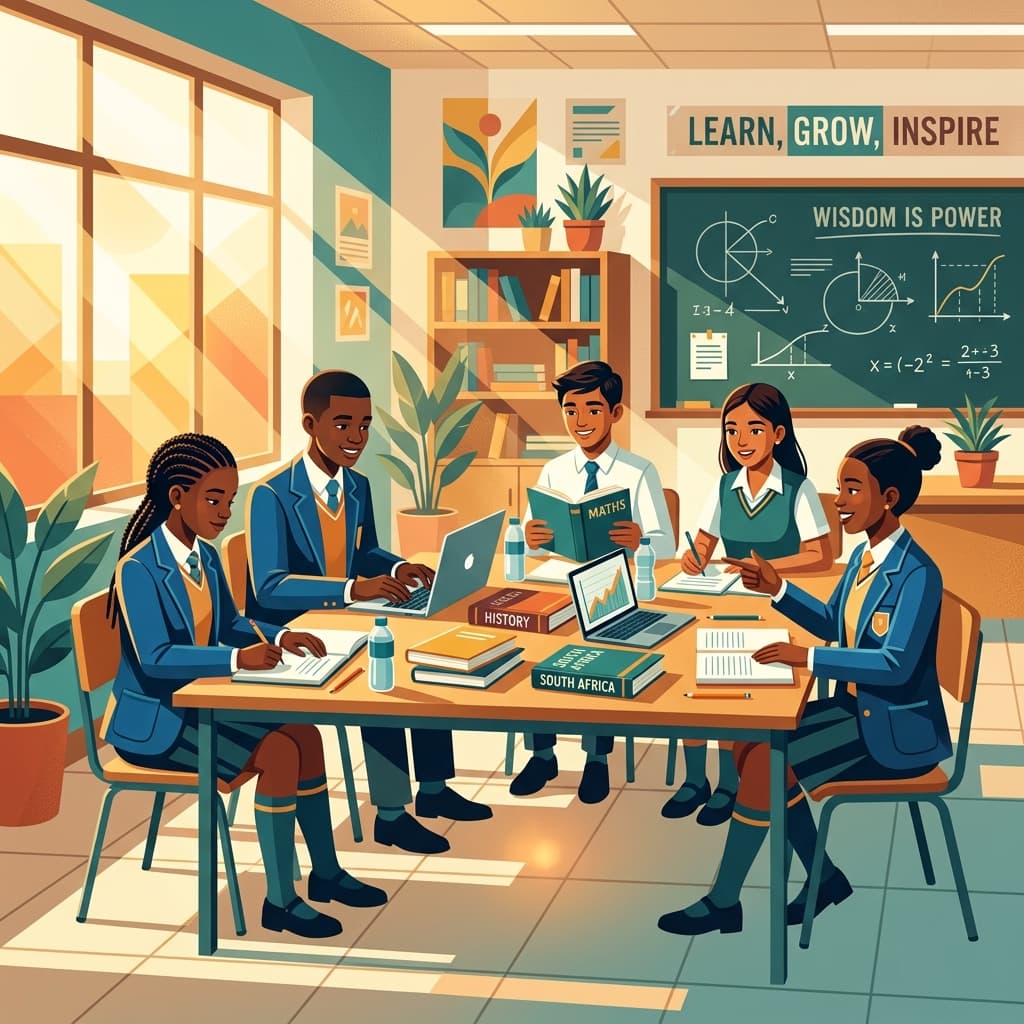
The rhythmic hum of a South African classroom, filled with eager, curious, and sometimes challenging young minds, is a testament to the dedication of our educators. Yet, beneath the surface of this vibrant energy, many teachers grapple with immense pressure: the relentless demands of the CAPS curriculum, large class sizes, diverse learner needs, administrative burdens, and the ever-present societal expectation for improved academic outcomes. It’s a tightrope walk that often leaves even the most passionate teachers feeling stretched thin, fatigued, and at risk of burnout.
But what if we told you that it's not only possible but achievable to reduce the pressure you feel while simultaneously elevating your learners' academic performance? This isn't about magic; it's about shifting perspectives, streamlining processes, and empowering both yourself and your learners in strategic, sustainable ways. This comprehensive guide aims to equip South African teachers with practical, CAPS-aligned strategies to navigate the complexities of the classroom with greater ease and effectiveness, fostering an environment where both you and your learners thrive.
Decoding the Dual Challenge: Teacher Pressure and Learner Performance
Before we delve into solutions, let's acknowledge the interwoven nature of teacher well-being and learner success within the South African educational landscape.
The Unseen Weight of Teacher Pressure
Our schools are vital community hubs, and teachers are at the heart of them. However, the multifaceted pressures often go unrecognised:
- CAPS Implementation Intensity: While CAPS offers a clear framework, its breadth and depth, coupled with the need for continuous assessment and record-keeping, can feel overwhelming. Ensuring comprehensive coverage while fostering deep understanding is a constant balancing act.
- Administrative Overload: Beyond teaching, educators are often swamped with paperwork, report writing, data capturing, extra-mural duties, and managing classroom logistics, all of which eat into precious planning and personal time.
- Diverse Learner Needs: Classrooms are microcosms of society, with learners presenting a spectrum of socio-economic backgrounds, learning styles, linguistic abilities, and developmental stages. Differentiating instruction effectively for 40+ learners requires significant effort and expertise.
- Societal and Parental Expectations: There's a persistent demand for improved results, often without full appreciation for the daily realities teachers face. This external pressure can compound internal stress.
- Limited Resources: Many schools operate with inadequate infrastructure, teaching materials, and support staff, forcing teachers to be resourceful and take on additional roles.
This constant pressure can lead to stress, reduced job satisfaction, and ultimately, burnout, directly impacting the quality of teaching and learner engagement.
Beyond the Pass Rate: Redefining Learner Performance
For too long, learner academic performance has been narrowly defined by exam scores and pass rates. While these are important metrics, a truly holistic view, aligned with the spirit of CAPS, encompasses much more:
- Critical Thinking and Problem-Solving: The ability to analyse information, evaluate arguments, and solve complex problems – essential skills for the 21st century.
- Creativity and Innovation: Encouraging learners to think outside the box, generate new ideas, and approach challenges with imagination.
- Collaboration and Communication: Working effectively with peers, articulating ideas clearly, and engaging in constructive dialogue.
- Self-Management and Resilience: Developing the capacity to manage one's own learning, persevere through difficulties, and adapt to change.
- Deep Conceptual Understanding: Moving beyond rote memorisation to grasping the 'why' behind concepts, enabling transfer of knowledge to new contexts.
When teachers are under undue pressure, the tendency can be to default to surface-level teaching methods aimed solely at covering content for tests, inadvertently hindering the development of these crucial higher-order skills. Our goal is to break this cycle.
Shifting Mindsets: From Burden to Empowered Facilitation
The journey towards reduced pressure and improved performance begins with a fundamental shift in perspective.
Embracing an Asset-Based Approach
Instead of focusing on what learners lack (e.g., "They don't understand fractions," "They can't write coherent essays"), an asset-based approach highlights their existing strengths, prior knowledge, and unique talents.
- Practical Example: Instead of lamenting a learner's inability to grasp a scientific concept, identify their strength in art. Can they draw a diagram that explains it? Or do they excel in group discussions? Leverage these strengths to build bridges to understanding the challenging concept. This not only empowers the learner but also re-frames the teacher's challenge from remediation to activation of existing potential.
- Impact on Teachers: This mindset reduces the feeling of being solely responsible for "fixing" deficits and instead positions the teacher as a facilitator who helps learners tap into their own capabilities.
The Transformative Power of a Growth Mindset
For both teachers and learners, adopting a growth mindset (the belief that abilities and intelligence can be developed through dedication and hard work) is revolutionary.
- For Learners: It replaces the fixed idea of "I'm not good at maths" with "I haven't mastered maths yet." This fuels perseverance, encourages risk-taking, and reduces the fear of failure, all contributing to deeper learning.
- For Teachers: It reframes challenges in the classroom not as insurmountable obstacles, but as opportunities for professional growth and innovation. When a lesson doesn't land, a growth mindset prompts reflection ("What can I try differently next time?") rather than self-blame ("I'm not a good teacher"). This significantly reduces self-imposed pressure.
By cultivating this mindset in ourselves and our learners, we create a more resilient, dynamic, and less stressful learning environment.
Practical Strategies for Pressure Reduction & Performance Enhancement
Here, we dive into actionable strategies that directly address the dual goals of this blog post.
A. Streamlining Planning & Preparation
Effective planning is the backbone of successful teaching, but it needn't be a solitary, exhausting endeavour.
Collaborative Planning:
- Departmental/Phase Meetings: Don't just meet for administrative updates. Dedicate time for co-planning.
- Practical Example: In a Grade 7 Social Sciences department, set aside one afternoon per term to collectively unpack the CAPS document for the upcoming term. Divide the topics, with each teacher taking responsibility for developing detailed lesson outlines, activity ideas, and even assessment tasks for specific sections. Share these resources via a shared drive. This eliminates 4-5 teachers individually reinventing the wheel for the same content.
- Peer-Reviewing Resources: Have colleagues review your lesson plans or assessment tasks before implementation. This catches errors, offers new perspectives, and builds a sense of shared responsibility.
- Shared Resource Bank: Create a digital or physical repository of high-quality worksheets, exemplary learner responses, relevant articles, and multimedia links. New teachers especially benefit immensely from this.
- Departmental/Phase Meetings: Don't just meet for administrative updates. Dedicate time for co-planning.
Effective Use of CAPS Documents:
- Focus on Core Competencies: The CAPS document is comprehensive. Instead of trying to cover every single detail in every lesson, identify the core concepts, skills, and values (CSVs) for each topic. Prioritise depth over breadth.
- Backward Design Principles: Start your planning with the end in mind.
- Step 1: Identify Desired Results: What should learners know and be able to do at the end of this unit/module, according to CAPS?
- Step 2: Determine Acceptable Evidence: How will you know they've achieved these results? Design your summative and key formative assessments first.
- Step 3: Plan Learning Experiences & Instruction: Only then do you design the lessons and activities that will lead learners to demonstrate that understanding. This ensures alignment and purpose, making planning more efficient and effective.
Lesson Planner
Generate comprehensive, CAPS-aligned lesson plans in seconds.
- Leveraging Technology (Strategically):
- Digital Resources: Curate and use relevant YouTube videos, interactive simulations (e.g., PhET simulations for Science), educational apps, and online articles to supplement your teaching. These can offer different modalities for learning and save you time explaining complex concepts.
- Online Assessment Tools: Platforms like Google Forms or Microsoft Forms can be used for quick quizzes, exit tickets, or even homework. They offer instant marking and data analysis, providing immediate feedback to both you and the learners. This drastically cuts down on manual marking time.
- Learning Management Systems (LMS): If your school has access to platforms like Google Classroom, Moodle, or even WhatsApp groups, use them to distribute resources, post announcements, collect assignments, and facilitate discussions. This centralises communication and reduces reliance on physical handouts.
B. Maximising Classroom Time & Learner Engagement
An engaged classroom is a less stressful classroom. When learners are actively involved, behavioural issues often decrease, and learning deepens.
Active Learning Methodologies:
- Collaborative Learning:
- Group Work: Design tasks where learners must work together to achieve a common goal (e.g., a shared research project, a group presentation, solving a complex problem together). Assign roles within groups to foster interdependence.
- Peer Tutoring: Pair stronger learners with those needing support. This benefits both; the tutor consolidates their understanding, and the tutee receives personalised help.
- Think-Pair-Share: Pose a question, give learners individual thinking time, have them discuss with a partner, then share their ideas with the whole class. This ensures every learner engages with the content.
- Differentiated Instruction (Manageably):
- Flexible Grouping: Group learners based on current understanding for specific tasks, rather than fixed groups. For a Mathematics lesson on fractions, you might have one group working with you for remediation, another working independently on practice problems, and a third tackling an enrichment activity involving real-world fraction application (e.g., recipe scaling).
- Tiered Assignments: Offer different versions of the same assignment that vary in complexity or support required, but all target the same learning objectives.
- Choice Boards: Give learners a choice of activities from which to demonstrate their understanding (e.g., write an essay, create a poster, produce a short video). This empowers them and plays to their strengths.
- Inquiry-Based Learning:
- Start units with a compelling question or real-world problem. Encourage learners to investigate, ask questions, and discover answers rather than simply being told information.
- Practical Example: For a Natural Sciences lesson on ecosystems, instead of lecturing, pose the question: "What would happen if all the insects suddenly disappeared from our local environment?" Guide learners to research, discuss, and predict the consequences, fostering critical thinking.
- Collaborative Learning:
Effective Classroom Management:
- Proactive Strategies: Establish clear, consistent routines and expectations from day one. Display classroom rules visually. Practise transitions between activities.
- Positive Reinforcement: Focus on acknowledging and rewarding desired behaviours. "I noticed how quietly you all settled into your groups today, well done!"
- Empowering Learners: Give learners responsibility (e.g., class monitors, group leaders, equipment managers). When learners feel a sense of ownership over their classroom environment, they are more likely to contribute positively.
- Minimising Disruptions: A well-managed classroom reduces the constant need for teacher intervention, freeing you to focus on teaching.
C. Assessment for Learning (AfL) - The Smart Way
Assessment doesn't have to be a dreaded, time-consuming task. When used formatively, it becomes a powerful tool for guiding instruction and learning, while also reducing your marking load.
Formative Assessment Focus:
- Regular, Low-Stakes Checks: Integrate quick checks for understanding throughout lessons.
- Mini Whiteboards: Ask a question, learners write answers on small whiteboards and hold them up. Instant overview of understanding.
- Exit Tickets: At the end of a lesson, ask learners to answer 1-2 questions on a slip of paper before leaving (e.g., "What was the main idea of today's lesson?" "What is one question you still have?").
- Quick Polls/Thumbs Up/Down: Simple, immediate feedback on comprehension.
- Immediate Feedback Loops: Provide feedback as close to the learning event as possible. This is where peer and self-assessment shine.
- Peer Feedback: Teach learners how to give constructive feedback using clear rubrics. This empowers them to evaluate work and provides learners with multiple perspectives.
- Self-Assessment: Provide checklists or rubrics for learners to assess their own work against. This fosters metacognition and reduces your initial marking burden.
- Regular, Low-Stakes Checks: Integrate quick checks for understanding throughout lessons.
Targeted Feedback:
- Focus on 1-2 Key Areas: Instead of correcting every mistake, identify the most significant 1-2 areas for improvement in a learner's work and provide specific, actionable feedback on those points.
- Question-Based Feedback: Instead of just telling them the answer, ask guiding questions: "What rule were you trying to apply here?" or "How could you rephrase this sentence for clarity?"
- Rubrics: Use clear, learner-friendly rubrics for assignments. These clarify expectations for learners (reducing "what do I need to do?" questions) and streamline your marking process by providing clear criteria.
Reducing Marking Load:
- Self-Marking Quizzes: Utilise online platforms or pre-prepared answer sheets for quizzes and multiple-choice questions.
- Marking Guides/Memos: Create detailed memos for learners to use for self- or peer-marking. This empowers them to learn from their mistakes immediately.
- Focus on Quality, Not Quantity: Not every piece of work needs a detailed grade and extensive comments. Some tasks are purely for practice and can be quickly reviewed with a tick or a brief check. Prioritise marking work that demonstrates progress on key learning objectives.
- Spot Marking: Instead of marking every sentence of every essay, identify key paragraphs or specific sections to provide feedback on.
D. Fostering Learner Autonomy & Self-Regulation
When learners take more responsibility for their own learning, the teacher's burden naturally decreases, and academic performance improves.
Goal Setting:
- Guide learners in setting SMART (Specific, Measurable, Achievable, Relevant, Time-bound) academic goals for a topic or term. Regularly check in on their progress.
- Practical Example: For a Grade 8 English class, instead of just saying "improve your essays," help a learner set a goal like: "I will improve my essay writing by ensuring each body paragraph has a clear topic sentence and at least two supporting details in my next three essays."
Teaching Study Skills & Metacognition:
- Explicitly teach learners how to learn, not just what to learn.
- Revision Strategies: Introduce various revision techniques (e.g., mind mapping, flashcards, summarising, active recall).
- Metacognition: Encourage learners to reflect on their own learning process: "What worked well for me in this task?" "What do I need to do differently next time?" "How did I come to this answer?"
Encouraging Independent Problem-Solving:
- When learners encounter a challenge, encourage them to try at least two strategies before asking for help.
- "Three Before Me" Rule: Teach learners to first check their notes, then ask a peer, then consult a textbook/resource, before asking the teacher. This fosters resilience and reduces constant interruptions.
Ownership of Learning:
- Empower learners to take the lead in projects, presentations, and even classroom discussions. When they own their learning journey, they become more motivated and resourceful.
E. Prioritising Teacher Well-being
You cannot pour from an empty cup. Sustainable teaching requires you to protect your own energy and mental health.
Set Clear Boundaries:
- Learn to say "no" to non-essential tasks or requests that overextend you.
- Designate specific times for work and for personal life. Avoid taking school work home every evening or working late into the night.
- Practical Tip: Turn off work notifications after a certain hour.
Cultivate Support Networks:
- Collaborate with Colleagues: Share your successes, frustrations, and ideas. A strong departmental team is an invaluable support system.
- Mentorship: Seek out experienced teachers for advice and guidance, and consider mentoring newer teachers yourself.
Prioritise Self-Care:
- Rest: Ensure you get adequate sleep.
- Physical Activity: Even short walks can significantly reduce stress.
- Hobbies and Interests: Engage in activities outside of teaching that bring you joy and help you switch off.
- Mindfulness/Meditation: Simple breathing exercises can help manage stress in moments of overwhelm.
Delegate (where appropriate):
- Empower learner leaders, class monitors, or even parent volunteers (if available and vetted) to assist with non-instructional tasks. This provides valuable leadership experience for learners and frees up your time.
Real-World South African Context & CAPS Alignment
These strategies are not abstract ideals; they are designed to be highly relevant and adaptable to the realities of South African schools, from well-resourced urban settings to rural schools with limited infrastructure.
- CAPS Alignment: The strategies outlined – fostering critical thinking, problem-solving, active participation, collaborative learning, and holistic development – are not just good teaching practices; they are deeply embedded in the philosophical underpinnings and specific aims of the CAPS curriculum. By implementing these, you are not just reducing pressure; you are aligning more effectively with CAPS goals.
- Low-Tech Alternatives: Many strategies can be adapted for contexts with limited technology. Collaborative planning can happen with pen and paper. Formative assessment can use physical exit tickets or group discussions. Peer and self-assessment require minimal resources beyond clear instructions.
- Community Involvement: Engage parents and community members where possible. They can be a resource for projects, guest speakers, or even assistance with classroom support (e.g., helping prepare learning materials).
- Embrace Local Context: Use local examples, stories, and challenges in your teaching. Connect learning to the learners' lived experiences to make it more relevant and engaging, often sparking natural inquiry.
Conclusion: Sustainable Teaching for a Brighter Future
The journey of reducing teacher pressure while simultaneously boosting learner academic performance is not a sprint, but a marathon of continuous improvement and adaptation. It requires a commitment to working smarter, not harder, and a belief in the power of shared responsibility.
By embracing collaborative planning, leveraging active learning, implementing smart assessment practices, fostering learner autonomy, and prioritising your own well-being, you can transform your classroom into a dynamic, less stressful, and ultimately more effective learning environment. Start small, experiment with one or two strategies that resonate with you, and observe the positive ripple effect.
You are not alone in this vital work. By empowering yourself, you empower your learners, creating a sustainable and thriving educational ecosystem that truly prepares the next generation of South African leaders, innovators, and thinkers. Let’s embark on this transformative journey together.
Andile. M
Dedicated to empowering South African teachers through modern AI strategies, research-backed pedagogy, and policy insights.