
When learners enter a classroom where they don't know what to expect, anxiety rises. This anxiety often manifests as disruption, off-task talking, or outright defiance. Conversely, a classroom governed by predictable, simple routines creates a "psychological safety net." When learners know the "how" of the classroom, they can focus entirely on the "what" of the curriculum.
Effective routines are not about rigid control; they are about creating a flow that minimises "dead time"—those dangerous gaps between activities where most behavioural issues occur. By automating the logistical aspects of your teaching, you free up your mental energy to engage with your learners and manage the classroom with calm authority.
1. The "First Five Minutes" Routine: Setting the Tone
The start of a lesson often dictates the next hour. If you spend the first ten minutes looking for your chalk, trying to get the projector to work, or arguing with learners about why they aren't sitting down, you have already lost the battle for their attention.
The Entry Protocol
Establish a firm entry routine. Learners should know exactly where to go and what to do the moment they cross the threshold.
- The Threshold Greeting: Stand at the door. Greet learners by name. This small act of "checking in" allows you to gauge the emotional state of your class before they even sit down.
- The Bell-Ringer/Starter Activity: Have a task waiting on the board. This should be a 5-minute activity that requires no explanation—perhaps a quick recap of yesterday’s CAPS-aligned content or a brain teaser.
How SA Teachers Helps
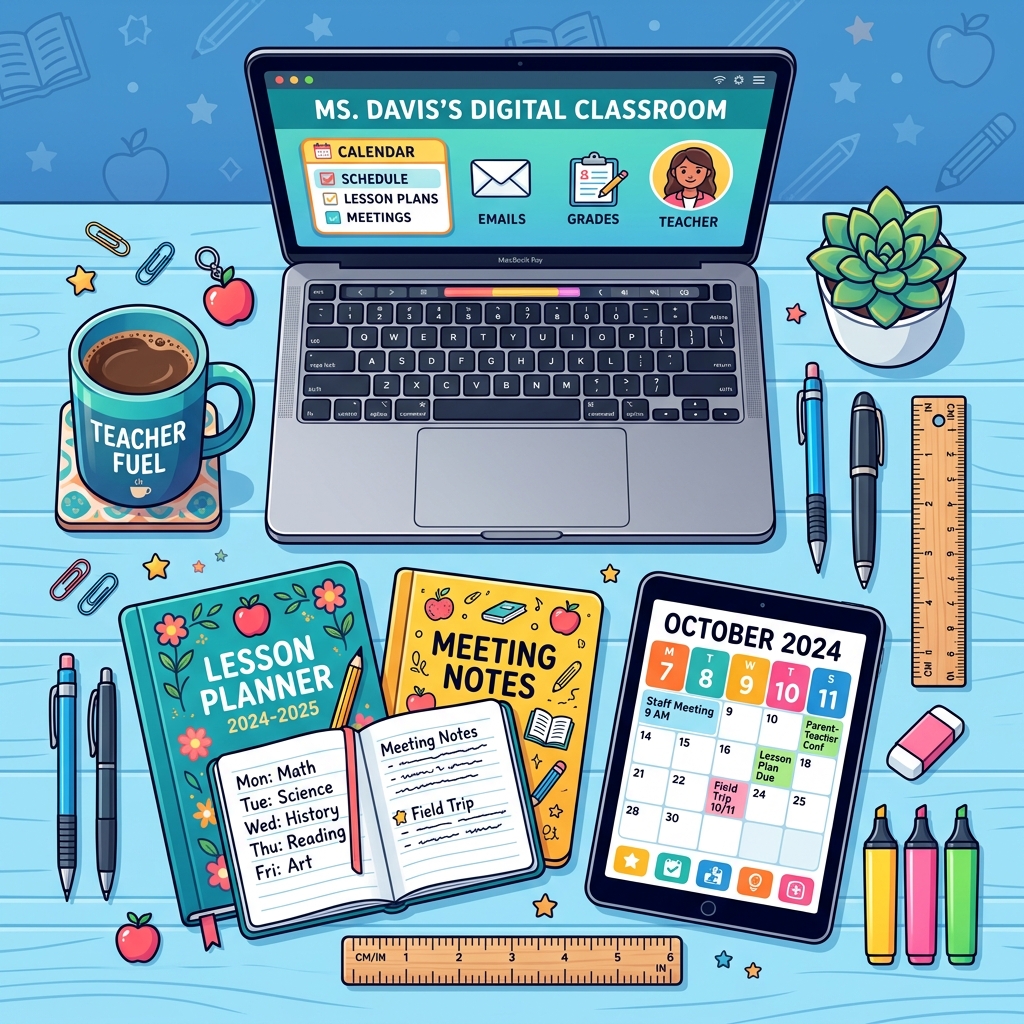
The biggest barrier to a smooth start is lack of preparation. When you are stressed about your lesson plan, the learners feel it. By using the CAPS-Aligned Lesson Planner on SA Teachers, you can generate comprehensive, curriculum-compliant plans in seconds. Instead of scrambling, you arrive in class with a clear roadmap, allowing you to focus on the learners as they enter.
2. Transition Routines: Eliminating "Dead Time"
Transitions—moving from a whole-class lecture to group work, or from one subject to another—are the most common "leakage points" for classroom management. In many South African schools, where learners move between classrooms, these transitions can become chaotic.
The Three-Step Transition
- The Signal: Use a consistent non-verbal signal (a bell, a specific clap pattern, or turning the lights off/on). Avoid shouting "Quiet!" over the noise.
- The Instruction: Give one instruction at a time. "In ten seconds, I need your books closed and your eyes on me. Ten, nine, eight..."
- The Check: Do not move to the next step until 100% of the class is following the instruction.
Leveraging Digital Tools for Flow
Often, transitions become messy because learners are waiting for the teacher to hand out materials or find a resource. You can eliminate this by using the Worksheet & Exam Generators. Instead of manually searching for relevant practice problems that fit the ATPs, you can generate and print custom worksheets tailored to your specific lesson objective before class begins. Having all materials ready to go ensures that the transition to independent work is seamless.
3. The "Help" Routine: Reducing Disruptive Questions
"Teacher, I don't get it!" "Ma'am, what do I do next?" These interruptions can derail a lesson and lead to frustrated learners acting out. You need a routine for how learners seek help during independent work.
Brain, Book, Buddy, Boss
Teach your learners this hierarchy of problem-solving:
- Brain: Think about it for one minute. Did the teacher mention this?
- Book: Look at your notes or the textbook.
- Buddy: Ask the person sitting next to you quietly.
- Boss: Only after trying the first three should you raise your hand for the teacher.
Integration: The AI Tutor as a Classroom Assistant
In a class of 40 learners, you cannot be everywhere at once. This is where the AI Tutor from SA Teachers becomes a game-changer. For schools with access to devices, learners can engage with the AI Tutor to get immediate, step-by-step explanations of complex concepts. If a learner is stuck on a particular CAPS topic, the AI Tutor provides personalised support, reducing the frustration that often leads to "acting out" to get attention.

4. Assessment and Feedback Routines
Anxiety around marks is a major driver of poor behaviour, especially in the FET phase (Grade 10-12). When learners don't understand why they received a certain mark, or when feedback is delayed by weeks, they become disengaged.
Transparent Rubrics
Create a routine where every task—from a simple essay to a complex project—is accompanied by a clear rubric. Learners should know exactly what is required to achieve a Level 7.
The Resource Routine
Ensure every learner has access to simplified study materials. The Study Guide Creator on SA Teachers allows you to turn your lesson notes into structured, easy-to-digest study guides. When learners have a "roadmap" of the term's work, they feel a sense of agency. You can establish a routine where early finishers can work ahead using these guides or use them to summarise the day’s lesson in their workbooks.

6. The End-of-Lesson "Cool Down"
The final five minutes of a period are often a race against the bell. Learners start packing up early, chairs scrape against the floor, and the teacher’s voice is drowned out by the noise of the hallway.
The "Clean and Reflect" Routine
- The 3-Minute Warning: Signal that it is time to stop working.
- Physical Accountability: No one leaves until their desk area is clean. This instils a sense of pride and respect for the classroom environment.
- The Exit Ticket: Ask one question related to the day's ATP goal. Learners must answer it (verbally or on a scrap of paper) before they leave.
7. The Administrative Burden: Reclaiming Your Time
Let’s be honest: bad classroom behaviour is often exacerbated by a stressed, tired teacher. In South Africa, the administrative load—recording marks, writing report comments, ensuring CAPS compliance—is staggering. When you are drowning in admin, your patience wears thin, and your "management" becomes "reaction."
Report Comments and SMT Requirements
At the end of each term, the pressure to produce meaningful report comments for hundreds of learners can be overwhelming. The Report Comments Generator on SA Teachers allows you to generate professional, personalised comments that reflect a learner’s progress without spending 20 hours at your desk.
Siyanda M.
Dedicated to empowering South African teachers through modern AI strategies, research-backed pedagogy, and policy insights.