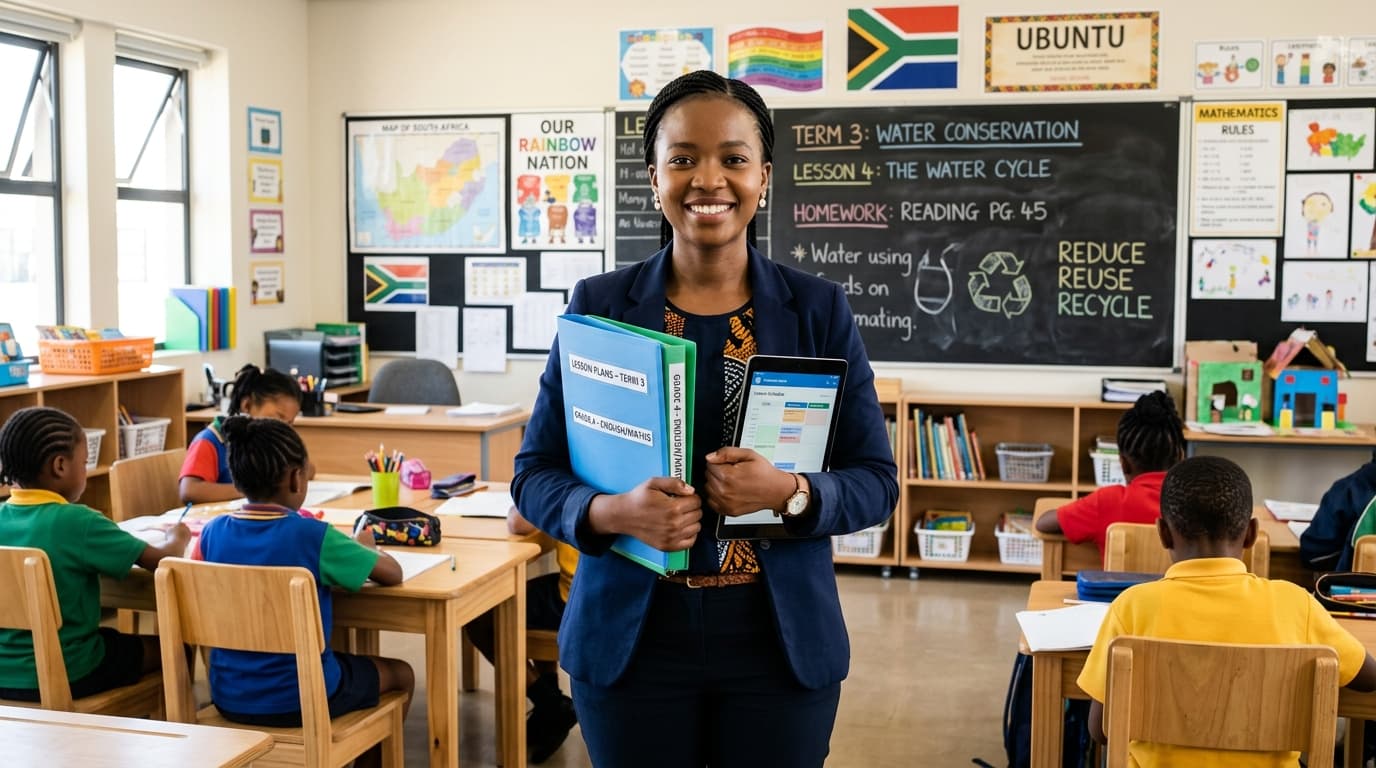
The South African High School Context: A Unique Challenge
Walking into a South African high school classroom is unlike any other experience in the world. As the bell rings, you aren't just facing forty to fifty learners; you are facing the future of a nation. Our classrooms are vibrant, energetic, and culturally rich, but they also come with a set of systemic pressures that can make classroom management feel like an uphill battle.
From the rigorous pacing of the Curriculum and Assessment Policy Statement (CAPS) to the socio-economic disparities that enter our gates every morning, the South African teacher is more than just an instructor—they are a mediator, a mentor, and a leader. Effective classroom management in our context isn't about "control"; it is about creating an environment where learning is possible despite the noise of the world outside.
The Foundation: Leadership Through Ubuntu
In South Africa, we cannot talk about management without talking about Ubuntu—"I am because we are." In a high school setting, particularly with adolescents seeking identity and autonomy, a top-down, dictatorial approach often leads to rebellion.
Effective management starts with the "human-first" approach. Before a learner cares about the Pythagorean theorem or the themes in Tsotsi, they need to know that you see them.
Building the Connection
In a class of 45 learners, it is easy for an individual to feel invisible. Successful South African educators use the first five minutes of every period to "read the room." A simple "Sawubona" or "Goeiemôre" at the door does more for discipline than a dozen detention slips. When learners feel a sense of belonging, they are less likely to disrupt the collective peace. This is the "Social Contract" of the classroom.
Navigating the CAPS Pacing Pressure
One of the greatest management hurdles in South Africa is the Annual Teaching Plan (ATP). The pressure to cover vast amounts of content often leads teachers to rush, which in turn creates "dead air"—those moments where struggling learners check out and begin to misbehave because they’ve lost the thread of the lesson.
Structured Routine as a Management Tool
Predictability reduces anxiety. High school learners, despite their posturing, crave structure.
- The "Do Now" Activity: Have a short, 5-minute task written on the board before they enter. Whether it’s a quick recap question or a brain teaser, it eliminates the "settling down" chaos.
- The Visible Agenda: Write the lesson goals on the corner of the chalkboard. When learners know exactly what is expected of them before the period ends, they are more likely to stay on task.
- Buffer Time: Build in "catch-up" Fridays or periods. In our context, where load shedding or transport strikes can disrupt the week, having a management plan for "lost time" prevents the panic that leads to poor classroom behavior.
Managing Large Class Sizes (The 40+ Reality)
While international pedagogical texts often assume a class of 20, the South African reality is often double that. Managing a large high school class requires a shift from "monitoring individuals" to "managing systems."
The Power of Peer Leadership
Identify the natural influencers in your classroom. In every Grade 10 or 11 class, there are learners who hold the social capital. Instead of fighting them, deputize them. Use a "Group Captain" system where the class is divided into small clusters. If a cluster is too loud, you address the captain, not the whole group. This creates a layer of accountability that doesn't rely solely on the teacher’s voice.
Proactive Movement
Don't get stuck behind your desk or at the front of the room (the "sage on the stage" trap). In a large South African classroom, the back row is often the "danger zone" for distractions. Move through the aisles. Your physical presence—what educators call "proximity control"—is the most effective non-verbal deterrent for off-task behavior.
Discipline in the Post-Corporal Punishment Era
It has been decades since the South African Schools Act prohibited corporal punishment, yet many teachers still struggle to find effective alternatives that carry weight. The key is moving from punitive discipline to Restorative Justice.
The Three-Tiered Approach to Conflict
- Low-Level Intervention: Use the "Non-Verbal Cue." A hand on a shoulder, a sustained look, or a pause in your speech. Do not stop the lesson to address a minor whisper; it gives the disruptor the "stage" they want.
- The "Check-In" Corridor Talk: If a learner is being defiant, do not engage in a power struggle in front of their peers. You will lose, even if you "win," because you’ve embarrassed them. Ask them to step into the corridor for 30 seconds. Ask: "Is everything okay today? This isn't your usual standard." This shifts the tone from accusation to concern.
- Restorative Consequences: If a learner disrupts a lesson, the consequence should fit the "crime." If they wasted 10 minutes of class time, they owe 10 minutes of their break to help you tidy the lab or organize textbooks. This restores the balance of the classroom community.
Lesson Planner
Generate comprehensive, CAPS-aligned lesson plans in seconds.
Language and Cultural Competence
South Africa’s linguistic diversity is our strength, but in the classroom, it can be a management flashpoint. For many learners, the Language of Learning and Teaching (LoLT)—usually English or Afrikaans—is their second or third language.
Bridging the Gap
Misbehavior is often a mask for frustration. If a learner doesn't understand the instructions, they will act out to save face.
- Concept Checking: Never ask "Do you understand?" The answer will always be "Yes." Instead, ask "Tell me what the first step of this task is."
- Strategic Code-Switching: While we aim for English proficiency, occasionally clarifying a complex instruction in isiZulu, Sesotho, or Xhosa can de-escalate a tense situation and show the learners that you value their heritage. This builds the "Respect Capital" necessary for smooth management.
Dealing with the Digital Divide and Mobile Phones
In many urban and township schools, smartphones are a constant distraction. Conversely, in under-resourced schools, the lack of technology creates its own management hurdles.
The "Tech-Parking" Strategy
If your school allows phones but they are a distraction, implement a "Parking Station." This can be a hanging shoe organizer at the front of the class. Learners "park" their phones at the start of the lesson. For those who comply, perhaps offer a small incentive (like 5 minutes of "music time" during independent work at the end of the week).
If you are in a school with no tech, management relies on high-engagement tactile activities. Use mini-whiteboards (or even laminated pieces of white paper) for quick-fire answers. Keeping hands busy is the secret to keeping minds focused.
Professionalism and the SACE Code of Ethics
As South African teachers, we are bound by the South African Council for Educators (SACE). Professionalism is a management tool. When you dress professionally, arrive on time, and have your resources ready, you set a standard of "high expectations."
Learners are mirrors. If the teacher is disorganized, the class will be chaotic. If the teacher is consistently fair and follows through on promises (both rewards and consequences), the learners develop a sense of psychological safety. Safety is the precursor to discipline.
The Mental Health of the Educator
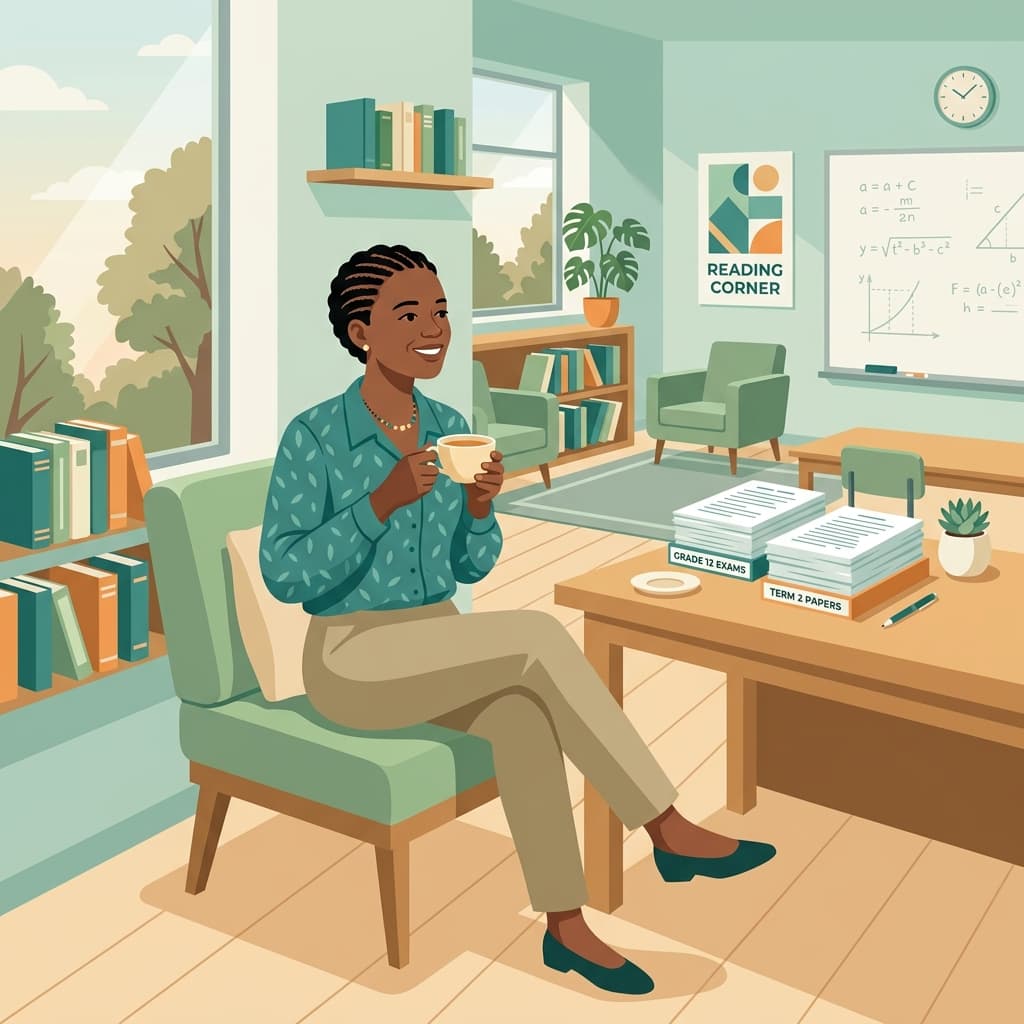
You cannot manage a classroom if you are running on empty. South African teachers face high rates of burnout due to secondary traumatic stress—absorbing the traumas our learners bring from home.
Practical Self-Care for Management
- The "Bell-to-Bell" Fallacy: You do not need to speak for 60 minutes. Design lessons where you facilitate for 20 minutes and learners work independently for 40. This allows you to catch your breath and check in with individuals.
- Find Your Tribe: Don't suffer in silence in the staffroom. Share management "wins" and "fails" with colleagues. Often, the learner who is a nightmare in your class is an angel in another—find out why. What works for the Geography teacher might work for you in Life Sciences.
Conclusion: The Long Game
Classroom management in a South African high school isn't about a perfect, silent room. A silent room can sometimes be a room where no learning is happening. A well-managed classroom is a "noisy-productive" one—where there is mutual respect, clear boundaries, and a shared goal.
Remember that you are planting seeds. The Grade 9 learner who tests your patience today is the future doctor, artisan, or leader of tomorrow. By holding the line with kindness and firmness, you aren't just teaching a subject; you are teaching the civic virtues of discipline and respect that our country so deeply needs.
Keep your head up, Teacher. You are doing the most important work in South Africa.
Siyanda M.
Dedicated to empowering South African teachers through modern AI strategies, research-backed pedagogy, and policy insights.