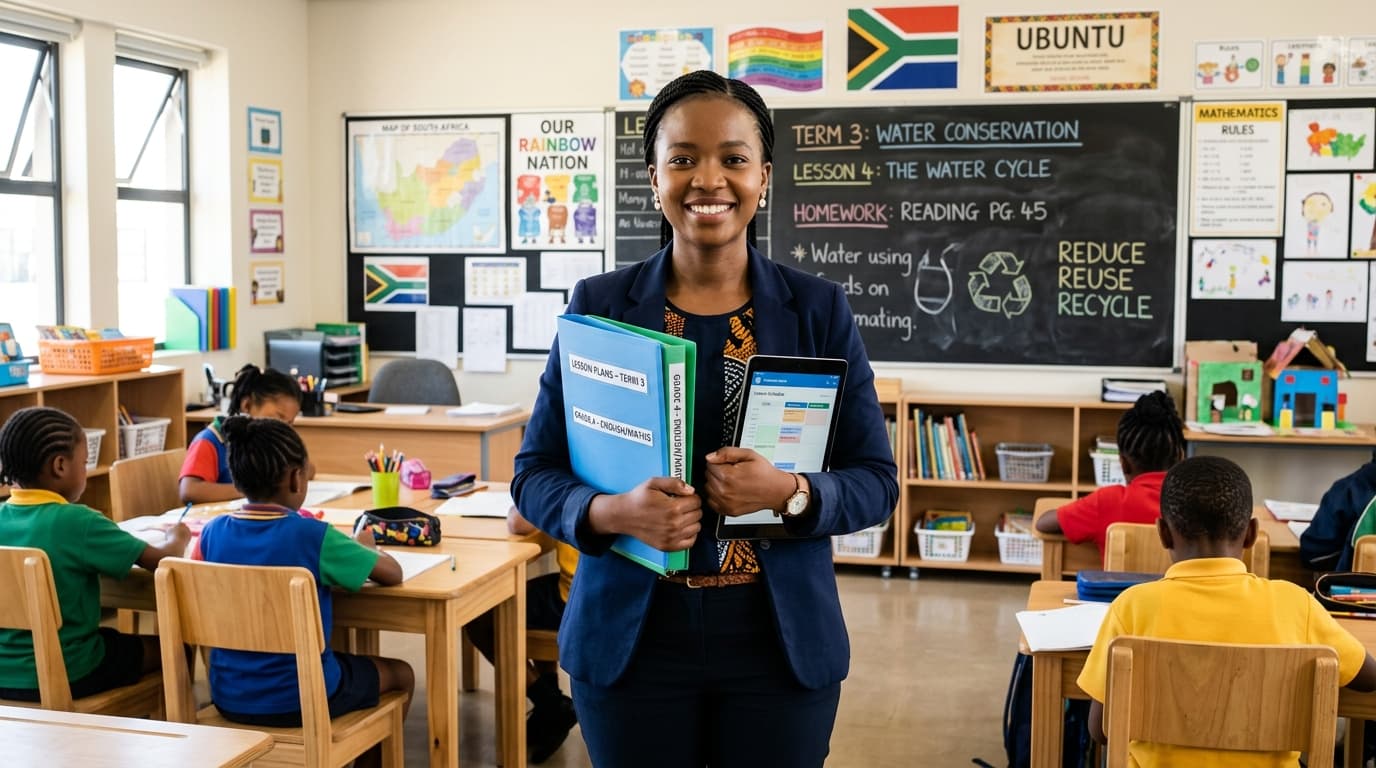
The Heart of the South African Classroom
As the bell rings for the start of the first period in a bustling South African school—whether it’s a rural quintile one school in Limpopo or a suburban former Model C school in Gauteng—the air is thick with more than just the dust of the playground or the scent of floor wax. It is thick with expectation, anxiety, and the diverse stories of forty or more individuals.
In our unique South African landscape, a teacher is rarely "just" an instructor. We are social workers, mediators, cheerleaders, and occasionally, the only stable parental figures our learners see in a day. The Curriculum and Assessment Policy Statement (CAPS) provides the 'what' of our teaching, but the 'how' is entirely dependent on the quality of the relationships we build.
Research consistently shows that learners who feel a sense of belonging and connection to their teachers are more likely to engage with difficult content, show resilience in the face of failure, and exhibit fewer disciplinary issues. In a country grappling with socio-economic disparities and the lingering shadows of a fractured past, the classroom relationship isn't just a pedagogical "nice-to-have"; it is the very foundation of our national project of transformation.
Redefining the Power Dynamic: From Authority to Ubuntu
The traditional South African classroom model was often built on a foundation of strict, unquestioned authority. While discipline is essential, the modern South African context demands a shift toward Ubuntu—the philosophy that "I am because we are."
Building a relationship doesn't mean relinquishing your authority. Rather, it means grounding that authority in mutual respect. When a learner feels that you see them as a whole person—recognizing their cultural heritage, their home language, and their personal struggles—the "wall" that often exists between the chalkboard and the desk begins to crumble.
The Power of the Correct Pronunciation
In a multilingual society like ours, identity is deeply tied to names. One of the simplest yet most profound ways to build a relationship is to make a concerted effort to pronounce every learner’s name correctly. Mispronouncing a name for an entire year, or worse, assigning a "nickname" because the original is "too difficult," sends a subtle message that the learner’s identity is an inconvenience.
Take the time in the first week to ask for the correct pronunciation. Ask about the meaning of their name. In many South African cultures, names carry ancestral weight and specific stories. By valuing the name, you value the person.
Navigating the CAPS Pressure Cooker
One of the primary complaints South African teachers have is the rigidity of the Annual Teaching Plans (ATPs). We often feel we are in a race against time to "cover the syllabus," leaving no room for "small talk."
However, we must view relationship-building not as a distraction from the curriculum, but as an accelerant for it. A learner who trusts you will work harder for you. They will take the risks necessary to master complex Mathematics or engage with difficult literature because they feel safe in your presence.
The "First Five Minutes" Rule
You don't need an hour of "bonding time" to make a difference. The first five minutes of every lesson are critical. Instead of walking in and immediately demanding that learners open their workbooks to page 42, use that window to humanize the space.
- The Threshold Greeting: Stand at the door. Greet as many learners as possible by name. A "Sharp-sharp, Thabo" or a "Good morning, Sarah" sets a positive tone before they even sit down.
- The Temperature Check: Use a quick, non-verbal "fist-to-five" (holding up fingers to show how they are feeling) to gauge the mood of the room. If the majority of the class is at a "one" because of a local protest or a looming test in another subject, acknowledging that reality builds an immediate bridge of empathy.
Understanding the Socio-Economic Context
We cannot build relationships in a vacuum. South African learners face unique challenges: food insecurity, lack of reliable transport, load shedding that hampers study time, and the "missing middle" financial stress.
Empathy Over Sympathy
When a learner fails to hand in homework, the instinctive reaction might be to issue a demerit. However, a relationship-focused teacher asks: "Is there something at home preventing you from finishing this?"
In many of our communities, learners are "parenting" younger siblings or studying by candlelight. When you show that you understand these systemic hurdles, you move from being an adversary to being an ally. This doesn't mean lowering your standards; it means providing the support necessary to reach those standards. Perhaps you offer your classroom during break for a quiet study space, or you provide a "grace pass" once a term for late work.
Bridging the Language Gap
Lesson Planner
Generate comprehensive, CAPS-aligned lesson plans in seconds.
While English is often the Language of Learning and Teaching (LoLT) from Grade 4 onwards, it is frequently the second or third language for our learners. This creates a barrier not just to understanding, but to connection.
Code-Switching as a Relational Tool
Don't be afraid to use occasional "translanguaging." Using a few words of isiZulu, Afrikaans, or Sesotho—even if you aren't fluent—shows a willingness to meet the learners halfway. It signals that you value their linguistic capital. It also adds a layer of humor and humanity to the classroom, especially when learners (kindly) correct your pronunciation.
Consistency: The Bedrock of Trust
In many South African households, consistency is a luxury. If a learner’s home life is unpredictable, your classroom must be the "constant."
Building better relationships requires radical consistency. This means:
- No Favouritism: Nothing kills a classroom's "gees" (spirit) faster than a teacher who has "teacher’s pets." Your warmth must be distributed equitably, reaching the "naughty" boy in the back row just as much as the top achiever in the front.
- Predictable Consequences: Learners feel safe when they know where the boundaries are. When you follow through on a promise (or a consequence) in a calm, non-emotional way, you build a reputation for fairness. Fairness is the highest form of respect in a learner’s eyes.
Practical Strategies for Connection
1. The 2x10 Strategy
Identify a learner with whom you are struggling to connect—perhaps someone who is disengaged or disruptive. For two minutes a day, for ten consecutive days, talk to them about something other than school. Ask about the Kaizer Chiefs game, their interest in Amapiano music, or their weekend. By the tenth day, the rapport you’ve built will significantly change the dynamic during actual lesson time.
2. Learner Interest Surveys
At the start of each term, have learners fill out a quick "About Me" form. Ask questions like: "What is one thing you’re proud of?" or "What is the hardest thing about school for you right now?" Refer back to these. Mentioning, "Hey, Sipho, I remember you said you like drawing—have you seen this new mural?" shows the learner they are not just a number in a database.
3. Celebrate "Small Wins"
In South Africa, we often wait for the Matric results or the big rugby derby to celebrate. But relationships are built in the small moments. Use "Positive Phone Calls" or WhatsApp messages to parents. Imagine the impact on a struggling learner when their parent receives a message saying: "Keitumetse participated so well in History today. I was really impressed." That positive feedback loop cements the relationship between teacher, learner, and home.
The Professional Boundary: Friendly but Not a Friend
It is crucial to mention the SACE (South African Council for Educators) Code of Ethics. Building a relationship does not mean becoming a "peer." Learners don't need another friend; they need a mentor.
Maintaining professional boundaries is actually a way of caring for the learner. It provides them with a safe, structured environment where the roles are clear. Avoid over-sharing personal problems or engaging with learners on private social media accounts. Your "coolness" should come from your passion for your subject and your genuine care for their future, not from trying to mimic their slang or lifestyle.
Trauma-Informed Teaching in the SA Context
Many of our learners carry "invisible backpacks" filled with trauma—exposure to violence, loss due to illness, or the stress of poverty. A relationship-focused teacher recognizes that "misbehavior" is often a communication of unmet needs.
Instead of asking "What is wrong with you?", ask "What happened to you?". This shift in perspective allows you to de-escalate conflicts. In a country with our history, creating a "trauma-informed" classroom means being a calm presence when the world outside is chaotic. Your relationship might be the only "safe harbor" that learner has.
Conclusion: The Long Game
Building better relationships with your learners won't happen overnight. There will be days when the marking is piled high, the electricity is off, and a learner is testing every nerve you have.
However, we must remember that we are in the business of human development. Twenty years from now, a learner will likely forget your lesson on the causes of the French Revolution or the intricacies of the Krebs cycle. What they will never forget is how you made them feel. They will remember that you believed in them when they didn't believe in themselves. They will remember that you respected their name, their language, and their potential.
In the end, the strongest "curriculum" we can deliver is the one where every South African learner feels seen, heard, and valued. That is how we truly transform our schools—one relationship at a time.
Siyanda M.
Dedicated to empowering South African teachers through modern AI strategies, research-backed pedagogy, and policy insights.