The Silent Struggle of the Over-Dependent Classroom
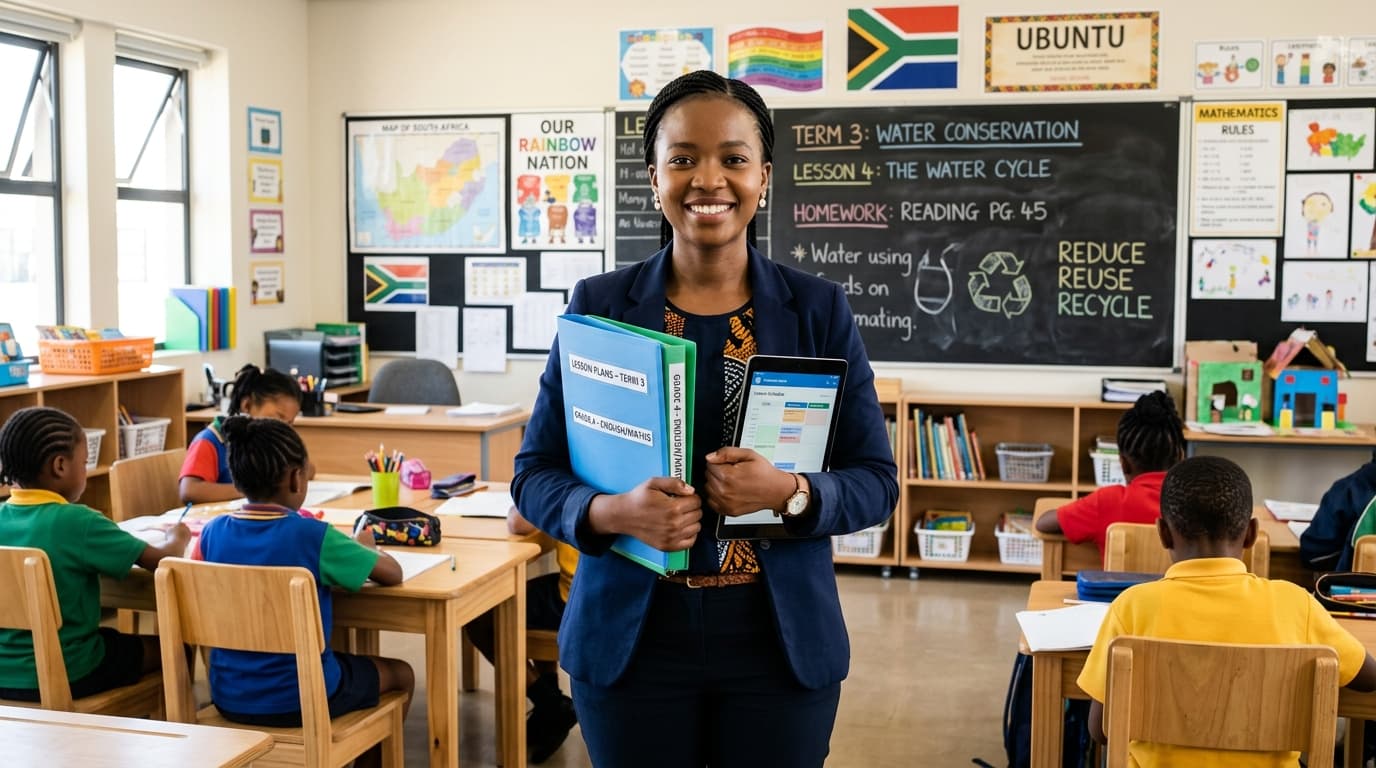
Walk into many South African classrooms today, and you will witness a common phenomenon: a dedicated educator working harder than the forty, fifty, or sixty learners in front of them. We see it in the constant hands raised for "What do I do next?", the paralysis that sets in when a task isn't explicitly dictated, and the "spoon-feeding" culture that often permeates our preparation for the National Senior Certificate (NSC).
In our context, teaching learners to work independently isn't just a pedagogical "nice-to-have"; it is a socio-economic necessity. With our unique challenges—ranging from large class sizes and language barriers to the pressures of the Curriculum and Assessment Policy Statement (CAPS)—fostering self-reliance is the only way to ensure our learners survive tertiary education and the modern workforce.
Independent learning is the ability of a learner to take charge of their own learning journey. It involves metacognition, time management, and the resilience to problem-solve without immediate teacher intervention. This guide outlines how we, as South African educators, can bridge the gap between "teacher-led" and "learner-owned."
Understanding the South African Contextual Barriers
Before we can implement solutions, we must acknowledge why independence is so difficult to achieve in our schools.
Firstly, many of our learners come from environments where rote learning was the historical norm. Secondly, the language of learning and teaching (LoLT)—often English—is a second or third language for the majority. When a learner doesn't fully grasp the instructions due to a language barrier, they default to dependence as a survival mechanism.
Furthermore, the sheer volume of the CAPS curriculum often forces teachers into "transmission mode" just to finish the syllabus on time. This leaves little room for the "productive struggle" required for independence. However, if we do not teach them to work alone now, we are merely delaying their struggle until they reach a lecture hall or an office where no one will hold their hand.
The Foundation: The Gradual Release of Responsibility (GRR)
The most effective framework for independence is the Gradual Release of Responsibility, often summarized as "I do, We do, You do." In a South African classroom, we need to add an extra step: "They do together."
1. I Do: Explicit Modeling
Independence starts with seeing what excellence looks like. When introducing a new concept—say, solving for $x$ in Mathematics or analyzing a poem in English Home Language—you must "think out loud." Show them how you tackle a problem, how you handle a mistake, and how you use the textbook as a resource. Don't just show the answer; show the messy process of getting there.
2. We Do: Guided Practice
This is where the teacher and learners work together. In a large class, this might involve using mini-whiteboards or choral responses. The goal here is to build confidence. If they feel safe making mistakes with you, they will feel safer making them alone later.
3. They Do Together: Collaborative Scaffolding
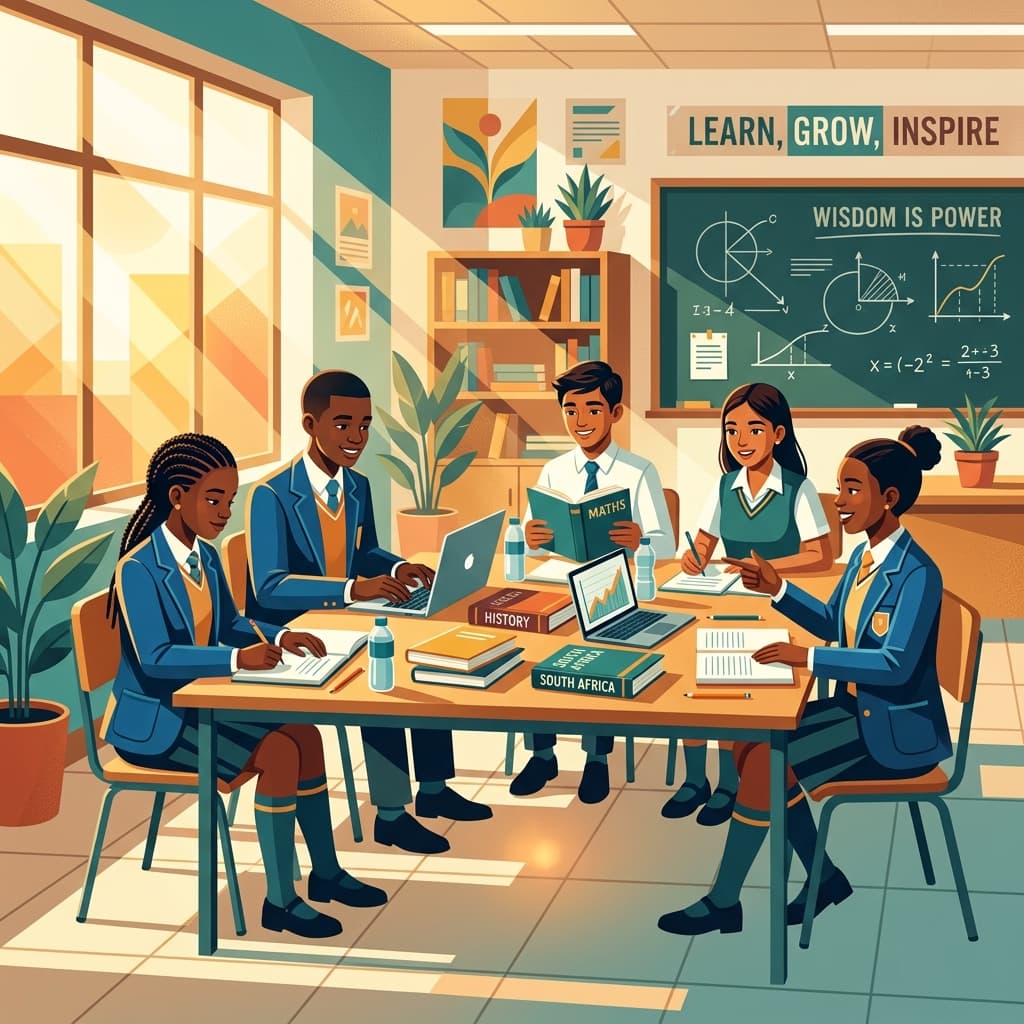
Before asking a learner to work in isolation, let them work in pairs or small groups. In our culture of Ubuntu, peer-supported learning is a powerful tool. Use "Think-Pair-Share" to let them test their ideas against a peer. This reduces the "fear of being wrong" that often causes learners to freeze when working independently.
4. You Do: Independent Application
Finally, the learner works alone. But here is the catch: the task must be at the right level. If it’s too hard, they will revert to asking you questions; if it’s too easy, they will finish in five minutes and disrupt the class.
Practical Strategies for the Daily Routine
The "Three Before Me" Rule
This is a game-changer for South African educators dealing with 50+ learners. Before a learner is allowed to ask the teacher a question, they must seek the answer from three other sources:
- Their own brain: Did I read the instructions twice?
- The resources: Is the answer in the textbook, on the chalkboard, or on an anchor chart?
- A peer: Have I asked my "study buddy" for clarification?
Only after these three steps are exhausted can they raise their hand. This drastically reduces the "helicopter teaching" we often find ourselves trapped in.
Visual Scaffolding through Anchor Charts
In many of our schools, resources are scarce. However, a piece of flipchart paper or even a neatly organized section of the chalkboard can serve as an "Anchor Chart." These charts should contain:
- Step-by-step instructions for common tasks.
- "What do I do when I’m finished?" lists (e.g., read a library book, practice sight words, or start on homework).
- Key vocabulary for the current CAPS unit.
By pointing to the chart instead of answering the question verbally, you are training the learner to look for information themselves.
The Power of "Wait Time"
South African teachers are often in a rush to beat the bell. When we ask a question, we wait an average of one second before calling on a learner or answering it ourselves. To foster independence, we must increase "Wait Time" to at least 5-10 seconds. This allows learners to process the LoLT and formulate their own thoughts rather than waiting for the "smartest" kid or the teacher to fill the silence.
Managing the "Productive Struggle"
Independence is born out of struggle. As teachers, our instinct is to "save" a struggling learner. We must resist this.
When a learner says, "Ma'am, I don't get it," avoid the temptation to explain the whole concept again. Instead, ask a scaffolding question:
- "Which part of the instruction is confusing?"
- "Where in your notes did we talk about something similar?"
- "What have you tried so far?"
Lesson Planner
Generate comprehensive, CAPS-aligned lesson plans in seconds.
By shifting the burden of thinking back to the learner, you are building the "academic muscle" they need for the NSC exams and beyond.
Designing Independent Tasks within CAPS
One of the biggest hurdles is the perception that independent work doesn't "fit" with the heavy CAPS assessment schedule. On the contrary, independent work is the best preparation for Formal Assessment Tasks (FATs).
Differentiation is Key
In a diverse South African classroom, independence looks different for everyone.
- For the struggling learner: Provide a "writing frame" or a "sentence starter" to get them going.
- For the average learner: Provide the standard task with a clear rubric.
- For the gifted learner: Provide an "extension task" that requires higher-order thinking (Bloom’s Taxonomy).
When every learner has a task suited to their "Zone of Proximal Development," the frequency of "Ma'am, I'm stuck" drops significantly.
Using "Choice Boards"
Even within the constraints of CAPS, you can offer choice. For a Life Orientation project on career paths, let learners choose whether they want to write an essay, create a poster, or conduct an interview. Choice breeds engagement, and engagement breeds independence.
Navigating Local Challenges: Overcrowding and Load Shedding
We cannot talk about independent work without addressing the "elephant in the room": our infrastructure.
The Overcrowded Classroom
In a class of 60, you cannot be everywhere. Use a "Station Rotation" model. Divide the class into three groups:
- Station A: Working with the teacher (Intensive support).
- Station B: Working independently on a worksheet or textbook exercise.
- Station C: Working in pairs on a practical activity or peer-marking.
This allows you to give focused attention to a small group while the rest of the class practices self-regulation.
The Load Shedding Reality
In the digital age, we often think of independent work as "researching on the internet." In South Africa, power cuts and data costs make this unreliable. Teach your learners "Analog Independence." Show them how to use a dictionary, how to navigate the index of a textbook, and how to summarize a chapter. These are "power-independent" skills that will serve them regardless of the state of the national grid.
Teaching Metacognition: The "How" of Thinking
Independence is ultimately about metacognition—thinking about one’s own thinking. In our context, where many learners are first-generation high school or university candidates, we must explicitly teach study skills.
Teach them how to:
- Self-Correct: Use a different colored pen to mark their own work against a memo you provide. This shifts the teacher from "The Judge" to "The Facilitator."
- Set Goals: At the start of a lesson, have them write down one thing they want to master by the end of the 45 minutes.
- Reflect: Use the last five minutes of the period for an "Exit Ticket." Ask: "What was the hardest part of today’s task, and how did you handle it?"
The Teacher’s New Role: From Sage to Architect
Moving toward independent learning requires a shift in our professional identity. We are no longer the "Sages on the Stage" who hold all the knowledge. Instead, we must become "Architects of Learning Environments."
An architect doesn't build the house for the resident; they design a structure where the resident can live and grow. Similarly, our job is to design the scaffolds, the routines, and the tasks that allow our learners to build their own knowledge.
It is exhausting at first. Setting up these systems takes more time than a traditional lecture. But by the second term, you will find a miraculous change. You will have time to sit with a small group of learners who are truly struggling, while the rest of the class hums with the sound of productive, independent work.
Conclusion: The Long-Term Impact
When we teach a South African child to work independently, we are doing more than just helping them pass a Grade 9 EMS test or a Grade 12 Physics paper. We are giving them the tools to navigate a world that is often unpredictable and resource-constrained.
We are raising a generation that doesn't wait for permission to solve a problem. We are fostering the innovators, the entrepreneurs, and the self-reliant citizens that our country so desperately needs.
Start small. Implement the "Three Before Me" rule tomorrow. Create one anchor chart this week. Step back, take a breath, and watch your learners realize that they are capable of much more than they—or you—ever imagined. The future of South Africa is not just in our hands; it is in the hands of the independent learners we cultivate today.
Siyanda M. is a veteran educator and curriculum consultant based in Gauteng, focusing on teacher development and classroom management in under-resourced schools.
Siyanda M.
Dedicated to empowering South African teachers through modern AI strategies, research-backed pedagogy, and policy insights.