The New Frontier of the South African Classroom
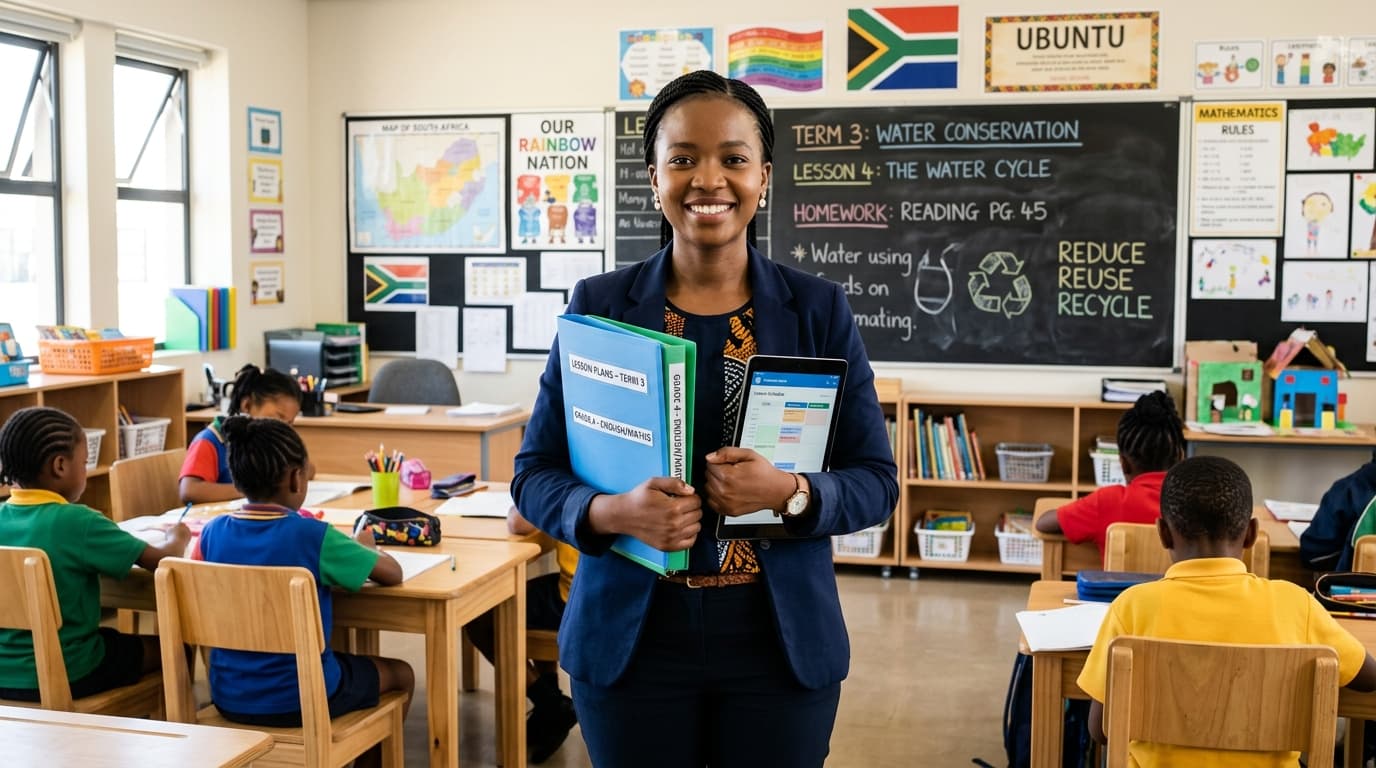
In any staffroom from Polokwane to Paarl, the conversation is often the same: we are overwhelmed. South African teachers are some of the most resilient in the world, balancing overcrowded classrooms, the rigorous demands of the Curriculum and Assessment Policy Statement (CAPS), and the administrative weight of Annual Teaching Plans (ATPs). Between marking scripts and preparing for the next GDE or WCED moderation, the "joy of teaching" often gets buried under a mountain of paperwork.
Enter Artificial Intelligence (AI). While the global conversation often focuses on whether AI will replace teachers, the reality in the South African context is far more practical. AI is not here to replace the teacher; it is here to replace the drudgery.
For us, AI is a digital teaching assistant that doesn’t require a salary, never gets tired, and understands the nuances of our 11 official languages. This guide explores how you can use AI to simplify your daily tasks, allowing you to focus on what truly matters: the learners in front of you.
Streamlining Lesson Planning and CAPS Alignment
The burden of planning according to the ATPs can feel like a full-time job in itself. Every lesson must align with specific Assessment Standards and be paced correctly to ensure the syllabus is completed before the November exams.
Developing 10-Week Term Plans
Instead of staring at a blank document, you can use AI tools like ChatGPT, Claude, or Google Gemini to create a skeletal structure for your term.
The South African Prompt:
"I am a Grade 9 Economic and Management Sciences (EMS) teacher in South Africa. Based on the CAPS document, create a 10-week lesson outline for Term 2 focusing on The Economy and Financial Literacy. Include weekly objectives and a suggestion for one informal assessment per week."
The AI will generate a structured table that you can then tweak. It saves hours of manual mapping and ensures you haven't missed a core topic required for moderation.
Scaffolding Complex Topics
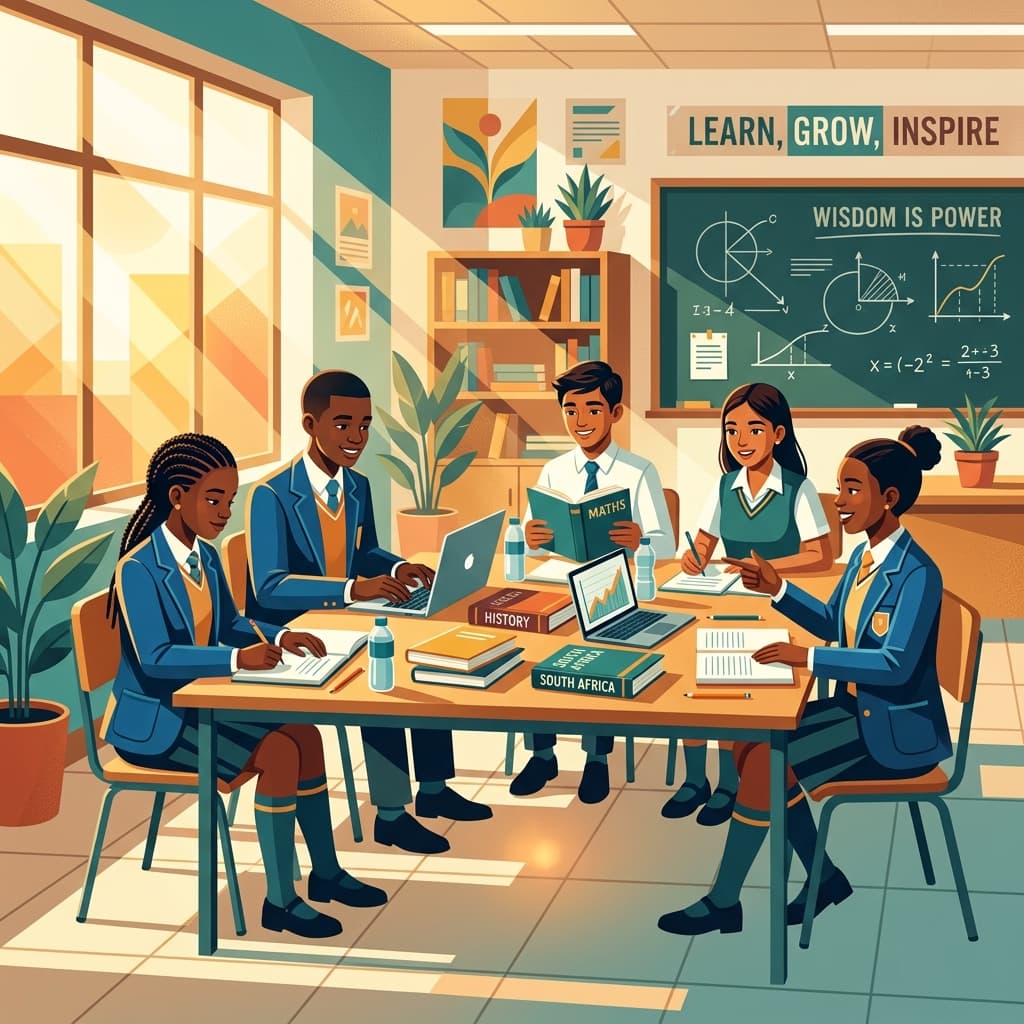
South African classrooms are famously diverse in ability. You might have a learner who thrives in Mathematics Literacy but struggles with the linguistic phrasing of the questions. You can ask AI to "Explain the concept of compound interest to a Grade 10 learner using a South African context, like saving in a Stokvel or a bank account." This local contextualization makes the content immediately more relatable and easier to grasp.
Resource Creation: Beyond the Textbook
Textbooks are essential, but they often lack enough practice examples or fail to reflect the immediate world our learners inhabit.
Generating High-Quality Worksheets
Creating a worksheet from scratch involves finding a reading passage, drafting questions, and then—most painfully—creating a memorandum. AI can do this in under two minutes.
If you are teaching English First Additional Language (FAL), you can ask the AI to write a 300-word story about a young girl in Soweto discovering a love for coding, then generate five comprehension questions based on Barrett’s Taxonomy (literal, reorganization, inference, evaluation, and appreciation).
Bilingual Support and Translation
One of our greatest challenges is the language barrier. Many learners are studying in their second or third language. You can use AI to translate key scientific or mathematical terms into isiZulu, isiXhosa, or Afrikaans to create bilingual glossaries. This doesn't just help the learners; it validates their home languages within the academic space.
The Rubric Revolution: Fair and Fast Assessment
Marking is the thief of teacher weekends. However, the true bottleneck isn't just the marking itself—it’s creating the rubrics that ensure our marking is transparent and fair.
Automated Rubric Generation
Whether it’s a Life Orientation project or a Creative Arts performance, you can input your criteria into an AI tool.
Lesson Planner
Generate comprehensive, CAPS-aligned lesson plans in seconds.
The Professional Prompt:
"Create a 20-mark rubric for a Grade 7 Social Sciences project on 'The Kingdom of Mali'. The rubric should have four levels of achievement and assess Research Skills, Content Accuracy, and Presentation. Align the levels with the 1–7 achievement scales used in South African schools."
In seconds, you have a professional table. This ensures that when parents ask why their child received a specific mark, you have a data-driven, objective tool to justify the assessment.
Providing Constructive Feedback
AI can help you draft report card comments that are more than just "He must try harder." By inputting a few bullet points about a learner’s performance, the AI can help you phrase a professional, encouraging, and SACE-compliant comment that provides actionable advice for the next term.
Administrative Efficiency and Communication
The "hidden" workload of teaching—emails to parents, minutes of department meetings, and permission slips—can consume hours of a school week.
Professionalizing Parent Communication
Communicating with parents is vital but sensitive. If you need to address a discipline issue or a decline in marks, you can use AI to draft an email that is firm yet supportive, ensuring your tone remains professional even when you are frustrated.
Meeting Summaries
If you have a digital recording or notes from a Phase Meeting, AI tools can summarize the key points, action items, and deadlines. This ensures that departmental goals don't just stay in a notebook but are actually implemented.
Navigating the South African Reality: Data and Connectivity
We cannot talk about AI in South African schools without addressing the "Digital Divide." Not every teacher has a high-speed fiber connection, and many schools face the daily reality of load shedding.
Low-Data Strategies
You do not need to be online all day to use AI. Many teachers find it effective to "batch" their AI work. Use a period where you have connectivity (perhaps at home or in a school admin block) to generate your materials for the entire week. Download them as Word or PDF files so they are available offline on your laptop or phone.
AI for Low-Resource Environments
AI can actually help bridge the resource gap. If your school doesn't have a massive library, AI can serve as an "on-demand" encyclopedia, generating summaries of historical events or explaining scientific phenomena that you can then print or write on the chalkboard.
Ethics, POPIA, and the Human Touch
As we integrate AI into our schools, we must be mindful of the South African legal landscape, specifically the Protection of Personal Information Act (POPIA).
- Protect Learner Privacy: Never input a learner’s full name, ID number, or sensitive personal details into an AI tool. Use initials or "Learner A" when generating feedback or reports.
- Fact-Check Everything: AI can "hallucinate" (make things up). Always verify dates, historical facts, and mathematical formulas. You are the subject matter expert; the AI is just the scribe.
- Maintain the Human Connection: A chatbot cannot see that a learner is crying, nor can it celebrate the "aha!" moment when a child finally understands long division. AI handles the tasks; you handle the hearts.
Conclusion: Starting Small
The transition to an AI-integrated classroom doesn't have to happen overnight. Start small. This week, try using AI to generate just one lesson plan or one rubric. See how much time it saves you.
In the South African context, AI is more than just a tech trend; it is a tool for equity. It allows a teacher in a rural school to have the same "research assistant" as a teacher in a wealthy private school. It levels the playing field by providing high-quality resources at the click of a button.
We are entering an era where our value as teachers is not defined by how many hours we spend at the photocopier, but by how we use the time we’ve saved to mentor, inspire, and lead the next generation of South Africans.
The chalkboard is still there, but the chatbot is now in your pocket, ready to help you change lives, one prompt at a time.
Siyanda M.
Dedicated to empowering South African teachers through modern AI strategies, research-backed pedagogy, and policy insights.