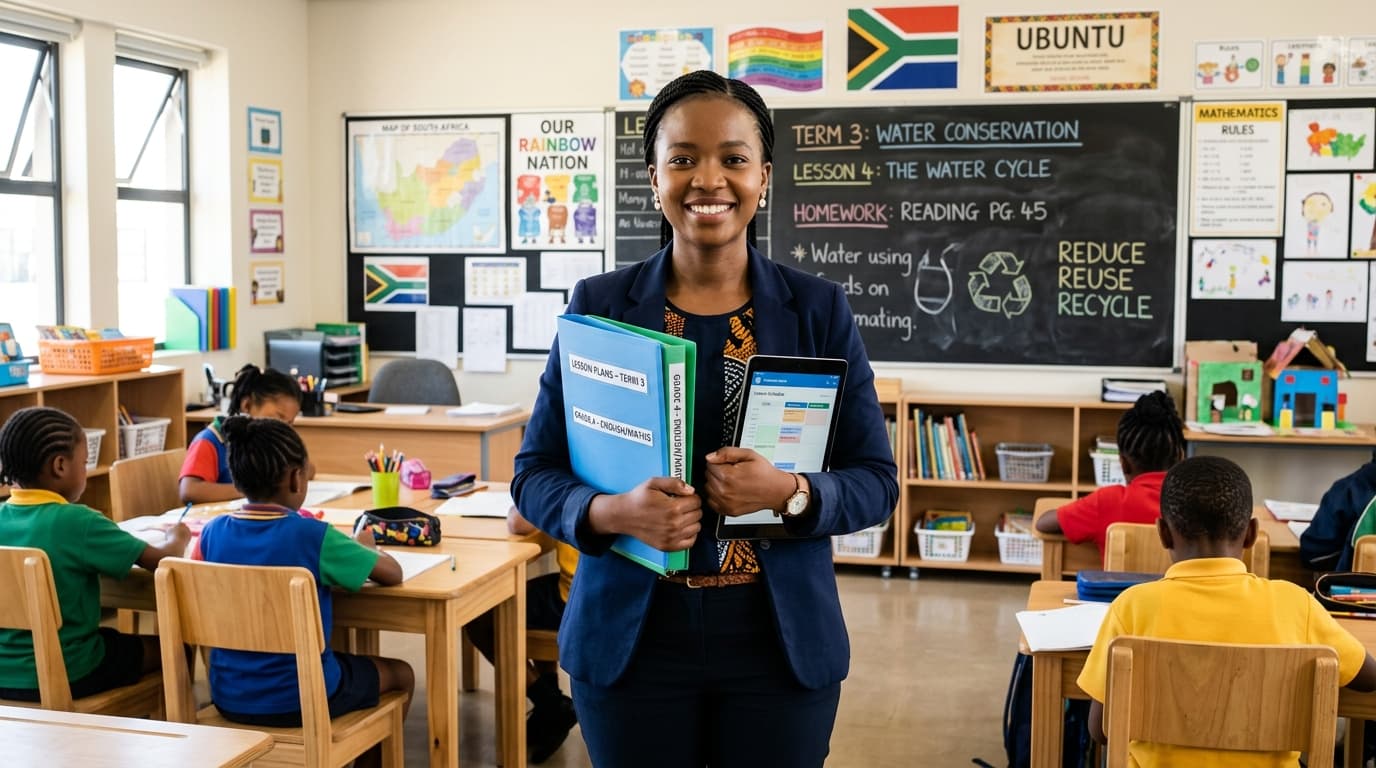
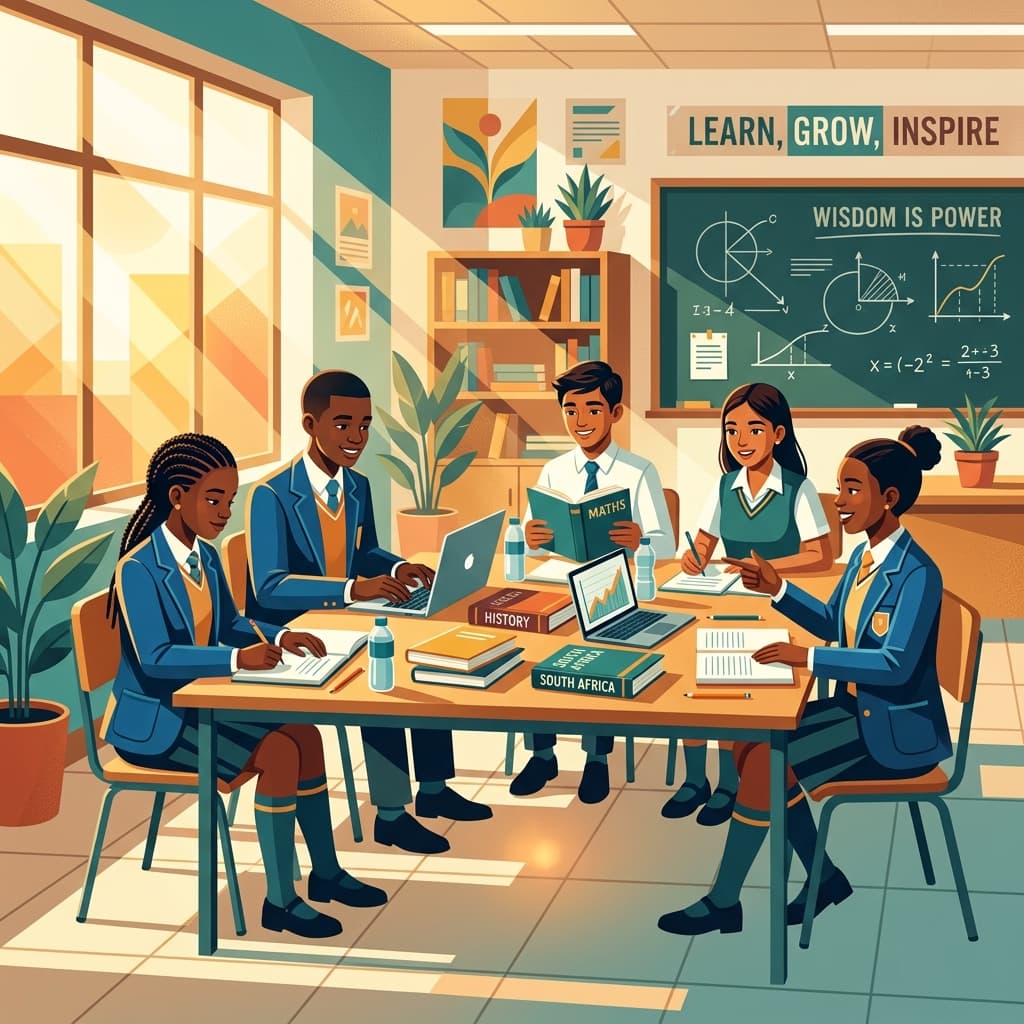
The Reality of the South African Classroom
In any South African staffroom, from the bustling urban centres of Gauteng to the rural heartlands of the Eastern Cape, the conversation eventually turns to the same challenge: "How do we handle the fighting?"
As South African educators, we don’t teach in a vacuum. Our classrooms are microcosms of a broader society characterized by profound diversity, historical trauma, and significant socioeconomic stressors. When two learners clash over a borrowed ruler or a misinterpreted comment on WhatsApp, we aren't just seeing a playground spat. Often, we are seeing the manifestation of external pressures—load shedding frustrations, crowded transport, food insecurity, or the complex identity politics of a post-apartheid nation.
Managing conflict in our schools requires more than a "standard" disciplinary approach. It requires a strategy rooted in the South African philosophy of Ubuntu—the recognition that our humanity is intertwined. To manage conflict effectively, we must move beyond merely "stopping the noise" and toward "restoring the relationship."
Understanding the South African Context of Conflict
Before we can apply strategies, we must understand the "why" behind the "what." In the South African context, conflict frequently stems from three specific areas:
- Communication Barriers: With 11 official languages, nuances are often lost in translation. A learner speaking their second or third language may come across as aggressive when they are merely frustrated, leading to unnecessary escalation.
- Socioeconomic Stress: We cannot ignore the "hidden curriculum" of poverty. A learner who hasn't eaten breakfast or who walked three kilometers to school is naturally more reactive.
- The Digital Divide and Cyberbullying: Despite our challenges, South African youth are highly connected. Conflict that starts on TikTok or WhatsApp groups on a Sunday night invariably explodes in the corridors on Monday morning.
Under the Curriculum and Assessment Policy Statement (CAPS), particularly within Life Orientation (LO) and Life Skills, we are mandated to teach "Social and Environmental Responsibility" and "Interpersonal Relationships." This means that handling conflict isn't a distraction from teaching—it is teaching.
Immediate Intervention: The "Heat of the Moment" Strategies
When a confrontation occurs—whether it’s a shouting match in Grade 4 or a tense standoff in a Grade 11 History period—the teacher’s primary role is de-escalation.
The Low-and-Slow Approach
When learners raise their voices, our natural instinct is to shout over them to assert authority. In the South African context, where many learners may have negative experiences with authority figures, this often triggers a "fight or flight" response. Instead, use the "Low-and-Slow" technique: lower your volume and slow your speech. This forces the learners to quieten down to hear you and subconsciously signals that the environment is safe.
The "Cooling-Off" Period and the Three-Breath Rule
Never attempt to resolve a conflict while the learners are in a state of high emotional arousal. In many of our overcrowded schools, finding a private space is difficult. However, simply asking the involved parties to sit at opposite ends of the room for ten minutes before speaking is vital. Encourage them to use the "Three-Breath Rule"—three deep, conscious breaths—to move from their "reptilian brain" (aggression) back to their "prefrontal cortex" (reasoning).
Neutral Ground and Physical Positioning
Avoid standing over the learners. If possible, sit with them at a desk or eye level. In our culture, body language speaks volumes. Standing with crossed arms can be perceived as confrontational. An open, seated posture invites dialogue.
The Restorative Justice Framework
South Africa has been a global pioneer in restorative justice through the Truth and Reconciliation Commission. We can bring this same spirit into our schools. Rather than a purely punitive system (detention, suspension), which often fails to change behavior, restorative justice focuses on repairing the harm.
The Five Restorative Questions
When the learners have calmed down, facilitate a conversation using these five questions. Avoid asking "Why did you do that?" as it usually leads to defensiveness or "I don't know." Instead, ask:
- What happened? (Get the story from both sides without interruption).
- What were you thinking at the time? (Explores the internal state).
- How have you felt since then? (Builds empathy).
- Who has been affected by what you did? (Broadens the perspective to the class/community).
- What do you think needs to happen to make things right? (Empowers the learners to find a solution).
This approach aligns perfectly with the CAPS focus on "Constitutional Rights and Responsibilities." It teaches learners that their actions have a ripple effect on their community.
Leveraging Peer Mediation: The Power of the "Village"
Lesson Planner
Generate comprehensive, CAPS-aligned lesson plans in seconds.
In many South African cultures, the elders or a council of peers play a role in dispute resolution. We can mirror this by establishing a Peer Mediation Program.
Training "Peace Marshals"
Identify natural leaders in your classroom—not just the "top achievers," but those who have social influence. Train them in basic active listening skills. When a minor conflict arises (e.g., a disagreement over a game or a seat), these Peace Marshals can step in before the teacher needs to. This reduces the burden on the educator and builds leadership skills that are essential for the South African workforce.
The "Circle Way"
Once a week, perhaps during a Life Orientation period, use the "Circle Way." Arrange the desks in a circle. This physical shift breaks the traditional hierarchy. Use this time to discuss general tensions in the class before they become specific conflicts. This proactive approach builds the "social capital" necessary to weather future storms.
Addressing Bullying and the South African Schools Act (SASA)
It is crucial to distinguish between a "conflict" (a disagreement between equals) and "bullying" (a systematic abuse of power).
Under the South African Schools Act (SASA) and the Protection of Personal Information Act (POPI), we have a legal obligation to provide a safe environment. When conflict crosses the line into bullying—especially racial, homophobic, or xenophobic bullying—the strategy must shift.
- Documentation: Keep a clear, objective log of incidents. This is vital if the School Governing Body (SGB) or the District-Based Support Team (DBST) needs to become involved.
- Safety First: In cases of bullying, do not use mediation. Mediation assumes a balance of power that does not exist in a bullying dynamic. Instead, follow the school's Code of Conduct strictly, while providing counseling support to the victim.
Involving Parents and the Community: The "Ubuntu" Connection
In South Africa, the school is often the heart of the community. When conflict is persistent, it is time to call on the "village."
The "Tea and Tensions" Meeting
Instead of a formal "disciplinary hearing" which can feel intimidating for parents, invite them for a "collaborative meeting." Use the term Lekgotla—a meeting to discuss important matters. Framing the meeting as "How can we together help your child succeed?" rather than "Your child is in trouble" changes the entire dynamic.
Cultural Intelligence
Be mindful of cultural protocols. In many South African cultures, it is a sign of respect for a child not to look an adult in the eye when being scolded. An uninformed teacher might interpret this as "sullenness" or "guilt," which escalates the conflict. Understanding these nuances is key to fair resolution.
The Teacher’s Wellbeing: Managing Your Own Response
You cannot pour from an empty cup. South African teachers face some of the highest stress levels in the world. Conflict is draining.
Recognising Counter-Transference
Sometimes, a learner’s behavior triggers our own frustrations. If you find yourself becoming disproportionately angry, take a moment. Use the "Step Back" technique—physically take one step back to create a boundary between your emotions and the situation.
Professional Learning Communities (PLCs)
Don't suffer in silence. Use your staff meetings or informal tea breaks to share "Conflict Wins." Discussing what worked in Grade 9B can help a struggling colleague in Grade 9C. This collective teacher efficacy is one of the strongest predictors of a calm school environment.
Conclusion: Turning Friction into Growth
Conflict in the South African classroom is inevitable, but it is not necessarily negative. If handled with empathy, structure, and a restorative mindset, a classroom conflict can be the most profound lesson a learner receives all year.
By using the CAPS framework as our guide and the spirit of Ubuntu as our compass, we can transform our classrooms from sites of friction into laboratories of peace. We are not just teaching Mathematics or English; we are teaching the next generation of South Africans how to live together in a complex, beautiful, and sometimes divided world.
Every conflict resolved is a stitch in the fabric of a stronger nation. Keep going, Teacher. Your work in these quiet moments of mediation is what truly builds our future.
References for Further Reading:
- Department of Basic Education: School Safety Framework.
- The South African Schools Act (Act 84 of 1996).
- Restorative Justice in Education (RJE) - South African perspectives.
Siyanda M.
Dedicated to empowering South African teachers through modern AI strategies, research-backed pedagogy, and policy insights.