The Reality of the Chalkboard Trenches
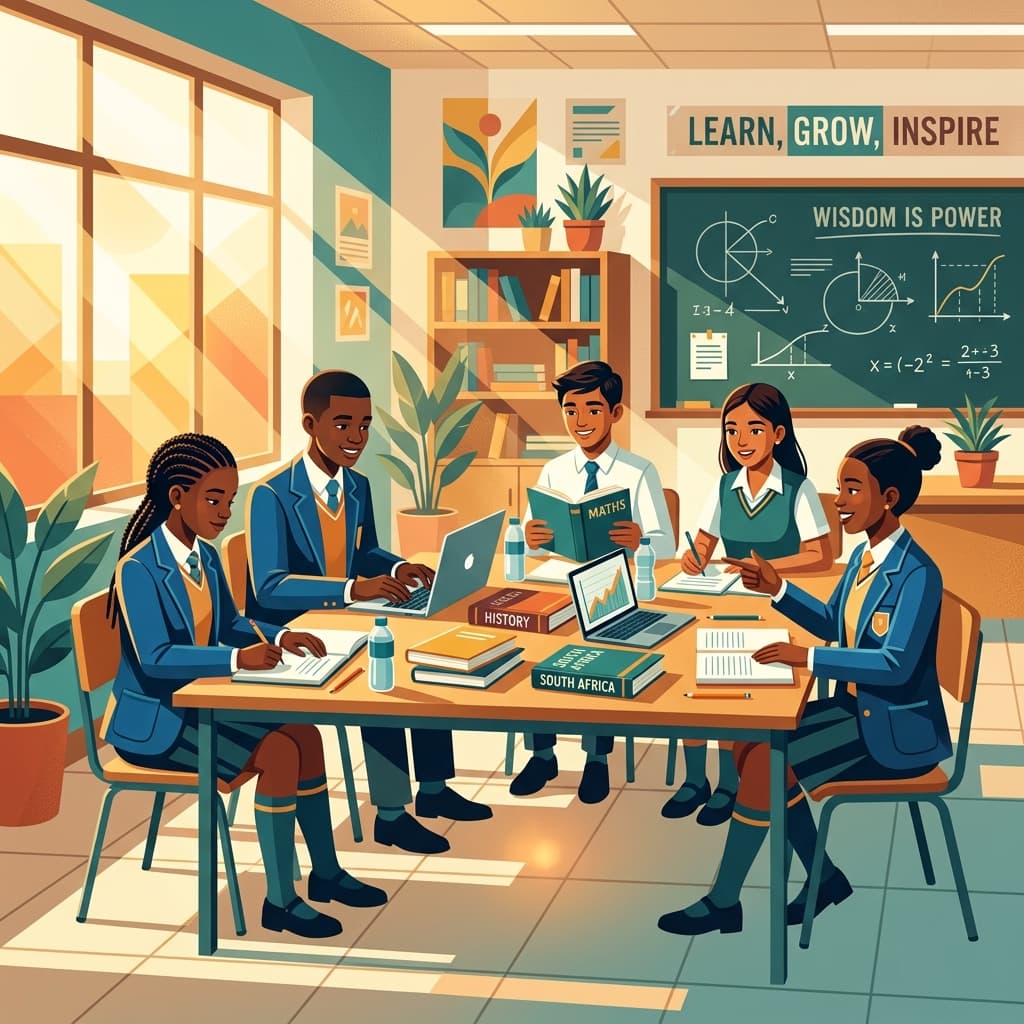
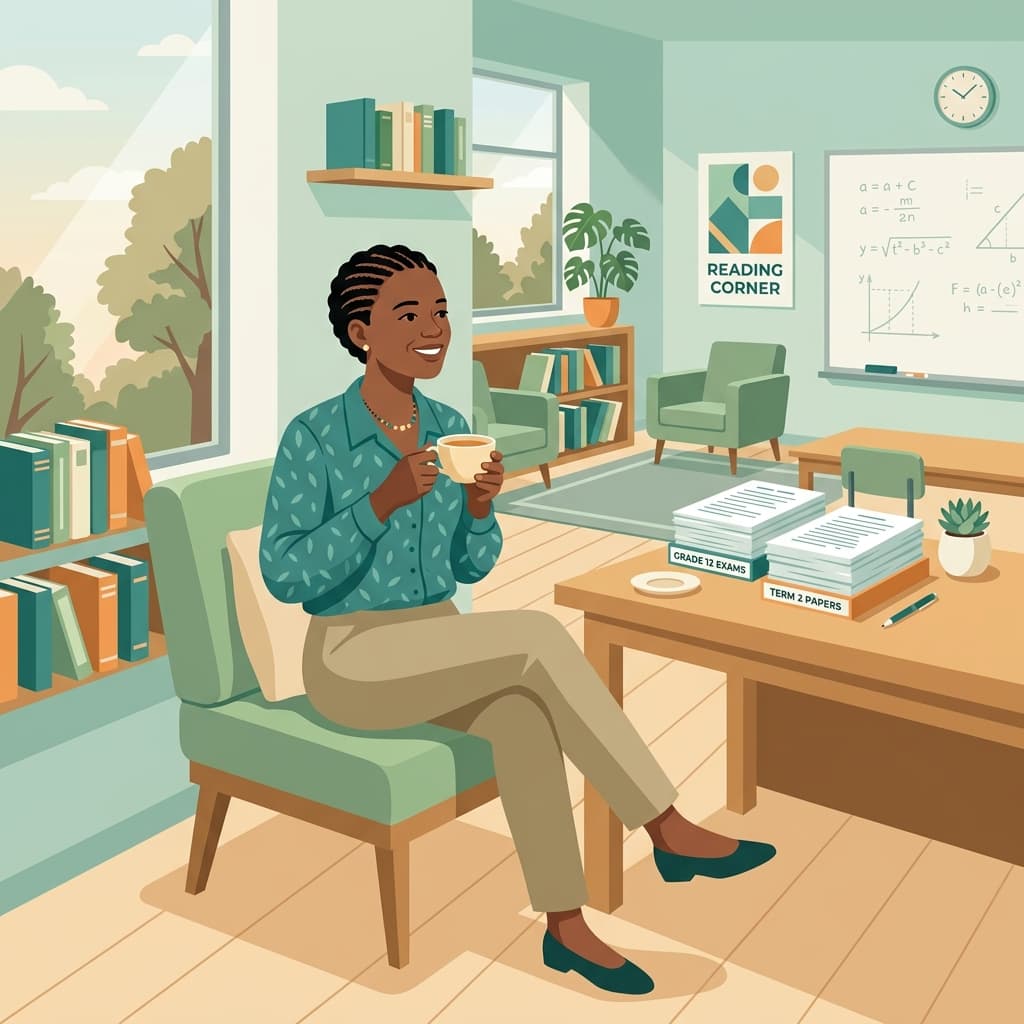
If you are reading this in a quiet staffroom during a free period, or perhaps late at night after marking a mountain of Grade 9 SBA (School-Based Assessment) tasks, know this: you are more than just a delivery mechanism for the CAPS curriculum.
In South Africa, teaching is not merely a profession; it is a form of nation-building that often borders on the heroic. We deal with overcrowded classrooms, the unpredictable rhythm of load shedding affecting our lesson prep, the pressure of Department of Basic Education (DBE) moderation, and the heavy emotional weight of our learners' socio-economic realities.
For too long, "self-care" has been sold to educators as something aesthetic—a scented candle or a weekend away. But for a teacher in a bustling school in Gauteng or a rural school in the Eastern Cape, real self-care isn't a luxury; it’s a tactical necessity. It is about building a sustainable professional life that prevents burnout and keeps your passion for "Ubuntu" in education alive.
This guide moves beyond the clichés to offer practical, classroom-tested strategies that actually make a difference in the South African context.
Taming the Administrative Beast: CAPS-Focused Efficiency
One of the primary sources of teacher stress in South Africa is the sheer volume of administrative compliance. The "Paperwork Mountain" can feel insurmountable.
The 80/20 Rule of Marking
We often feel the need to provide exhaustive feedback on every single worksheet. However, the CAPS framework specifies which tasks are for formal assessment. For informal "classwork," shift your focus. Use peer-marking or "walking feedback" during class time. This not only reduces your take-home marking pile but provides learners with immediate correction, which is pedagogically more effective than a red-pen comment three weeks later.
Batching and "The Admin Hour"
The South African school day is fragmented. Between the bell, assembly, and extra-murals, we lose focus. Try to implement "Batching." Instead of filing one document every day, dedicate the final hour of your Friday afternoon—before the weekend "braai" spirit kicks in—strictly to filing and SACE (South African Council for Educators) point logging. By grouping similar tasks, you reduce the cognitive load of switching between "teaching mode" and "clerk mode."
Digital Hoarding vs. Digital Harmony
If your school has moved toward Google Classroom or MS Teams, use it to automate what you can. Create a "Master Resource Folder" for each term. South African teachers often reinvent the wheel every year. By curating a high-quality digital repository of past papers and memos, you save your future self dozens of hours during the frantic June and November exam seasons.
Establishing Digital Boundaries in a WhatsApp Culture
South Africa has one of the most active mobile-user populations in the world, and unfortunately, this has led to the "24/7 Teacher" phenomenon. Between SGB (School Governing Body) messages, parent WhatsApp groups, and learner queries, the boundary between home and school has dissolved.
The "Office Hours" Protocol
It is time to be radical with your availability. Your WhatsApp status should clearly state your professional hours: "Available for school queries between 07:30 and 15:30." After that, mute the groups. Research shows that "anticipatory stress"—the feeling that you might get a work message—is as damaging as the work itself.
Professionalizing Parent Communication
While it's important to be accessible, especially in communities where parents are deeply invested in their children’s progress, try to shift high-stakes conversations to official channels. If a parent sends a long, emotional message at 8:00 PM on a Tuesday, do not reply immediately. A standard "I have received your message and will address this during school hours tomorrow" creates a boundary that protects your evening peace.
Navigating the Load Shedding Blues
We cannot talk about teacher self-care in South Africa without mentioning the energy crisis. Nothing kills a well-prepared PowerPoint lesson faster than a sudden power cut.
The "Analog Backup" Kit
The stress of technology failing during an observation or a critical lesson is a major cortisol spike. Real self-care is having a "Low-Tech Emergency Box." This includes pre-printed sets of task cards, a battery-powered lantern for your desk, and a physical grade book. When the lights go out, you don't need to panic; you simply pivot. This sense of preparedness reduces "techno-stress" significantly.
Protecting Your Prep Time
When load shedding hits your home during your evening prep time, don't force it by candlelight. It strains your eyes and your patience. Advocate for "Power-Flex" hours at school—using the school’s generator or solar capacity to get all digital prep done before you leave the premises. Leave work at work, literally, because the lights might not be on at home.
Managing Secondary Trauma and Emotional Labor
Lesson Planner
Generate comprehensive, CAPS-aligned lesson plans in seconds.
South African teachers are often the first responders to the country’s social crises. We see the hunger, the neglect, and the trauma our learners carry.
The "Staffroom Sanctuary" vs. the "Vent-Trap"
The staffroom can be a double-edged sword. It’s either a place of support or a "moan-fest" that drains your remaining energy. Be intentional about who you sit with. Seek out the "radiators" (those who radiate warmth and solutions) rather than the "drains" (those who only complain about the Department).
Practical Debriefing
If you’ve dealt with a difficult pastoral issue—such as a learner disclosing a tough home situation—you cannot simply walk into your next period and teach the Pythagoras theorem as if nothing happened. Use a "transition ritual." It could be three deep breaths, a quick walk to the tuckshop, or a 2-minute "brain dump" in a private journal. Acknowledging the emotional weight prevents it from turning into "compassion fatigue."
Physical Resilience in the Classroom
Our schools are often built with hard floors and high ceilings, and we spend 6 to 8 hours on our feet. Physical discomfort is a silent thief of mental health.
Ergonomics of the Chalkboard
Invest in the best shoes you can afford. This isn't vanity; it’s musculoskeletal self-care. Furthermore, rethink your classroom layout. If you are constantly leaning over low desks to help learners, you will develop back pain. Use a "teacher stool" or create a "feedback station" where learners come to you. This preserves your energy and your posture.
Hydration and Nutrition
In the rush of a 30-minute break where you’re also on playground duty, teachers often forget to eat or drink. Dehydration leads to "brain fog" and irritability. Keep a 1-litre water bottle on your desk as a visual cue. Avoid the temptation to live off staffroom biscuits and instant coffee; the sugar crash at 2:00 PM during the last period makes classroom management twice as hard.
Reclaiming Your Identity Beyond the "Teacher" Label
In many South African communities, the "Onderwyser" or "Mestra" is a pillar of society. While this is an honor, it can be a cage.
Cultivate a Non-Teaching Hobby
What do you do that has nothing to do with CAPS, SACE, or school? Whether it’s joining a local parkrun, learning a new language, or urban gardening, you need an identity that doesn't involve marking rubrics. This "psychological detachment" is proven to be the most effective way to recover from work-related stress.
The Power of "No"
South African schools rely heavily on the "extra-mural" system. While coaching the U13 rugby team or leading the choir is rewarding, you cannot do everything. Learn to say "No" to the third committee invitation this term. A "No" to an unnecessary meeting is a "Yes" to your own mental health and your family.
The Long Game: Financial and Career Wellness
Self-care is also about security. The financial stress of a teaching salary in a rising cost-of-living environment is a significant burden.
Maximize Your Benefits
Are you fully utilizing your GEMS (Government Employees Medical Scheme) benefits? Many teachers miss out on wellness screenings and mental health days because they don't know their policy. Real self-care is taking that "Wellness Day" to see a therapist or a doctor before you have a breakdown.
Professional Growth as Self-Care
Sometimes, burnout comes from feeling stagnant. Engaging in meaningful professional development (CPD) can reignite your passion. Look for courses that actually interest you, not just what's mandatory. When you feel like an expert in your field, your confidence rises, and your stress levels drop.
Conclusion: A Call to Radical Professionalism
We often hear the phrase, "Teaching is a work of heart." While true, a heart can only give so much before it needs to be refilled. In the South African context, where we are often asked to do the impossible with very little, self-care is an act of professional rebellion.
By setting boundaries, streamlining your CAPS administration, and protecting your physical and emotional energy, you aren't being "lazy"—you are ensuring that you can stay in the classroom for the next decade rather than burning out in the next two years.
Tomorrow morning, when that first bell rings, remember: the most important resource in your classroom isn’t the textbook, the smartboard, or the stationery. It is you. Take care of the teacher, and the teaching will take care of itself.
Stay sharp, stay inspired, and remember that you are making a difference, one period at a time. Sharp-sharp, Colleague.
Siyanda M.
Dedicated to empowering South African teachers through modern AI strategies, research-backed pedagogy, and policy insights.