Welcome to the Frontlines of the Future
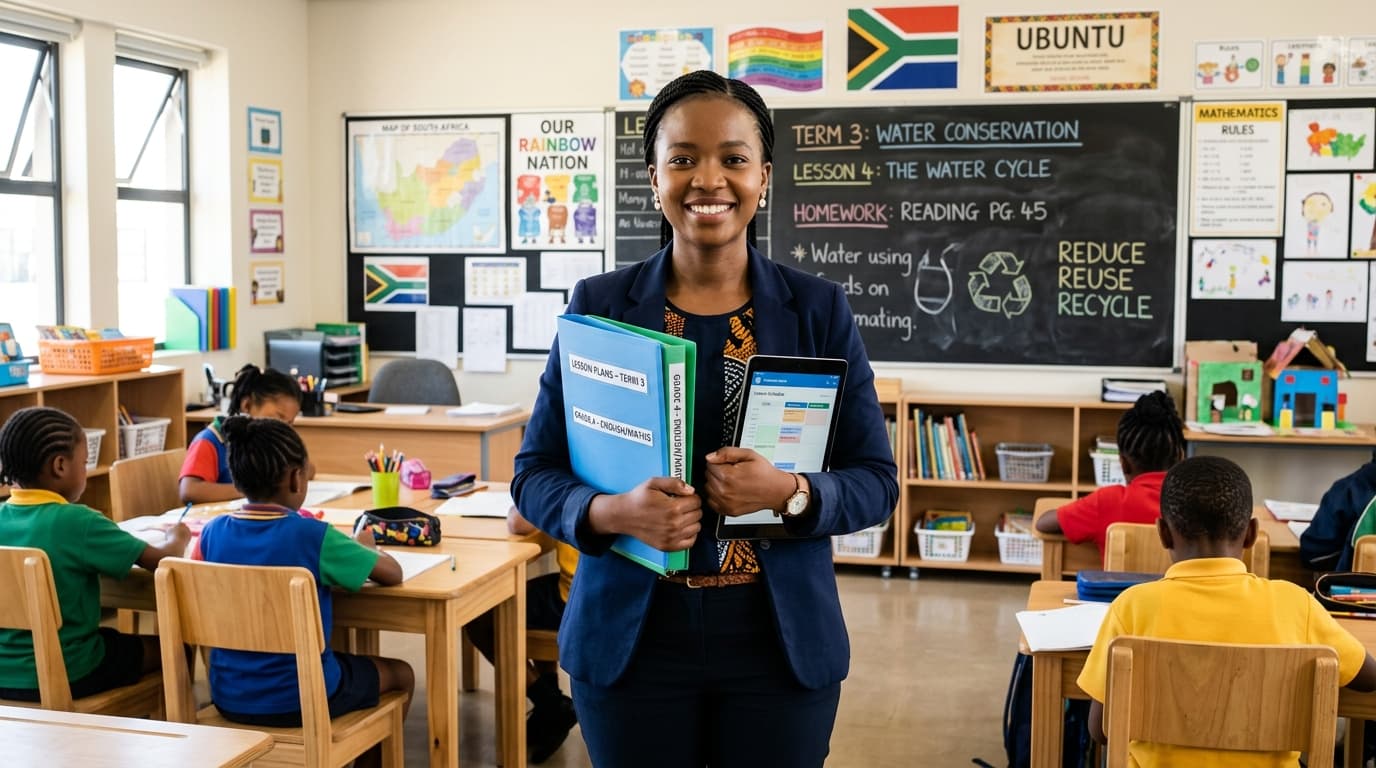
Walking into your first classroom as a newly qualified teacher (NQT) in South Africa is an experience that sits somewhere between pure adrenaline and absolute terror. You have spent years studying the theories of Piaget and Vygotsky, but as you stand before forty—or perhaps sixty—expectant faces in a classroom in Polokwane, Gqeberha, or Soweto, those theories can feel worlds away.
The South African context is uniquely challenging and incredibly rewarding. We operate in a system of vast disparities, ranging from high-resource independent schools to rural schools struggling with basic infrastructure. However, regardless of where your first posting is, certain universal truths apply to the South African "chalkface."
This guide is designed to move beyond the textbook. It is a practical roadmap to help you survive your first term, master the administrative beast, and, most importantly, make a lasting impact on the lives of your learners.
1. Mastering the CAPS Maze and the ATPs
In South Africa, the Curriculum and Assessment Policy Statement (CAPS) is your bible. However, the true "boss level" of curriculum management is the Annual Teaching Plan (ATP).
Many new teachers make the mistake of treating the ATP as a suggestion. In reality, the Department of Basic Education (DBE) monitors these closely. If you fall behind in Term 1, the pressure in Term 3 becomes unbearable.
Strategic Planning for the ATP
Don't just look at the week ahead; look at the entire term. Identify the "heavy" sections that require more cognitive load from learners and plan to tackle those when energy levels are high (usually mid-morning).
The Portfolio of Evidence (PoE)
Start your teacher’s file on day one. A South African teacher’s life is governed by moderation. Whether it is internal moderation by your HOD or external moderation by Umalusi or the DBE, having a meticulously organized PoE is your best defense. Document everything: your lesson plans, your formal assessments, and even your interventions for struggling learners.
2. Classroom Management: Discipline with Dignity
One of the biggest shocks for new South African teachers is the breakdown of discipline in some environments. Since the abolition of corporal punishment, many teachers feel they lack "teeth." However, effective management in our context isn't about fear; it’s about structure and relationship-building.
Set the Tone in the First 15 Minutes
The first 15 minutes of your first day are the most important minutes of your career. Establish your "Non-Negotiables." In many South African schools, learners respond well to firm, consistent boundaries combined with genuine care. If you say a cell phone will be confiscated if seen, you must confiscate it the first time it appears. Consistency is the only way to earn respect.
Routine is the Antidote to Chaos
In overcrowded classrooms, movement is the enemy of order. Establish routines for everything: how books are handed out, how learners enter the room, and how they ask questions. In a class of 50, a simple 2-minute delay in handing out papers can result in 10 minutes of lost teaching time.
The "Ubuntu" Approach to Discipline
Understand the socio-economic context of your learners. A child who hasn't eaten or who walked 5km to school might not be "lazy"—they might be exhausted. Use a restorative justice approach where possible. Talk to learners privately rather than shaming them in front of their peers. In our culture, "respect" is a two-way street.
3. Navigating the Language Barrier
South Africa has 12 official languages, and the reality is that many of your learners will be learning in their Second (or even Third) Language—usually English or Afrikaans as the Language of Learning and Teaching (LoLT).
Code-Switching as a Tool
While the DBE emphasizes the importance of the LoLT, do not be afraid of strategic code-switching if you are proficient in the learners' home language. If a complex scientific concept in CAPS is not landing in English, explaining it briefly in isiZulu or Setswana can be the "aha!" moment the learner needs.
Scaffolding Literacy
Every teacher in South Africa is a language teacher. Whether you teach Math, Geography, or Life Sciences, you must explicitly teach the vocabulary of your subject. Don't assume they know what "evaluate" or "identify" means in an exam context.
4. The Admin Beast: SA-SAMS and Beyond
If there is one thing that catches new teachers off guard, it is the volume of administrative work. The South African School Administration and Management System (SA-SAMS) is the backbone of school data.
Lesson Planner
Generate comprehensive, CAPS-aligned lesson plans in seconds.
Don't Let the Marks Pile Up
The end of the term is a frantic time of reporting. Enter your marks into SA-SAMS or your school’s management system as soon as an assessment is graded. Waiting until the final week of the term to enter 200 marks for three different grades is a recipe for burnout and errors.
The IQMS/QMS Reality
The Integrated Quality Management System (IQMS) or the updated Quality Management System (QMS) is how you are evaluated for pay progression. Do not view this as a box-ticking exercise. Use your peer observations to actually learn. Ask a veteran teacher to sit in your class and give you "the real talk" about your pacing and engagement.
5. Building Professional Relationships
A school is a microcosm of South African society. You will deal with a diverse School Governing Body (SGB), stressed parents, and colleagues who have been in the game for 30 years.
Finding a Mentor
Seek out the "Quiet Legend" in the staffroom—the teacher whose learners are always quiet and whose results are always good. They carry institutional knowledge that no university module could provide. They know how to handle the local circuit office, how to fix the photocopier when it jams, and how to talk to the most difficult parents in the community.
Managing Parents and the SGB
In many South African communities, the school is the heart of the village or suburb. Engage with parents early. A proactive phone call to a parent about a learner’s good performance builds a bridge of trust that will be vital when you later have to call them about a disciplinary issue.
6. Resourcefulness in the Absence of Resources
You may find yourself in a school without a smartboard, without high-speed internet, or even without enough textbooks for every child. This is where the South African teacher's spirit of "boer maak 'n plan" (finding a way) comes in.
The Digital Pivot on a Budget
Even in low-resource schools, many learners (or their parents) have access to WhatsApp. Use WhatsApp groups to share PDF summaries or voice-note explanations. Use free platforms like Siyavula for Math and Science or the DBE’s own "Cloud" resources.
Physical Resourcefulness
If you lack lab equipment, look for everyday substitutes. Vinegar and baking soda from the local spaza shop can demonstrate chemical reactions just as well as expensive lab chemicals. Use old newspapers for art projects or map-work. The South African classroom rewards the creative.
7. Protecting Your Mental Health
The "Teacher Burnout" rate in South Africa is alarmingly high. Between the emotional weight of our learners' social challenges (poverty, child-headed households, violence) and the pressure of National Senior Certificate (NSC) results, it is easy to lose yourself.
Leave the Marking at School (Sometimes)
Establish boundaries. If you spend every Sunday marking, you will resent your profession by June. Design assessments that are easier to grade (using rubrics or structured questions) without sacrificing rigor.
Secondary Trauma is Real
South African teachers often act as social workers, psychologists, and nurses. When a learner confides in you about trauma at home, it stays with you. Understand that you are a teacher, not a savior. Know when to refer a child to the school's pastoral care team or a local NGO.
8. The First Week Survival Checklist
To ensure you hit the ground running, here is a practical checklist for your first week:
- SACE Registration: Ensure your South African Council for Educators (SACE) registration is up to date. You cannot legally teach without it.
- Know the Bell Times: It sounds simple, but nothing undermines a new teacher like being lost when the bell rings.
- The Learner Attendance Register: This is a legal document. Mark it every single day, without fail, in ink.
- Seating Plan: Don't let learners choose their seats on day one. Assign them. It asserts your authority over the physical space immediately.
- Get the ATP: Ensure you have the latest version of the ATP for your subjects.
Conclusion: The Most Important Room in the Country
Teaching in South Africa is not just a job; it is an act of nation-building. Every time you explain a concept, every time you encourage a struggling learner, and every time you hold a line on discipline, you are helping to shape the trajectory of this country.
The first year will be hard. There will be days when you cry in your car, and days when the administrative load feels like a mountain. But there will also be that moment when a learner who has struggled for weeks finally understands a concept, or when a "troublemaker" tells you that your class is the only place they feel safe.
Stay curious, stay resilient, and remember: you were chosen for this profession because you have the capacity to lead. Welcome to the classroom. Our future is in your hands.
Siyanda M.
Dedicated to empowering South African teachers through modern AI strategies, research-backed pedagogy, and policy insights.