The Evolving Role of the Educator in an AI-Driven South African School: Case Study 20
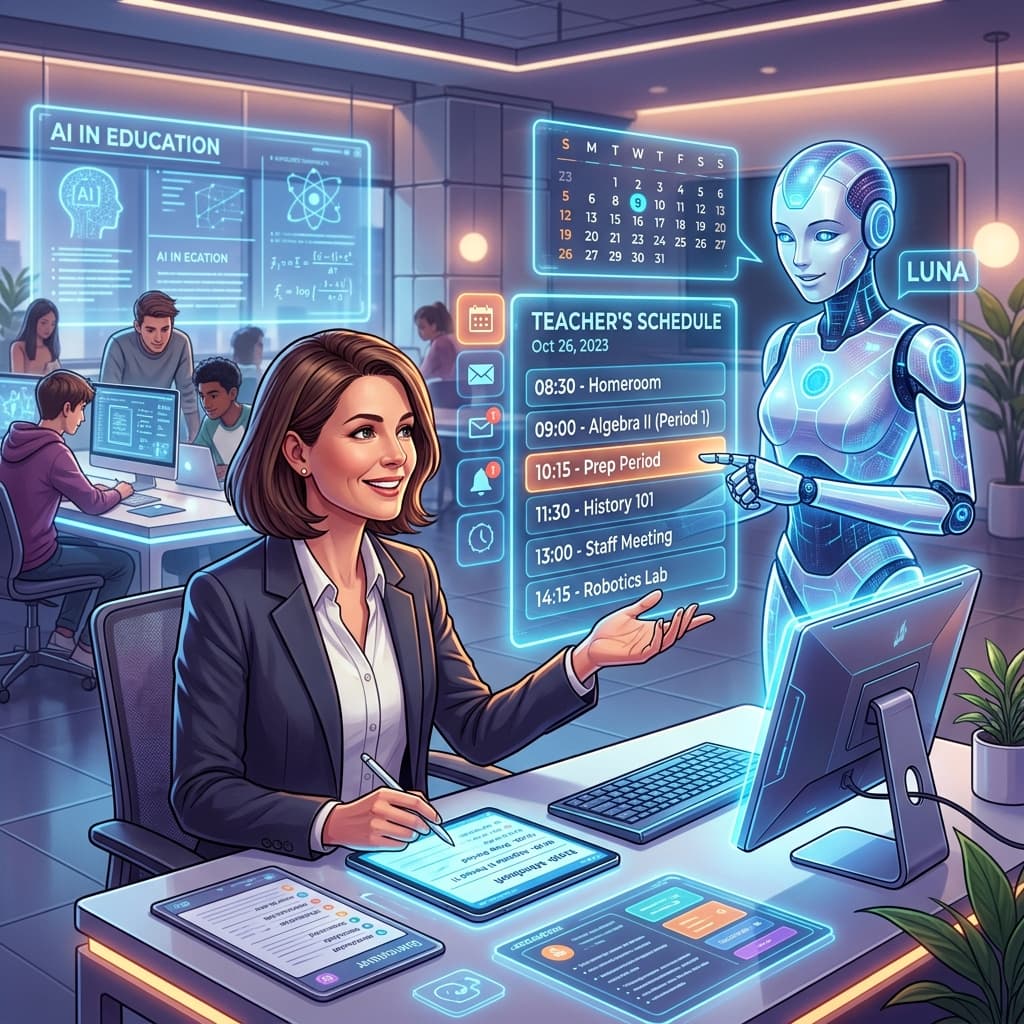
The landscape of education is shifting. Across South Africa, from bustling urban centres to the most remote rural villages, the whispers of Artificial Intelligence (AI) are growing louder, promising to reshape how we teach and how our learners learn. As South African educators navigating the complexities of the CAPS curriculum and the unique socio-economic realities of our classrooms, the advent of AI presents both a challenge and an unparalleled opportunity. This article, through the lens of "Case Study 20" – a hypothetical but representative exploration of an AI-integrated South African school – aims to unpack the evolving role of the educator in this new era. We'll delve into practical strategies, curriculum alignment, and the essential human touch that remains irreplaceable.
The very foundation of our teaching philosophy in South Africa is built on a learner-centred approach, fostering critical thinking, problem-solving, and a deep understanding of our diverse contexts. The CAPS (Curriculum and Assessment Policy Statement) provides a robust framework, emphasizing not just content mastery but also the development of skills, values, and an appreciation for our national identity. How does AI fit into this? It's not about replacing the teacher; it's about augmenting our capabilities, freeing us from administrative burdens, and personalising learning experiences to an unprecedented degree.
Case Study 20: A Glimpse into the AI-Integrated Classroom
Imagine "Ubuntu High School" (a pseudonym for our case study), a school that has strategically integrated AI tools into its pedagogical practices. Here, AI isn't a standalone gimmick but a carefully selected suite of tools designed to support both educators and learners.
Personalised Learning Paths: One of the most significant impacts of AI is its ability to tailor learning. In Grade 5 Mathematics, for instance, an AI-powered platform can identify individual learner strengths and weaknesses. It can then generate differentiated practice exercises, offer targeted explanations, and even suggest supplementary resources that align with the CAPS Grade 5 Mathematics content descriptors. For the educator, this means less time spent on creating endless worksheets and more time engaging with learners who require deeper conceptual support or enrichment.
Automated Assessment and Feedback: The sheer volume of marking can be overwhelming. AI tools can automate the grading of objective assessments (multiple-choice questions, fill-in-the-blanks) in subjects like Natural Sciences or Social Sciences. More sophisticated AI can even provide preliminary feedback on written assignments, highlighting areas for improvement in grammar, spelling, and sentence structure. This allows teachers to focus their valuable time on providing in-depth, qualitative feedback on critical thinking, argumentation, and creativity – the very essence of higher-order learning as outlined in CAPS.
Data-Driven Insights: AI excels at processing vast amounts of data. At Ubuntu High, AI dashboards provide educators with real-time insights into learner progress, class-wide trends, and potential learning gaps. This data is not intended to label learners but to inform pedagogical decisions. A teacher observing a consistent struggle with a specific concept in Grade 10 English across several learners can then proactively adjust their teaching strategy, perhaps incorporating a different approach or providing targeted remedial activities, all while ensuring alignment with the CAPS Grade 10 English learning outcomes.
Enhanced Content Creation and Resource Curation: AI can assist educators in generating diverse teaching materials. Need a new example to illustrate a concept in Grade 7 Afrikaans? An AI can suggest scenarios or vocabulary. Struggling to find age-appropriate resources for a Grade 12 History project on South African apartheid? AI can scour the internet, identify relevant primary and secondary sources, and even help summarise key information, saving educators precious preparation time.
The Educator's Role: Shifting from Sage on the Stage to Guide on the Side (and So Much More)
In an AI-driven school, the educator’s role evolves, becoming more nuanced and profoundly human.
The Architect of Learning Experiences: While AI can deliver content, it's the educator who designs the overall learning journey. This involves:
- Curriculum Integration: Understanding how AI tools can seamlessly integrate with CAPS objectives. For example, using an AI language learning tool to supplement Grade 4 isiXhosa lessons, focusing on conversational practice, while the teacher leads discussions on cultural nuances and literature.
- Pedagogical Design: Crafting learning activities that leverage AI for personalised practice, but also incorporate collaborative projects, critical discussions, and hands-on experiences that AI cannot replicate.
- Differentiated Instruction: Using AI-generated data to inform personalised interventions, ensuring every learner, regardless of their starting point, is challenged and supported.
The Facilitator of Critical Thinking and Digital Literacy: AI can provide answers, but the educator's role is to foster the ability to ask the right questions and to critically evaluate the information provided. This involves:
- Teaching AI Literacy: Educating learners about how AI works, its limitations, and the importance of verifying AI-generated information. This is crucial in a South African context where misinformation can have significant social consequences.
- Promoting Higher-Order Thinking: Designing tasks that require learners to analyse, synthesise, and evaluate, pushing beyond simple recall that AI can easily provide. For example, instead of asking AI to summarise a historical event, asking learners to critically analyse different AI-generated summaries for bias.
- Ethical Considerations: Guiding discussions on the ethical implications of AI, data privacy, and the responsible use of technology, aligning with the values embedded in the CAPS curriculum.
The Cultivator of Social-Emotional Learning (SEL) and Human Connection: This is where the educator’s role is truly irreplaceable. AI can deliver personalized learning content, but it cannot replicate the empathy, encouragement, and mentorship that a human teacher provides.
- Building Relationships: Fostering a safe and supportive classroom environment where learners feel valued and connected. The teacher's ability to understand a learner's emotional state, offer encouragement during challenges, and celebrate successes is paramount.
- Developing Collaboration and Communication Skills: Designing group activities where learners must work together, negotiate, and communicate effectively, skills that are crucial for success in any future career and vital for a cohesive South African society.
- Instilling Values: Reinforcing the values of respect, responsibility, and community that are central to our South African identity and the CAPS curriculum. AI can present facts, but it's the educator who models and instils these values through daily interactions.
The Lifelong Learner and Adaptor: The rapid evolution of AI demands that educators themselves become lifelong learners.
- Professional Development: Actively seeking out training and resources on AI tools and their pedagogical applications. This might involve online courses, workshops, or peer learning networks.
- Experimentation and Innovation: Embracing a growth mindset, being willing to experiment with new AI tools and adapt teaching strategies based on what works best for their learners within the South African context.
Practical Steps for South African Educators:
- Start Small: You don't need to overhaul your entire classroom overnight. Identify one area where AI could offer significant support, such as personalised practice in a specific subject or automated feedback on basic tasks.
- Leverage Existing Free Tools: Many excellent AI tools are available for free or at low cost. Explore platforms for content generation, basic assessment feedback, or educational games that align with CAPS objectives.
- Collaborate with Colleagues: Share experiences, best practices, and challenges with fellow educators. A collective approach to AI integration can be incredibly powerful.
- Focus on AI as a Tool, Not a Replacement: Remember that AI is designed to augment your teaching, not to substitute your expertise, your empathy, or your understanding of your learners' unique contexts.
- Prioritise Digital Safety and Ethics: Educate yourself and your learners about responsible AI use, data privacy, and the potential for bias in AI systems.
- Connect AI to CAPS: Always ensure that any AI tool or strategy you implement directly supports the learning objectives and assessment requirements of the CAPS curriculum for your specific grade level. For instance, when using an AI writing assistant for Grade 9 English, ensure the focus remains on developing the learner's own writing skills and understanding of literary devices as per the CAPS document, rather than simply producing polished text.
The Future is Collaborative
The integration of AI in South African schools is not a distant fantasy; it's a present reality that is rapidly accelerating. Case Study 20 illustrates that in this evolving landscape, the educator remains at the heart of the learning process. By embracing AI as a powerful ally, focusing on its capacity to personalize learning and streamline administrative tasks, while simultaneously doubling down on the irreplaceable human elements of teaching – mentorship, critical thinking facilitation, and social-emotional development – we can empower our learners for a future that is both technologically advanced and deeply human. The South African educator, with their unique understanding of our context and their unwavering commitment to learner success, is perfectly positioned to lead this transformative journey.
Siyanda M.
Dedicated to empowering South African teachers through modern AI strategies, research-backed pedagogy, and policy insights.