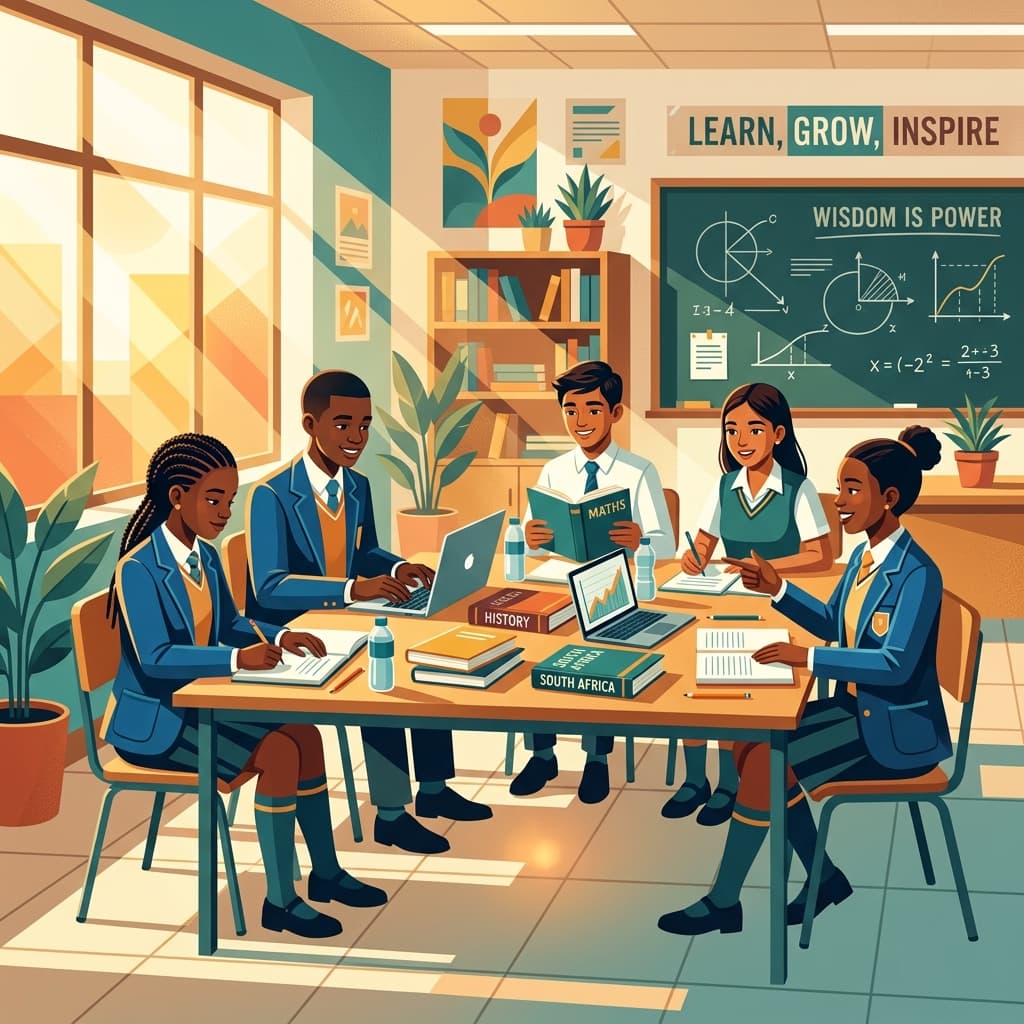
Navigating the dynamic landscape of education is a hallmark of our profession. As South African teachers, we are continuously adapting, innovating, and refining our approaches to best serve our learners. The National Curriculum and Assessment Policy Statement (CAPS) provides our foundational framework, and like any living document, it undergoes periodic reviews and refinements to ensure it remains relevant, effective, and responsive to the evolving needs of our society and global educational trends.
It's entirely understandable to feel a mix of anticipation and perhaps a touch of apprehension when news of "curriculum changes" circulates. Our classrooms are busy spaces, and every shift, no matter how subtle, requires thoughtful consideration and implementation. This post aims to demystify recent CAPS curriculum changes and re-emphases, offering clarity on what they truly mean for you, our dedicated educators, and how we can collectively embrace them to enrich the learning experience.
Understanding the Evolving CAPS Landscape: Key Shifts and Re-emphases
While there might not always be a single, dramatic overhaul, the CAPS curriculum is a framework that continuously evolves through policy updates, circulars, and heightened departmental focus areas. Recent discussions and directives have brought several key areas into sharper focus, shaping what we teach and how we assess.
Re-emphasised Foundational Skills: The Bedrock of Learning
One of the most significant and consistent re-emphases has been on strengthening foundational skills – particularly reading, writing, and arithmetic. This isn't a new concept, but rather an intensified call to action across all phases, from Foundation to Further Education and Training (FET).
Why the Focus? International and national assessments have highlighted persistent gaps in these core areas. Without strong foundational literacy and numeracy, learners struggle to access higher-order concepts across all subjects. The push is to ensure every learner has a solid launchpad for future learning and life.
What This Means for You:
- Foundation Phase: An even more rigorous, structured approach to phonics, sight words, reading comprehension, number sense, and basic operations. Daily, targeted intervention is crucial.
- Intermediate and Senior Phases: Integrating literacy and numeracy across all subjects. For example, a Natural Sciences teacher might explicitly teach how to interpret data from a graph (numeracy) or explain scientific concepts clearly in written form (literacy). A Social Sciences teacher could focus on critical reading of historical texts.
- FET Phase: Continuing to address reading comprehension of complex texts, academic writing skills, and mathematical reasoning within subject-specific contexts. It means not assuming these skills are fully developed, but rather scaffolding and reinforcing them.
Practical Example: In a Grade 6 English class, instead of just assigning a comprehension passage, dedicate time to explicitly teach strategies for identifying main ideas, inferring meaning from context, and summarising. For Mathematics, incorporate problem-solving tasks that require learners to explain their reasoning in written sentences, linking numeracy with literacy.
The Imperative of 21st-Century Skills
The world our learners will inherit is one of rapid change, technological advancement, and complex challenges. The CAPS curriculum, through its updates and explicit guidelines, places a greater emphasis on cultivating 21st-century skills such as critical thinking, creativity, communication, and collaboration.
Why the Focus? These skills are no longer "nice-to-haves" but essential for personal success, active citizenship, and economic participation in the global arena. Our education system must equip learners to be adaptable, innovative, and effective problem-solvers.
What This Means for You:
- Shifting from Rote Learning: Less emphasis on memorisation for the sake of regurgitation, and more on understanding, application, and analysis.
- Fostering Critical Thinking: Designing activities that require learners to evaluate information, challenge assumptions, and form reasoned judgments.
- Nurturing Creativity: Providing opportunities for imaginative expression, divergent thinking, and innovative solutions – not just in Creative Arts, but across all subjects.
- Enhancing Communication: Encouraging learners to articulate their ideas clearly, both orally and in writing, and to listen actively.
- Promoting Collaboration: Implementing group projects and cooperative learning tasks that teach learners how to work effectively with others, negotiate, and share responsibility.
Practical Example: In a Grade 9 Technology class, instead of simply explaining different types of bridges, challenge groups of learners to design and build a model bridge using limited materials, capable of supporting a certain weight. This requires critical thinking, problem-solving, creativity in design, and collaboration within the group.
Digital Integration and ICT Literacy
The COVID-19 pandemic accelerated the realisation that digital literacy is a non-negotiable skill. While the curriculum has long recognised the importance of Information and Communication Technology (ICT), there's a renewed and urgent drive to integrate digital tools and foster digital citizenship across all subjects and phases.
Why the Focus? To bridge the digital divide, prepare learners for a technologically-driven future, and leverage digital tools to enhance teaching and learning.
What This Means for You:
- Beyond Basic Computer Skills: It's not just about teaching how to use a computer, but how to effectively use digital tools for research, creation, collaboration, and presentation.
- Integrating Technology Thoughtfully: Using projectors for visual aids, incorporating educational apps or websites, encouraging learners to conduct online research (with guidance on source evaluation), or using word processors for assignments.
- Teaching Digital Citizenship: Educating learners on online safety, responsible digital behaviour, and critical evaluation of online information.
- Coding and Robotics: In some phases, particularly Foundation and Intermediate, there's an increasing emphasis on introducing basic coding concepts and robotics to develop computational thinking and problem-solving skills from an early age.
Practical Example: For a Grade 7 History project on ancient civilisations, instead of a poster board, learners could be encouraged to create a short digital presentation, a podcast, or a simple webpage using free online tools, thereby integrating research, content creation, and digital presentation skills.
Holistic Learner Development and Well-being
CAPS has always advocated for holistic development, but recent discussions have put a stronger spotlight on learner well-being, emotional intelligence, and socio-emotional learning (SEL). This ties into the Life Skills and Life Orientation subjects, but its principles extend to the entire school environment.
Why the Focus? Acknowledging that academic success is intrinsically linked to a learner's emotional and social health. Addressing issues like mental health, resilience, empathy, and conflict resolution is vital for creating supportive learning environments.
What This Means for You:
- Creating a Safe and Inclusive Classroom: Fostering an environment where learners feel respected, heard, and safe to express themselves and make mistakes.
- Integrating SEL into Daily Interactions: Using teachable moments to discuss emotions, problem-solving, and conflict resolution.
- Promoting Empathy: Designing activities that encourage learners to understand different perspectives and develop compassion.
- Building Resilience: Helping learners develop coping mechanisms for challenges and setbacks.
- Collaboration with Support Structures: Working closely with school counsellors, social workers, and parents to support learners in need.
Practical Example: During a routine check-in, acknowledge a learner's frustration with a difficult task. Instead of just pushing through, take a moment to discuss strategies for managing frustration, breaking down complex tasks, and the importance of perseverance. This is a subtle yet powerful integration of SEL.
Why These Changes Now? The Rationale Behind the Shifts
These shifts are not arbitrary. They are driven by several crucial factors aimed at strengthening our education system:
- Addressing Learning Gaps: Data from national and international assessments (e.g., TIMSS, PIRLS) consistently points to areas where our learners struggle, particularly in foundational literacy and numeracy. The re-emphasis is a direct response to this.
- Preparing for the Future of Work: The global economy demands individuals who are adaptable, critical thinkers, technologically proficient, and excellent collaborators. Our curriculum must evolve to meet these demands.
- Enhancing Equity and Access: By focusing on foundational skills and digital literacy, the aim is to provide all learners, regardless of their background, with the essential tools needed for success.
- Promoting Holistic Development: Recognising that academic achievement is only one facet of a well-rounded individual, and that socio-emotional skills are equally vital for life.
- Alignment with Global Best Practices: These trends are mirrored in progressive education systems worldwide, demonstrating a commitment to international standards of excellence.
Practical Implications for Your Classroom: What Do I Do Differently?
Understanding what the changes are and why they're happening is the first step. The next, and most crucial, is translating them into actionable strategies within your classroom.
1. Re-evaluating Lesson Planning and Delivery
Lesson Planner
Generate comprehensive, CAPS-aligned lesson plans in seconds.
From Content Coverage to Skill Development: While content remains essential, your planning should explicitly articulate which foundational, 21st-century, or digital skills will be developed in each lesson.
- Action: When planning, ask yourself: "Beyond the topic, what specific skills will learners practice and master today?" "How can I design this activity to encourage critical thinking, not just recall?"
- Example: If teaching about photosynthesis, instead of just outlining the process, design an activity where learners analyse data from different plant growth conditions to infer the factors affecting photosynthesis (critical thinking, scientific reasoning).
Integrated Learning Opportunities: Look for natural connections between subjects and across different skill sets.
- Action: Collaborate with colleagues in other subjects. Can a language project complement a history research task? Can maths concepts be applied in a technology design challenge?
- Example: A Life Sciences teacher and an English teacher could collaborate on a project where learners research a local environmental issue and then write persuasive essays or create public service announcements to raise awareness.
Differentiated Instruction: The focus on foundational skills means being acutely aware of individual learner needs and providing targeted support.
- Action: Incorporate small-group work, peer tutoring, and differentiated tasks within your lessons. Utilise diagnostic assessments to pinpoint specific gaps.
- Example: For a reading task, provide some learners with simplified texts or graphic organisers, while others work with more complex material or respond to higher-order questions.
2. Adapting Assessment Strategies
Assessment is no longer solely about measuring what learners know, but also what they can do with that knowledge.
Authentic Assessment: Design tasks that mimic real-world challenges, allowing learners to demonstrate skills in practical contexts.
- Action: Move beyond traditional tests. Consider project-based assessments, presentations, debates, portfolios, and practical demonstrations.
- Example: Instead of a multiple-choice test on healthy eating, have learners plan a balanced meal for their family within a budget, complete with a nutritional breakdown and justification.
Assessment for Learning (AfL): Use ongoing assessment to inform your teaching and provide immediate, constructive feedback to learners.
- Action: Incorporate frequent check-ins, exit tickets, quick quizzes, and observation during group work. Emphasise self-assessment and peer-assessment.
- Example: After a lesson segment, ask learners to write down "one thing they understood" and "one question they still have" on a sticky note. Review these to gauge understanding and adjust your next steps.
Rubrics and Clear Criteria: For 21st-century skills, clear rubrics are essential to define expectations for critical thinking, collaboration, etc.
- Action: Co-create rubrics with learners where appropriate, so they understand exactly how their skills will be assessed.
- Example: For a group presentation, the rubric might include criteria for 'clarity of communication,' 'depth of research,' 'critical analysis of sources,' and 'effective collaboration.'
3. Leveraging Resources Thoughtfully
The changes aren't about needing an entirely new set of resources, but rather utilising existing ones more effectively and exploring new, often free, digital tools.
Digital Resources: Explore educational apps, websites, online videos, and simulations to supplement your teaching.
- Action: Identify trusted educational platforms. Many offer free resources aligned with CAPS topics.
- Example: Use online interactive quizzes to reinforce foundational maths concepts, or short educational videos to introduce complex scientific phenomena.
Community Resources: Look beyond the classroom walls for learning opportunities.
- Action: Invite guest speakers, organise virtual field trips, or connect with local experts to bring real-world relevance to your lessons.
- Example: For a discussion on local governance, invite a ward councillor or community leader to speak to the class (in person or virtually) about their role and local issues.
4. Prioritising Professional Development and Collaboration
You are not expected to navigate these changes alone. Professional development and collegial support are more critical than ever.
Continuous Learning: Stay informed about educational research, best practices, and new pedagogical approaches.
- Action: Attend workshops, webinars, and conferences offered by your district, school, or professional organisations. Read educational journals and blogs.
- Example: Participate in a workshop focused on 'Teaching Reading Comprehension Strategies' or 'Integrating Coding into the Intermediate Phase'.
Professional Learning Communities (PLCs): Collaborate with your colleagues to share ideas, challenges, and successes.
- Action: Form subject-specific or phase-specific PLCs within your school. Meet regularly to discuss lesson plans, assessment strategies, and learner progress.
- Example: Your Grade 4 team could meet weekly to discuss how to embed specific numeracy and literacy interventions across all subjects, sharing resources and troubleshooting challenges together.
Strategies for Seamless Integration: Making it Work in Your Classroom
Here are some actionable strategies to help you effectively integrate these re-emphases into your daily practice:
- Revisit CAPS Documents Regularly: Don't just rely on what you remember. The official CAPS documents for your subjects and phases are your primary guide. Pay attention to the specific skills, values, and attitudes outlined, not just the content.
- Start Small and Iterate: You don't need to overhaul everything overnight. Choose one specific change or skill area to focus on each term or even month. Experiment with a new strategy, reflect on its effectiveness, and refine it.
- Example: This month, focus on explicitly teaching summarising skills in all written tasks. Next month, try incorporating a collaborative problem-solving activity once a week.
- Embrace a Growth Mindset: For yourself and your learners. View these changes not as additional burdens, but as opportunities for growth and improvement. Model resilience and a willingness to learn new things.
- Leverage Peer Support: Connect with fellow teachers, both within your school and in your district. Share resources, discuss challenges, and celebrate successes. A problem shared is often a problem halved.
- Communicate with Parents: Keep parents informed about the shifts in focus. Explain why these changes are important and how they can support their child's learning at home. This fosters a crucial home-school partnership.
- Example: At parent-teacher meetings, briefly explain the school's focus on 21st-century skills and suggest ways parents can encourage critical thinking or problem-solving at home.
- Prioritise Learner-Centred Approaches: The heart of these changes is about better preparing our learners. Keep their needs, interests, and future at the forefront of your planning and delivery. Empower them to take ownership of their learning.
Overcoming Potential Challenges
It's important to acknowledge that implementing curriculum changes comes with its own set of challenges.
- Time Constraints: Our timetables are packed. Integrating new approaches requires careful planning.
- Solution: Focus on embedding skills within existing content rather than adding entirely new activities. Look for efficiencies and shared tasks across subjects.
- Resource Limitations: Not all schools have access to extensive digital resources or support staff.
- Solution: Get creative! Explore free online resources, utilise low-tech solutions, and collaborate with your community. Peer learning and group work require minimal resources but yield significant skill development.
- Initial Resistance (from learners, colleagues, or even yourself): Change can be uncomfortable.
- Solution: Explain the 'why' clearly and repeatedly. Celebrate small successes. Be patient and persistent. Model a positive attitude towards learning and adaptation.
- Assessment Pressure: The need to cover content for formal assessments can feel at odds with developing deeper skills.
- Solution: Advocate for and develop authentic assessment tasks that simultaneously assess content knowledge and skill application. Remember that effective AfL reduces the pressure on AoL (Assessment of Learning) by identifying gaps early.
Conclusion: Embracing the Future of South African Education
The recent shifts and re-emphases within the CAPS curriculum are not merely administrative adjustments; they represent a vital evolution in how we prepare our learners for a complex, interconnected world. As South African teachers, we are at the forefront of this change, shaping not just minds, but futures.
By focusing on foundational skills, fostering 21st-century competencies, integrating technology thoughtfully, and nurturing holistic well-being, we are empowering our learners to become adaptable, resilient, and engaged citizens. This journey requires commitment, collaboration, and a continuous dedication to professional growth.
Remember, you are not alone in this endeavour. The collective wisdom and passion of the South African teaching community are our greatest assets. Embrace these changes as an opportunity to innovate, to refine your craft, and to make an even more profound impact on the lives of the young people we are privileged to teach. Let us work together to build a vibrant, responsive, and excellent education system for all.
Andile. M
Dedicated to empowering South African teachers through modern AI strategies, research-backed pedagogy, and policy insights.