The Indispensable Skill: Why Writing Matters Across the Curriculum
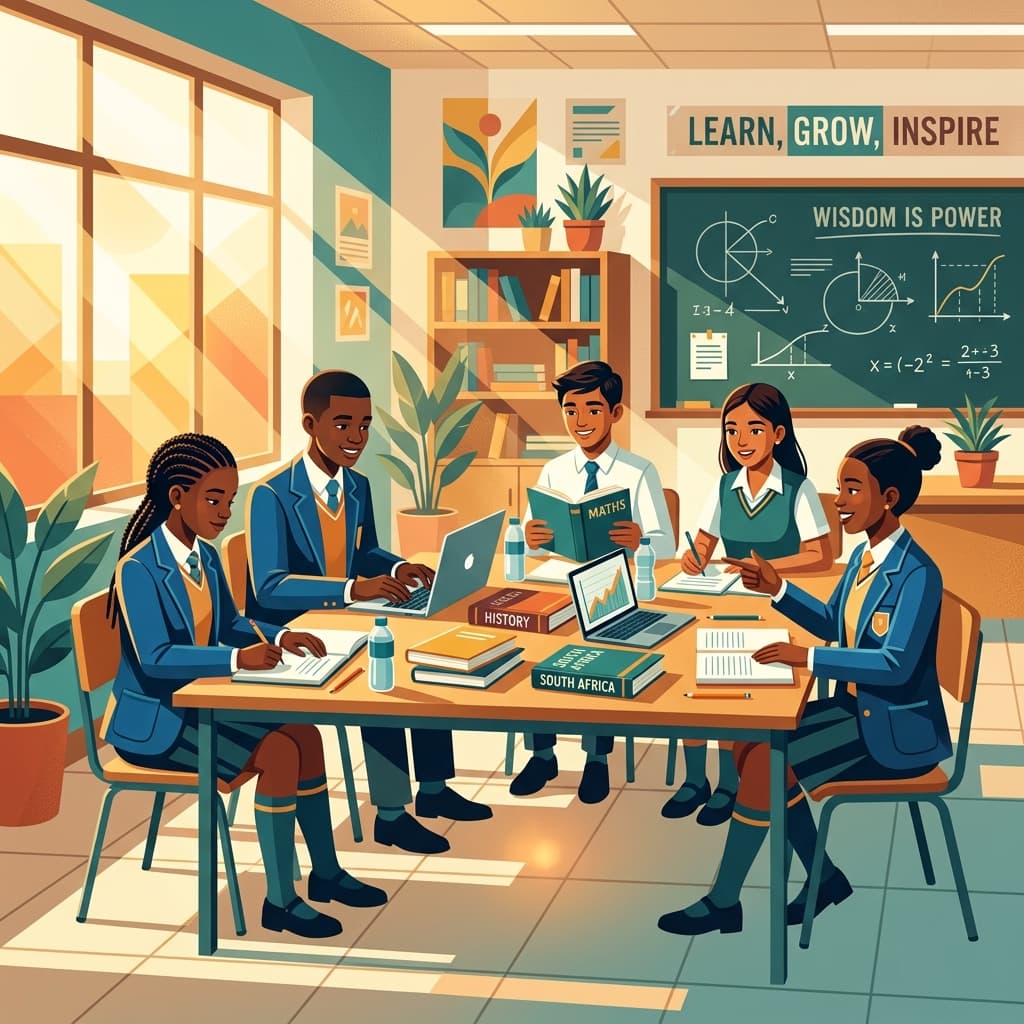
As South African educators, we understand the immense pressure on our learners to not only master subject content but also to articulate their understanding effectively. Writing is not merely an English or Home Language skill; it is a fundamental tool for thinking, learning, and communicating across all subjects. From explaining a scientific process to justifying a historical argument, or even detailing a mathematical solution, proficient writing underpins academic success and, indeed, future employability.
Yet, we often find ourselves grappling with learners who struggle to organise their thoughts on paper, structure an argument, or even express simple ideas clearly. This isn't a problem solely for the language department; it’s a shared responsibility that, when tackled collaboratively, can yield remarkable improvements. This post aims to provide practical, CAPS-aligned strategies that you can implement in any subject to empower your learners to become confident, competent writers.
Building the Foundation: Writing as a Cross-Curricular Imperative
The CAPS curriculum explicitly emphasises communication skills across all learning areas. Writing serves as a powerful conduit for critical thinking, analysis, synthesis, and evaluation. When learners write, they are forced to engage deeply with the subject matter, internalise concepts, and make connections. It’s not just about what they write, but how the act of writing shapes their understanding.
Why Every Teacher is a Writing Teacher
Think about it:
- In Mathematics, learners write to explain their reasoning for solving a problem, not just state the answer.
- In Natural Sciences, they write lab reports, hypotheses, and detailed observations, employing precise scientific language.
- In Social Sciences, they construct historical narratives, analyse sources, and present geographical findings, requiring structured arguments and evidence.
- Even in Creative Arts or Technology, documenting design processes, reflecting on creative choices, or writing project proposals are crucial.
By embracing our role as facilitators of writing, we provide learners with consistent opportunities to hone this vital skill, reinforcing its importance and ensuring transferability across contexts.
Core Strategies for Cultivating Strong Writers
Improving writing isn’t about adding an extra burden to your already packed curriculum; it’s about strategically integrating writing activities into your existing lessons.
Making Writing Visible and Explicit
Many learners struggle with writing because they haven't been shown how to write effectively within specific genres or subjects. We need to demystify the writing process.
Model Good Writing (Teacher as Writer):
- Think Alouds: When introducing a new writing task, demonstrate your own thought process. Write a paragraph or a short response on the board or projector, verbalising your choices: "I need to start with a strong topic sentence here... Now I'll add some supporting evidence... This transition word will link my ideas."
- Share Exemplars: Provide learners with examples of high-quality writing relevant to your subject. Deconstruct these together, highlighting strong topic sentences, effective use of evidence, clear structure, and appropriate vocabulary.
- Teacher-Authored Samples: Don't be afraid to share your own writing. A short paragraph you've drafted for a science explanation or a history essay introduction can be a powerful learning tool.
Deconstruct Exemplary Texts (Mentor Texts):
- Select short, high-quality texts (e.g., a well-written paragraph from a textbook, a strong student response from a previous year – anonymised, of course, and with permission if possible, or adapted for teaching purposes) that exemplify the kind of writing you want learners to produce.
- Guide learners to identify the features of effective writing:
- What makes the introduction engaging?
- How is evidence integrated and explained?
- What is the structure of the argument?
- What precise vocabulary is used?
- How does the writer transition between ideas?
Explicit Instruction on Genres and Structures:
- Each subject has its own writing conventions. Don't assume learners intuitively know them.
- Teach Specific Structures:
- History: Introduce P.E.E. (Point, Evidence, Explanation) or P.E.A. (Point, Example, Analysis) for paragraph construction in essays.
- Science: Explicitly teach the structure of a lab report (Aim, Hypothesis, Apparatus, Method, Results, Discussion, Conclusion).
- Mathematics: Show how to clearly lay out problem-solving steps, including definitions, formulae, calculations, and final answers with units.
- Use Graphic Organisers: Provide frameworks like Venn diagrams for comparison, flowcharts for processes, or T-charts for pros and cons to help learners organise their thoughts before writing.
The Writing Process, Not Just the Product
Often, we only see the final draft. However, the real learning happens in the journey of writing. Emphasising the process helps learners understand that writing is iterative and can be improved.
Pre-writing (Planning and Brainstorming):
- Mind Maps/Concept Webs: Excellent for visual thinkers, helping them connect ideas and generate content.
- Outlining: Crucial for longer pieces. Teach learners to create a logical flow of ideas before writing full sentences.
- Freewriting/Quick Writes: Allow learners to write continuously for a short period (e.g., 5-10 minutes) on a topic without stopping, editing, or worrying about grammar. This helps them overcome writer's block and generate initial ideas.
- Discussion & Debate: Encourage verbal discussion and debate before writing. This helps learners formulate arguments and hear different perspectives, enriching their written output.
Drafting:
- Encourage learners to focus on getting their ideas down first, without obsessing over perfection. Emphasise that this is just a "rough draft."
- Provide quiet time for drafting in class.
Revising (Content, Clarity, Organisation):
- This is where learners rethink their ideas, add more detail, reorder paragraphs, or remove irrelevant information.
- Checklist for Revision: Provide a simple checklist:
- "Does my writing address the prompt fully?"
- "Is my main point clear?"
- "Have I supported my ideas with enough evidence/examples?"
- "Is my writing organised logically?"
- "Have I used strong vocabulary?"
Editing (Grammar, Punctuation, Spelling):
- This is the final polish. Teach learners to edit for mechanical errors.
- Focus on Common Errors: Identify 1-2 common errors your class makes (e.g., subject-verb agreement, comma usage) and teach a mini-lesson, then ask them to specifically check for those errors in their own work.
- Proofreading Strategies: Teach them to read their work aloud, or read it backwards sentence by sentence, to catch errors.
Publishing/Sharing:
- Provide opportunities for learners to share their work with an authentic audience beyond just the teacher.
- Class Presentations: Learners present their research findings or creative pieces.
- Display Boards: Showcase excellent written work in the classroom or school hallway.
- Class Blog/Website: Create a digital space for sharing creative or academic writing.
- Peer-to-Peer Reading: Allow learners to read each other's work (respectfully and constructively).
Feedback That Fosters Growth
Feedback is paramount, but it needs to be constructive and manageable for both the learner and the teacher.
Specific, Actionable, Timely Feedback:
- Avoid generic comments like "Good effort" or "Needs improvement." Instead, pinpoint specific areas: "Your introduction clearly states your argument, but can you add a specific example to support your second point?"
- Focus on 1-2 Key Areas: Don't overwhelm learners with too many corrections. Choose the most critical areas for improvement for each learner (e.g., organisation, evidence use, or a specific grammatical error).
- Provide Feedback Promptly: Learners are more likely to act on feedback if it's given while the writing task is still fresh in their minds.
Peer Feedback Strategies:
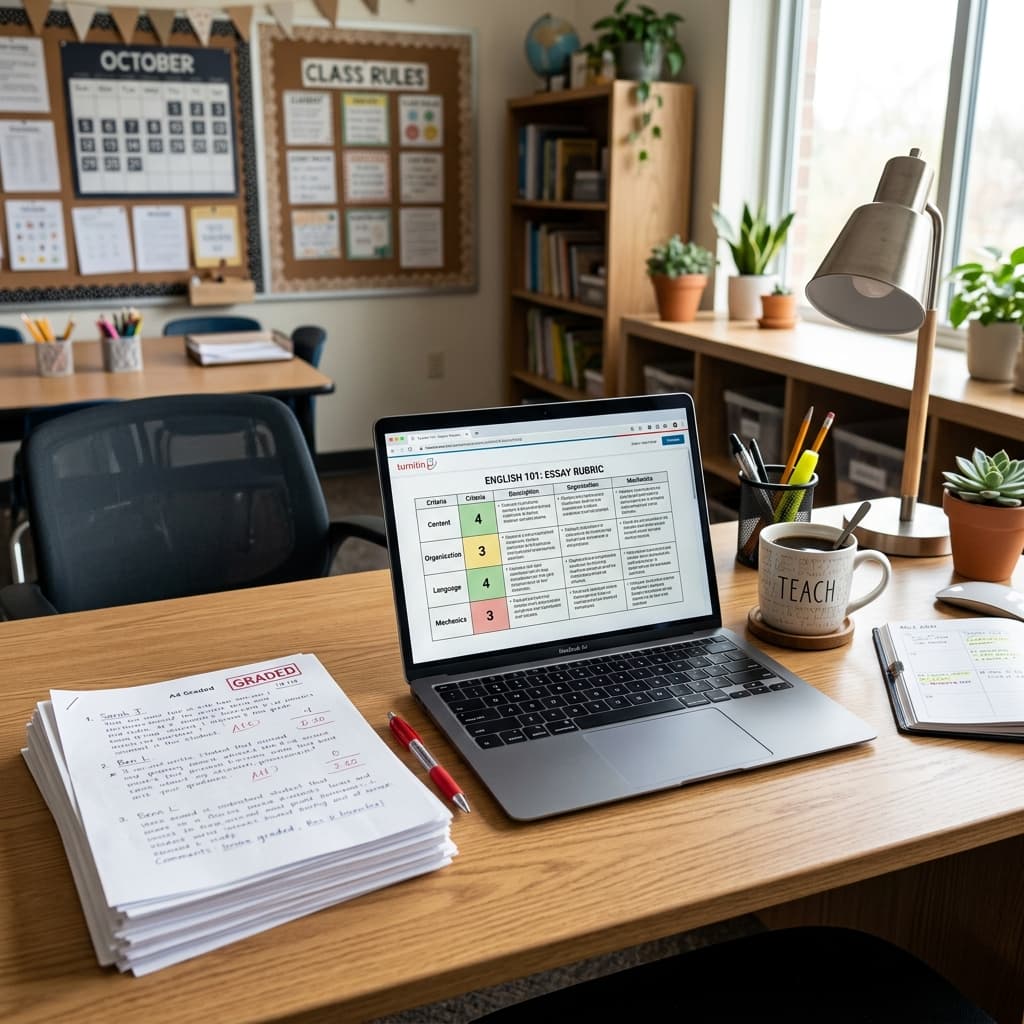
- Structured Peer Review: Provide learners with a clear rubric or guiding questions for reviewing a peer's work.
- Example questions: "What is the main argument of this essay?" "Where could the author provide more detail or evidence?" "What is one strength of this writing?" "What is one suggestion for improvement?"
- "Two Stars and a Wish": Learners identify two strengths ("stars") and one area for improvement ("wish") in their peer's writing.
- Feedback Rotations: In groups, learners read each other's work and provide anonymous feedback on sticky notes.
- Structured Peer Review: Provide learners with a clear rubric or guiding questions for reviewing a peer's work.
Self-Assessment:
- Equip learners with rubrics or checklists to evaluate their own work against the criteria. This metacognitive process helps them internalise what makes good writing.
- Before submitting, ask them: "Have I met all the requirements of the task?" "Is my argument clear?" "Have I checked for common errors?"
Integrating Writing into Daily Classroom Activities
Writing shouldn't be reserved for major assignments. Frequent, low-stakes writing opportunities build fluency and confidence.
Bell-Ringer Activities (Quick Writes):
- Start the lesson with a 2-5 minute writing prompt related to the day's topic or previous lesson.
- Examples: "What did you find most challenging about yesterday's experiment?" (Science) "Summarise the main cause of World War II in three sentences." (History) "Explain the concept of 'profit' in your own words." (EMS)
Exit Tickets:
- At the end of a lesson, ask learners to write a short response to a specific question.
- Examples: "What is one question you still have about today's lesson?" "Name one new vocabulary word you learned today and use it in a sentence." "Explain how a river system works using at least two key terms."
Note-Taking Skills (Cornell Notes, Summary Writing):
- Explicitly teach effective note-taking strategies that involve writing more than just copying.
- Cornell Notes: Encourage learners to summarise main ideas and formulate questions in the margins, promoting active engagement with the content.
- Summary Writing: After a reading or lecture, ask learners to summarise the key points in their own words, focusing on conciseness and accuracy.
Explaining Concepts in Writing:
- Instead of just asking for verbal answers, require learners to write out explanations.
- Example: "Explain the process of photosynthesis, ensuring you use the terms 'chlorophyll', 'glucose', and 'carbon dioxide'." (Science)
Problem-Solving Explanations (Maths):
- After solving a problem, ask learners to write a short paragraph explaining the steps they took and why, or to justify their choice of formula. This reinforces understanding and mathematical reasoning.
Subject-Specific Writing Strategies
Lesson Planner
Generate comprehensive, CAPS-aligned lesson plans in seconds.
Let's look at how writing can be integrated uniquely across different subjects, ensuring a comprehensive approach across the CAPS curriculum.
Languages (Home Language/FAL)
While language teachers are the primary custodians of writing skills, the focus can extend beyond traditional essays.
- Creative Writing: Short stories, poetry, dramatic scripts.
- Reportage: News articles, factual reports based on research.
- Summaries & Précis: Essential for comprehension and information processing.
- Response to Text: Analysing literary devices, character development, thematic exploration.
- Formal and Informal Letters/Emails: Practical communication skills.
Mathematics
Writing in Maths clarifies thinking and demonstrates understanding beyond numerical answers.
- "Show Your Work" with Explanations: Demand a written explanation alongside calculations. "I chose this formula because..." or "My answer makes sense because..."
- Journaling about Math Concepts: Learners write about their struggles, breakthroughs, or understanding of a new concept.
- Word Problem Creation: Ask learners to write their own word problems, requiring them to understand the concepts deeply enough to apply them.
- Defining Terms: Write clear definitions of mathematical vocabulary in their own words.
Natural Sciences
Precision and clarity are paramount in scientific writing.
- Lab Reports: Strict structure (Aim, Hypothesis, Method, Results, Discussion, Conclusion). Teach the use of passive voice and objective language.
- Scientific Explanations: Explaining phenomena, processes, or theories using precise terminology.
- Hypothesis Formulation: Writing testable statements based on observation.
- Data Interpretation: Describing trends in graphs or tables in written form, drawing conclusions from evidence.
- Field Notes: Detailed, observational writing.
Social Sciences (History/Geography)
Analytical and evidence-based writing is key here.
- Source Analysis: Writing responses that analyse primary and secondary sources, identifying bias, purpose, and audience.
- Historical Narratives: Constructing coherent accounts of events, explaining cause and effect.
- Argumentative Essays: Developing a clear thesis, supporting it with historical or geographical evidence, and acknowledging counter-arguments.
- Debate Preparations: Writing out arguments and counter-arguments before a class debate.
- Case Studies: Analysing specific scenarios and presenting written findings.
Life Orientation
Writing in LO fosters self-reflection and critical thinking about personal and societal issues.
- Reflective Journals: Personal reflections on values, choices, or experiences.
- Goal Setting: Writing clear, actionable personal or academic goals.
- Case Study Responses: Analysing ethical dilemmas or social issues and articulating reasoned opinions or solutions.
- Debate Arguments: Researching and writing persuasive arguments on current affairs.
Leveraging Technology to Support Writing
Technology offers powerful tools to enhance and streamline the writing process for both learners and teachers.
Word Processors & Online Collaboration Tools:
- Google Docs, Microsoft Word Online: Enable learners to type, edit, and save their work easily. This helps with legibility and encourages revision.
- Collaborative Writing: Tools like Google Docs allow multiple learners to work on a single document, fostering teamwork and shared responsibility for writing tasks (e.g., group lab reports, shared research projects).
- Teacher Feedback: Teachers can provide comments, suggestions, and edits directly within the document, making feedback more interactive and trackable.
Grammar Checkers (with caution and guidance):
- Tools like Grammarly or built-in spell checkers can be helpful for identifying basic errors.
- Crucial Caveat: Teach learners not to blindly accept suggestions. They must understand why a correction is being made. Use these tools as learning aids, not replacements for understanding grammar rules.
Research Tools & Databases:
- Teach learners how to effectively use online search engines, library databases, and academic sources to gather information for their writing, and how to cite them correctly.
Digital Storytelling & Multimedia Presentations:
- Writing scripts for short videos, podcasts, or interactive presentations can motivate learners and develop a different kind of writing skill, focusing on concise, engaging communication.
Creating a Supportive Writing Culture
Ultimately, improving writing skills is about creating an environment where learners feel safe to take risks, make mistakes, and learn from them.
Celebrate Writing Efforts:
- Acknowledge and praise learners' improvements, not just their perfect scores.
- Showcase good writing in your classroom, regardless of subject.
- Host a "Writer's Wall" where exemplar pieces are displayed.
Provide Choice Where Possible:
- Allow learners some choice in topics or presentation formats when appropriate. This increases engagement and ownership.
Make Writing Less Intimidating:
- Start with short, low-stakes writing tasks before moving to longer, more complex assignments.
- Emphasise progress over perfection.
- Encourage learners to view writing as a process of discovery, not a test of inherent talent.
Regular, Low-Stakes Writing Opportunities:
- As mentioned with bell-ringers and exit tickets, frequent short bursts of writing are more effective than infrequent, high-pressure essays.
Reading Widely to Inform Writing:
- Encourage learners to read diverse texts within your subject area. Reading good writing helps internalise structures, vocabulary, and effective communication styles. Discuss how authors convey information or arguments in these texts.
Addressing Common Challenges
We know that implementing these strategies isn't always easy.
Time Constraints
- Integrate writing into existing activities (e.g., instead of a verbal recap, do a written exit ticket).
- Focus feedback on 1-2 key areas per learner.
- Utilise peer feedback to share the load.
- "Quick Writes" and "Think-Pair-Share-Write" activities are time-efficient.
Large Class Sizes
- Use rubrics and checklists for faster grading and more targeted feedback.
- Prioritise certain writing tasks for in-depth feedback, while others receive quick checks.
- Leverage self-assessment and peer review.
- Focus on whole-class trends in writing errors for mini-lessons.
Learner Reluctance/Anxiety
- Start with very short, non-threatening writing tasks.
- Emphasise "process over product" to reduce pressure.
- Provide sentence starters or writing frames to scaffold early attempts.
- Create a safe, encouraging classroom environment where mistakes are seen as learning opportunities.
Differentiated Instruction
- Provide sentence stems, word banks, or structured outlines for struggling writers.
- Offer extension activities for advanced writers, such as requiring more complex vocabulary, deeper analysis, or challenging them to write from multiple perspectives.
Empowering Our Learners, One Sentence at a Time
Improving learner writing skills across all subjects is a continuous journey, not a destination. It requires patience, consistency, and a shared commitment from all educators. By consciously integrating practical writing strategies into our daily lessons, modeling good practice, and providing constructive feedback, we empower our learners to become more confident thinkers, clearer communicators, and ultimately, more successful individuals in all their endeavours, truly aligning with the holistic goals of the CAPS curriculum. Let's work together to nurture a generation of articulate and thoughtful South African learners.
Tyler. M
Dedicated to empowering South African teachers through modern AI strategies, research-backed pedagogy, and policy insights.