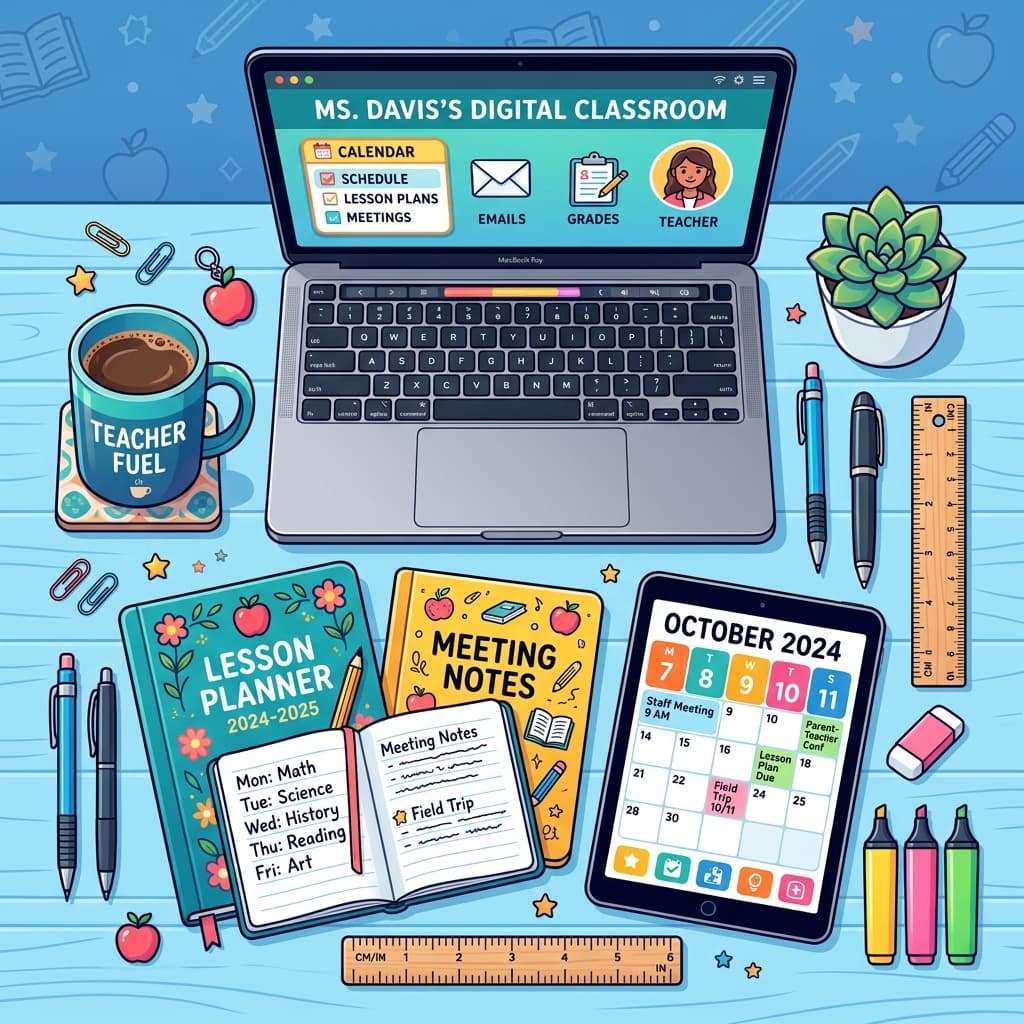
The Silent Crisis in South African Classrooms
It is 08:15 on a Tuesday morning. You stand at the front of your classroom, CAPS document in hand, ready to tackle the week’s Annual Teaching Plan (ATP) requirements. You have prepared a solid lesson on Euclidean geometry or perhaps the nuances of South African history. But before you can even finish your introductory sentence, the disruptions begin.
A learner in the back row is scrolling through TikTok under their desk. Two others are engaged in a heated argument over a borrowed pen that has escalated into personal insults. Another group is staring blankly out the window, completely disengaged.
If you feel like classroom discipline has become an uphill battle that you are losing, you are not alone. Across South Africa—from well-resourced schools in suburban Gauteng to overcrowded rural classrooms in the Eastern Cape—educators are reporting a significant decline in learner discipline. But why? Is it a change in the learners, the system, or the world at large?
In this post, we will unpack the multi-faceted reasons why discipline feels harder than ever and, more importantly, how you can use the power of AI through SA Teachers to reclaim your classroom.
1. The Post-Pandemic "Social Gap"
We cannot discuss modern discipline without acknowledging the "Covid Gap." The learners currently sitting in our Foundation Phase through to the FET phase missed critical windows of social development.
During the lockdowns, the informal rules of social engagement—sharing, waiting one’s turn, conflict resolution, and respecting authority figures—were replaced by the isolation of a screen or the lack of a structured environment. When learners returned to school, many had "de-skilled" in terms of classroom etiquette.
In South Africa, this was exacerbated by the rotational learning schedules that persisted longer than in many other countries. This lack of consistency broke the rhythm of the school year. Now, teachers are expected to cover the full CAPS curriculum while simultaneously acting as social workers and therapists for learners who have forgotten how to function in a communal setting.
2. The Cognitive Competition: The "TikTok Brain"
One of the greatest challenges to discipline is the competition for attention. In 2024, teachers are not just competing with other learners for attention; they are competing with high-octane, algorithmically-driven content.
Research suggests that the "short-form" nature of modern media has significantly reduced the average attention span. When a learner is used to 15-second bursts of entertainment, a 45-minute lesson on the digestive system feels like an eternity. Boredom is the primary precursor to disruption. When a learner’s brain is not being stimulated at the level they are accustomed to, they seek stimulation elsewhere—often by acting out or distracting others.
How SA Teachers Helps:
To combat this, your lessons need to be punchy, varied, and perfectly paced. Our CAPS-Aligned Lesson Planner allows you to structure lessons that include "hooks" and "brain breaks" tailored to the South African context. By using AI to plan, you can ensure your ATPs are met without sacrificing the engagement levels required to keep modern learners focused.
3. Administrative Overload and "Teacher Burnout"
Discipline is not just about what the learners do; it is about the teacher’s capacity to respond. Effective discipline requires patience, consistency, and emotional regulation. However, South African teachers are currently buried under a mountain of administrative tasks.
Between recording marks for SASAMS, attending SGB meetings, adjusting to revised ATPs, and marking hundreds of scripts, many educators are operating in a state of chronic fatigue. When a teacher is burnt out, their "fuse" is shorter. They may oscillate between being overly permissive (because they are too tired to engage) and overly reactive (because their stress levels are peaked).
Consistency is the bedrock of discipline. If the rules change based on the teacher's energy level, learners will push boundaries.
How SA Teachers Helps:
We aim to give you back your time so you can focus on the human element of teaching.
- Report Comments Generator: Writing unique, meaningful comments for 200+ learners is an administrative nightmare. Our tool generates professional, CAPS-compliant comments in seconds, allowing you to leave school on time and recharge.
- Essay Grader & Rubric Creator: Marking English or History essays can take hours. Our AI tool helps you grade and provide constructive feedback based on specific rubrics, ensuring fairness and transparency—which in turn reduces learner disputes over marks.
4. The "Differentiation Dilemma"
In any South African classroom, you likely have a massive range of abilities. You might have one learner who is ready for university-level work sitting next to a learner who is struggling with basic literacy in their Home Language.
When a learner cannot access the content because it is too hard, they feel stupid and frustrated. To mask this, they often become the "class clown" or the "troublemaker." Conversely, when a learner finds the work too easy, they become bored and seek entertainment through disruption.
Discipline problems are often just undiagnosed academic frustrations.
How SA Teachers Helps:
The key to solving this is differentiation, but no teacher has the time to create five different versions of the same lesson.
- Worksheet & Exam Generator: You can quickly generate different levels of practice material. One set for those needing remediation and another for those needing extension.
- Study Guide Creator: Empower your learners to work at their own pace. By generating custom study guides that break down complex topics into manageable chunks, you reduce the frustration that leads to bad behaviour.
- AI Tutor: For the learner who is perpetually "stuck" while you are busy with another group, our AI Tutor can provide immediate, safe, and curriculum-accurate explanations, keeping the learner on track and out of trouble.
5. The Erosion of Traditional Authority
There has been a global shift in how authority is perceived. The days of "respect me because I am the teacher" are largely over. In the modern South African context, respect is a two-way street that must be earned through relationship building and perceived competence.
Learners today are more aware of their rights, but often lack a corresponding understanding of their responsibilities. When disciplinary measures are taken, they are frequently met with "Why?" or "That’s not fair." If a teacher cannot provide a clear, logical, and calm justification for a rule or a mark, the learner will rebel.
Transparency is the best tool for modern discipline. When learners understand exactly how they are being assessed and what is expected of them, the room for "unfairness" arguments shrinks.
Practical Advice: The Power of the Rubric
Use our Rubric Creator for every significant task. When a learner knows that they lost marks for "Structure" or "Critical Analysis" because it was clearly defined in a rubric provided before the task, they are less likely to challenge your authority in a disruptive way. It shifts the dynamic from "The teacher is being mean" to "I did not meet the criteria."
6. Socio-Economic Realities and Trauma
We cannot ignore the reality that many of our learners come from environments characterized by high levels of stress, violence, or poverty. Discipline issues in the classroom are often "symptoms" of external "diseases." A learner who hasn't eaten, or who witnessed a crime over the weekend, is not going to sit quietly and conjugate verbs.
While a teacher cannot fix the world, they can provide a "Predictable Environment." For many South African children, school is the only place in their lives that is consistent. If your classroom is a place of structure, where the rules are the same every single day and the teacher is prepared, it becomes a safe haven.
Preparation is a form of care. When you walk into a classroom with high-quality, professional-looking materials, you signal to the learners that they are worth the effort.
How SA Teachers Helps:
Using the Worksheet & Exam Generator ensures that your assessments look professional and follow the DBE standards. It eliminates the "scrappy" feel of last-minute prep, which subconsciously tells learners that the lesson—and by extension, their behaviour—doesn't matter.
7. Actionable Strategies for the Modern Teacher
So, how do we move forward? If discipline is harder, our strategies must be smarter. Here is a three-pronged approach to reclaiming your classroom:
A. The "First Five Minutes" Rule
The first five minutes determine the next forty. Do not let learners wander in and "settle down" on their own. Have an "Entry Task" already projected or on their desks. Use the Worksheet Generator to create quick 5-minute "bell-ringers" that recap the previous day's work. If they are working from the moment they sit down, the opportunity for chaos is minimized.
B. Radical Transparency in Grading
Nothing causes a classroom blow-up faster than a perceived "unfair mark." Use the Essay Grader to provide consistent feedback. When learners see that the AI-assisted grading is objective and tied directly to the CAPS rubrics you've provided, it removes the personal friction between teacher and learner.
C. Moving from Reactive to Proactive
Most teachers spend their energy reacting to bad behaviour. We need to shift that energy to preventing it. This is done through "Scaffolding." If a task is too daunting, learners quit. Use the Study Guide Creator to provide "scaffolds"—templates, vocabulary lists, and mind maps. When a learner feels they can do the work, they are 80% less likely to disrupt.
8. The Role of the SMT and Parents
Discipline is a team sport. However, School Management Teams (SMTs) are often as overwhelmed as teachers. When you refer a learner for discipline, you need data.
Instead of saying "Thabo is always disruptive," imagine saying: "I have differentiated the work using custom study guides, provided rubric-based feedback on three assignments, and used AI-tutor interventions, yet Thabo's engagement remains at 10%."
This level of professional documentation—which is made easier when you use structured tools like the SA Teachers Lesson Planner and Report Comments Generator—makes it much harder for SMTs or parents to dismiss your concerns. It shows that the breakdown is not in your teaching, but in the learner's choices.
Summary: Work Smarter, Not Harder
Classroom discipline in South Africa is undoubtedly harder than it was twenty years ago. The intersection of technology, post-pandemic trauma, and administrative bloat has created a "perfect storm" for teachers.
But you are not powerless. The solution lies in reducing your administrative burden so that your "Emotional Bank Account" is full enough to handle the challenges of the day. By integrating AI tools into your workflow, you aren't just "using technology"—you are strategically reclaiming your time, your energy, and your authority.
Ready to transform your classroom management? Don't let admin steal your passion for teaching. Explore the SA Teachers Toolkit today. Start with the CAPS-Aligned Lesson Planner to ensure your next week of teaching is your most organised yet, and use the Report Comments Generator to finally get through that marking pile without the stress.
You became a teacher to change lives, not to fight for silence. Let us handle the "paperwork" so you can get back to the heart of education.
Key Takeaways for South African Educators:
- Acknowledge the Context: Understand that modern disruptions are often a mix of cognitive shifts (screens) and social gaps (post-pandemic).
- Differentiation is Discipline: Use the Worksheet & Exam Generator to keep all learners challenged but not overwhelmed.
- Consistency is King: Use the Rubric Creator to ensure all learners feel they are being treated fairly and objectively.
- Protect Your Peace: Use the Report Comments Generator and Essay Grader to avoid burnout, ensuring you have the emotional energy to manage your classroom effectively.
Andile M.
Dedicated to empowering South African teachers through modern AI strategies, research-backed pedagogy, and policy insights.