The New Era of South African Education: Why AI is No Longer Optional
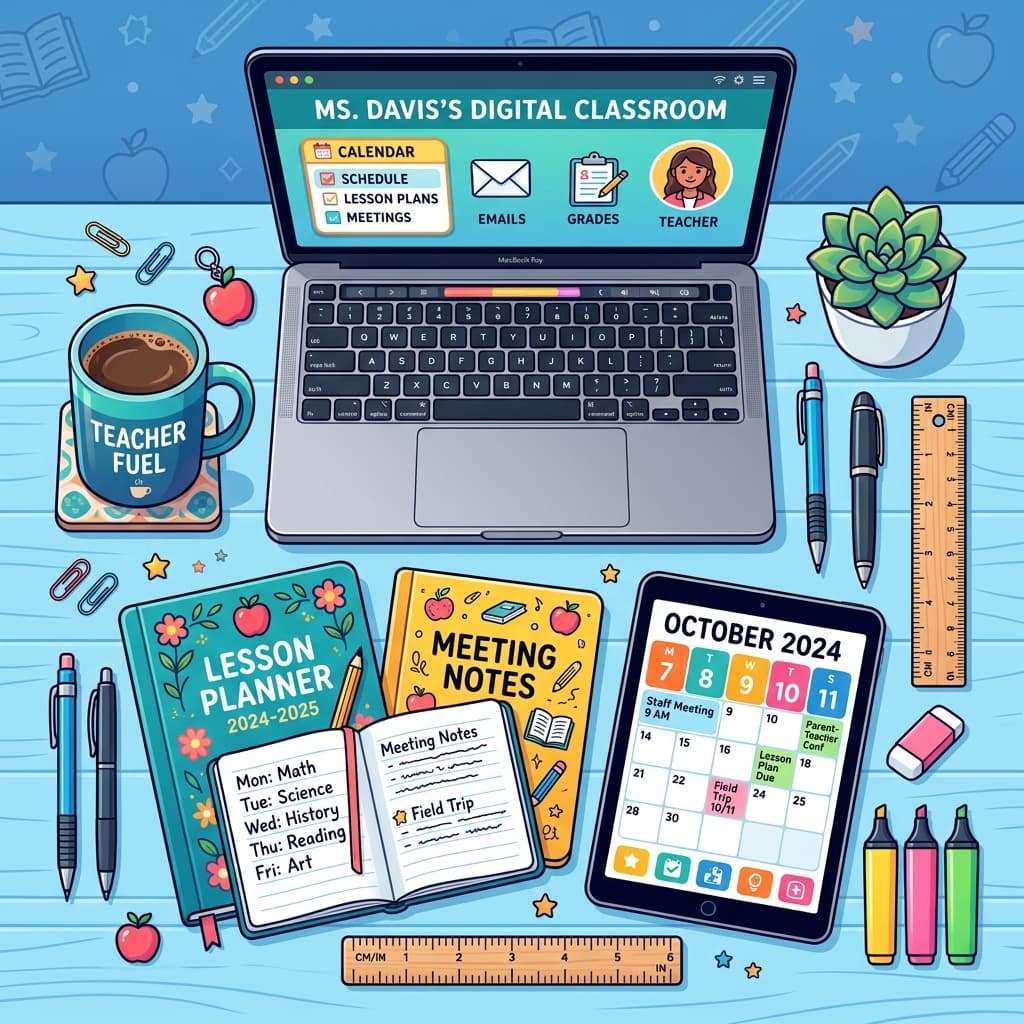
It is Sunday evening in South Africa. Across the country—from the bustling suburbs of Gauteng to the rural heartlands of the Eastern Cape—thousands of teachers are sitting at their dining room tables. They aren't enjoying a quiet meal; they are surrounded by open textbooks, stacks of marking, and the ever-present, daunting Annual Teaching Plans (ATPs). The pressure to remain CAPS-compliant while catering to diverse classroom needs is a weight that every South African educator carries.
However, a shift is happening. In staffrooms from Cape Town to Polokwane, the conversation is changing. Teachers are no longer just talking about the burden of administration; they are talking about the solution: Artificial Intelligence.
Specifically, South African educators are embracing AI lesson planning not as a replacement for their expertise, but as a sophisticated "co-pilot." With the tools provided by SA Teachers, the dream of a balanced work-life schedule is finally becoming a reality. In this deep dive, we explore why this technological revolution is taking hold and how you can leverage it to transform your teaching practice.
The Administrative Burden: The "Hidden" Job of Teaching
In South Africa, a teacher’s job description extends far beyond the classroom. The Department of Basic Education (DBE) requires meticulous record-keeping. Between the National Protocol for Assessment (NPA) and the specific requirements of the Curriculum and Assessment Policy Statement (CAPS), the paperwork can feel endless.
The "hidden job" of teaching includes:
- Aligning every lesson to the ATP: Ensuring that every week of the term is accounted for and that no topic is missed.
- Differentiation: Creating different versions of the same lesson to support learners with barriers to learning while challenging top achievers.
- Assessment Design: Crafting formal and informal assessments that adhere to Bloom’s Taxonomy and cognitive level requirements (40% low order, 40% middle order, 20% high order).
- Reporting: Writing meaningful, individualised report comments for 40 to 60 learners per class.
This is where burnout begins. When a teacher spends six hours on administrative planning for every five hours of teaching, the quality of classroom interaction inevitably suffers.
Why AI Lesson Planning is the Solution
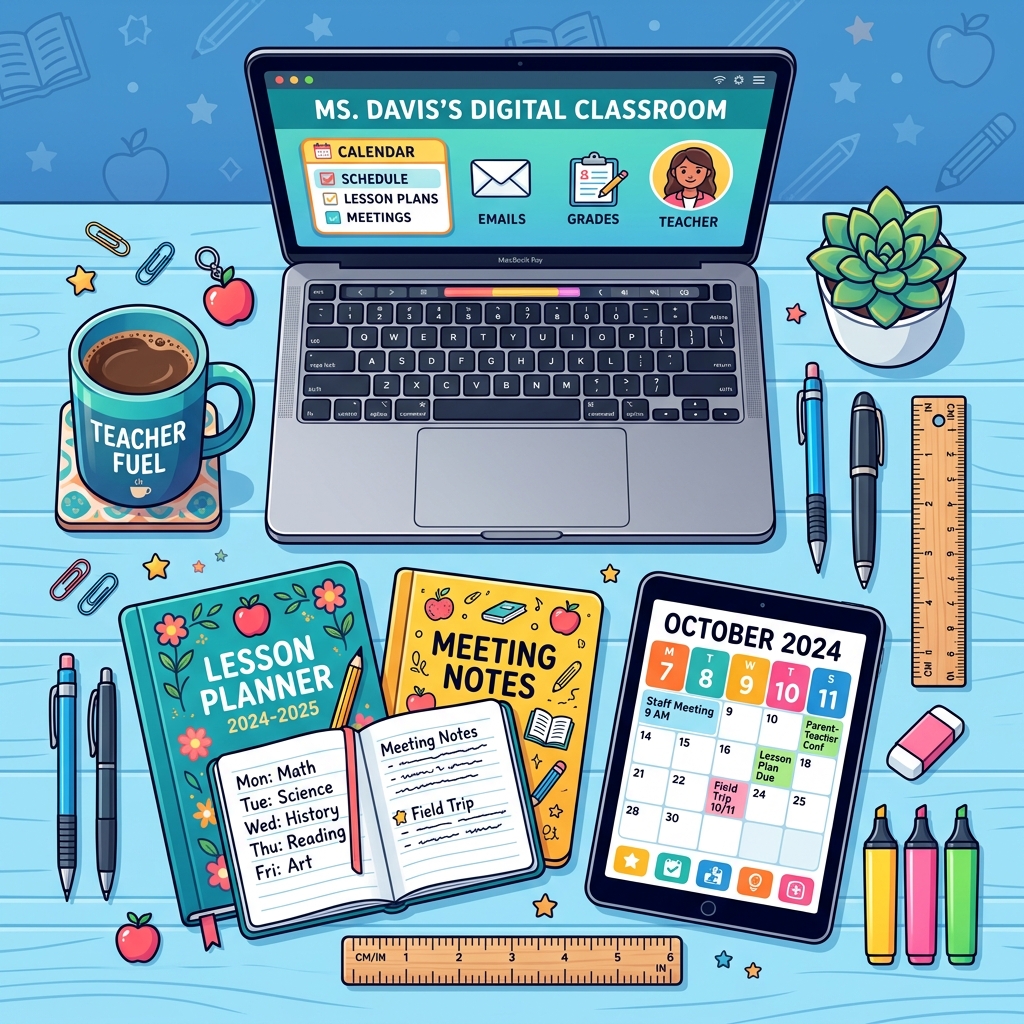
AI lesson planning isn't just about "generating text." It is about intelligent synthesis. Modern AI tools, like the CAPS-Aligned Lesson Planner on SA Teachers, understand the specific nuances of the South African curriculum.
1. Instant CAPS Alignment
The biggest hurdle for any South African teacher is ensuring that their lesson plans satisfy the School Management Team (SMT) and Departmental officials during moderation. Traditionally, this meant cross-referencing ATP documents with textbooks and policy guides.
The SA Teachers Lesson Planner automates this. By inputting your subject, grade (from Foundation Phase to FET), and the specific week of the term, the AI generates a plan that includes:
- Specific Aims and Objectives: Directly linked to CAPS requirements.
- Introduction, Content Delivery, and Conclusion: A structured flow for the lesson.
- Teacher and Learner Activities: Practical steps for the classroom.
- Resources Needed: Suggestions for physical and digital aids.
2. Tailoring Content for Diversity
South African classrooms are uniquely diverse. A single Grade 4 class may have learners who are fluent in English (HL), learners for whom English is a First Additional Language (FAL), and learners with various neurodivergent needs.
AI allows teachers to "remix" a single lesson plan into multiple versions instantly. Need a simplified version of a Natural Sciences lesson on "Photosynthesis" for learners struggling with vocabulary? The AI can adjust the reading level while keeping the core scientific concepts intact.
At SA Teachers, we have developed a suite of tools specifically designed to solve the "time-poverty" crisis in South African schools. Let’s look at how these specific tools function in a real-world scenario.
The Worksheet & Exam Generator: Say Goodbye to Late-Night Typing
Creating a formal assessment is one of the most time-consuming tasks. You have to find relevant texts, ensure the language is appropriate, and manually create a marking memorandum.
With the Worksheet & Exam Generator, you can simply input your topic (e.g., "The South African War" or "Euclidean Geometry"). The tool doesn't just give you questions; it provides:
- Varied Question Types: Multiple choice, short answers, and paragraph-style questions.
- Cognitive Level Weighting: Ensuring your exam meets the 40/40/20 or 30/40/30 requirements of the DBE.
- Automated Memorandums: A complete marking guide generated alongside the paper, saving you hours of manual work.
The Essay Grader & Rubric Creator: Objective and Fast Marking
For Language and History teachers, marking essays is the "final boss" of administration. It’s subjective, exhausting, and slow.
The Essay Grader & Rubric Creator allows you to input your specific criteria—such as "Structure," "Grammar," or "Critical Analysis"—and generate a professional rubric in seconds. When it comes to grading, the AI can provide a preliminary scan of a learner's digital essay, suggesting marks based on your rubric and providing constructive feedback that you can then refine. This ensures consistency across a grade of 200+ learners.

Lesson Planner
Generate comprehensive, CAPS-aligned lesson plans in seconds.
The Study Guide Creator: Empowering the FET Phase
For Grade 11 and 12 learners, the sheer volume of content is overwhelming. Teachers often want to create summary booklets but simply don't have the time.
The Study Guide Creator takes a complex topic and breaks it down into "bite-sized" chunks. It identifies key definitions, creates summary bullet points, and suggests "exam-room tips." This is a game-changer for revision sessions and helps learners who struggle to take effective notes during class.
Real Classroom Scenarios: AI in Action
Scenario A: The Foundation Phase Teacher (Grade 1-3)
A Grade 2 teacher needs to plan a week of Life Skills focused on "Healthy Living."
- The AI Approach: She uses the CAPS-Aligned Lesson Planner to generate five days of activities. She then uses the Worksheet Generator to create a simple "match-the-column" activity for healthy vs. unhealthy foods. Finally, she uses the AI Tutor feature to generate a short, age-appropriate story about a boy named Thabo who learns to eat his vegetables, which she reads to the class.
- Time Saved: 4 hours of planning reduced to 20 minutes.
Scenario B: The FET Phase Mathematics Teacher (Grade 10-12)
A Grade 11 teacher is introducing "Trigonometric Functions."
- The AI Approach: He uses the Study Guide Creator to produce a one-page "Cheat Sheet" for his learners that summarises amplitude, period, and shifts. For the Friday test, he uses the Worksheet & Exam Generator to create 10 difficult problems with a full memorandum.
- The Result: The teacher spends more time walking around the classroom helping learners solve problems and less time standing at the chalkboard writing notes that learners are slowly copying.
The "Human in the Loop": Why AI Doesn't Replace Teachers
A common fear is that AI will make the teaching profession redundant. This couldn't be further from the truth. Teaching is, at its heart, a human-centric profession. An AI cannot see that a learner is having a bad day, it cannot manage a playground dispute, and it cannot provide the emotional encouragement a child needs to build confidence.
Instead, AI handles the algorithmic side of teaching so the teacher can focus on the human side. By using the Report Comments Generator, for example, a teacher can input a few keywords about a learner's performance (e.g., "Good at maths, needs to work on focus, polite"). The AI then structures this into a professional, grammatically correct comment:
"Thabo has shown excellent aptitude for Mathematical concepts this term. While he is a polite and valued member of the class, he would benefit from improving his focus during independent tasks to ensure he completes his work in the allocated time."
The teacher reviews and tweaks the comment, ensuring it is authentic, but the "blank page syndrome" is gone.
Overcoming Challenges: Ethics and Best Practices
While embracing AI, South African educators must remain mindful of a few key principles:
- Fact-Checking: AI can occasionally "hallucinate" or provide incorrect data. Always review generated content, especially in subjects like History or Science where accuracy is paramount.
- Contextualisation: An AI might suggest a resource that isn't available in a school with limited infrastructure (like a specific high-tech lab experiment). The teacher must adapt the AI’s suggestion to fit their school’s context (e.g., suggesting a "kitchen science" alternative).
- Privacy: Never input sensitive learner data (like surnames or ID numbers) into an AI tool. Use first names or initials only.
The Future: AI as an Equaliser in South African Schools
One of the most exciting aspects of AI in education is its potential to close the gap between well-resourced and under-resourced schools. A teacher in a rural school with a smartphone and an internet connection now has access to the same high-level planning tools and pedagogical support as a teacher in a top-tier private school.
By using SA Teachers, educators are democratising quality education. When the "paperwork barrier" is lowered, the quality of instruction rises across the board.
Conclusion: Take Back Your Weekends
The shift toward AI lesson planning isn't just about technology; it's about teacher well-being. We know that the South African education system asks a lot of you. You are expected to be a subject expert, a social worker, an administrator, and a mentor all at once.
By embracing the tools available on the SA Teachers platform—from the CAPS-Aligned Lesson Planner to the Report Comments Generator—you are making a choice to work smarter, not harder. You are choosing to spend your Sunday evenings with your family instead of your ATPs.
Are you ready to join the thousands of South African teachers who have already made the switch?
Visit sateachers.co.za today to explore our AI toolkit. Start with the Lesson Planner and see for yourself how twenty minutes of AI-assisted work can replace hours of manual frustration. Your classroom—and your mental health—will thank you.
STRATEGIC PLAYBOOK
Tool & Primary Benefit
6 Key Sections
|
Tool
|
Primary Benefit
|
CAPS Integration
|
|
Lesson Planner
|
Saves 80% of planning time.
|
Built-in ATP alignment.
|
|
Exam Generator
|
Creates balanced, moderated tests.
|
Bloom’s Taxonomy compliant.
|
|
Study Guide Creator
|
Boosts learner revision quality.
|
Tailored to Grade 10-12 syllabi.
|
|
AI Tutor
|
Provides 24/7 support for learners.
|
Subject-specific knowledge.
|
|
Essay Grader
|
Accelerates marking for languages.
|
Rubric-based assessment.
|
|
Report Generator
|
Eliminates end-of-term stress.
|
Professional, DBE-friendly tone.
|
Don't let the administrative burden of teaching extinguish your passion for the classroom. Embrace the future of education with SA Teachers and get back to what you do best: inspiring the next generation of South Africans.
SA
Dedicated to empowering South African teachers through modern AI strategies, research-backed pedagogy, and policy insights.