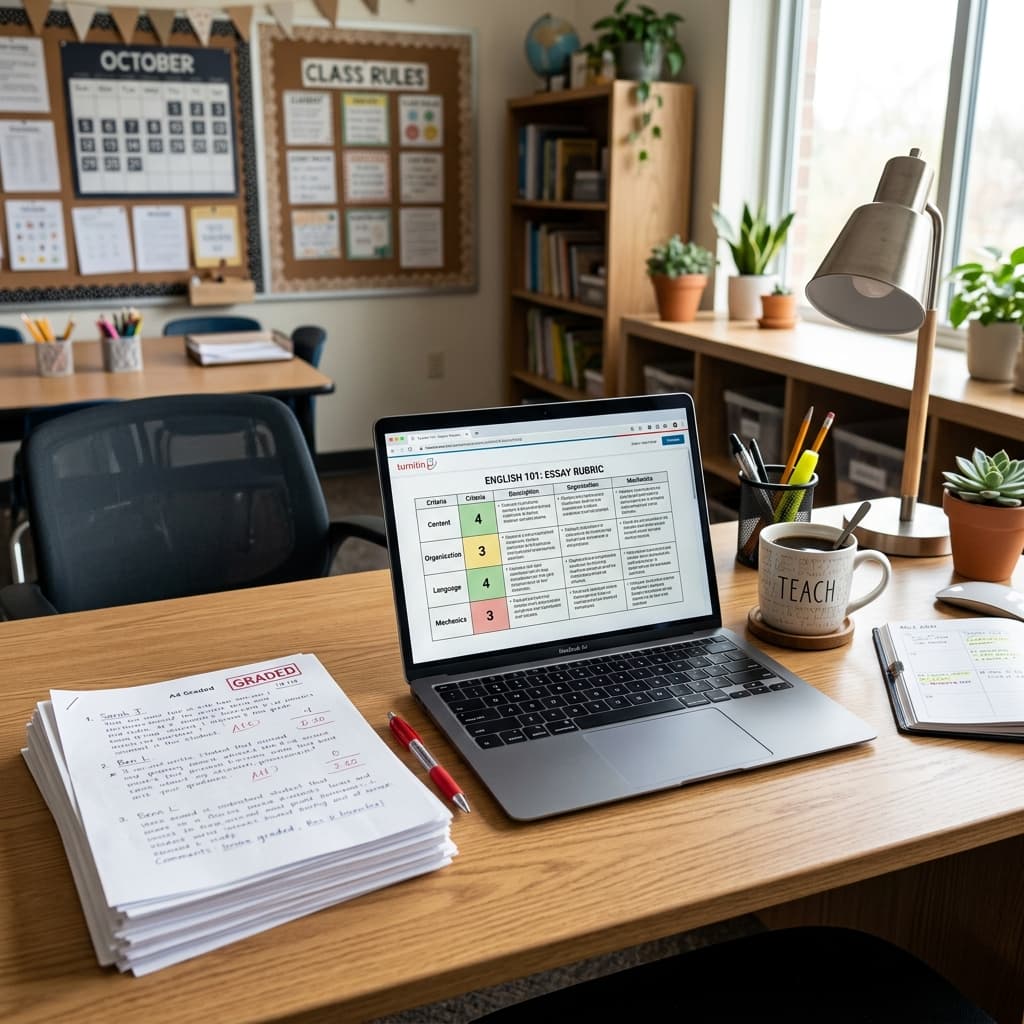
The world of education is a vibrant, ever-evolving landscape, and here in South Africa, we are no strangers to its dynamic shifts. As dedicated teachers working within the CAPS curriculum framework, we constantly strive to equip our learners not just with knowledge, but with the skills and resilience they need to thrive in a rapidly changing world. Staying abreast of global and local educational trends isn't just about professional development; it's about future-proofing our teaching and, more importantly, our students.
This post will explore key educational trends that are shaping classrooms worldwide and, crucially, how they relate to our context in South Africa, offering practical insights and actionable strategies for us as educators. Let's delve into what every South African teacher should be watching.
The Accelerated Integration of Digital Learning & Blended Approaches
The past few years have undeniably fast-tracked the adoption of digital tools in education. While the "digital divide" remains a significant challenge in many South African schools, the move towards blending online and offline learning experiences is a trend we cannot ignore. It's about more than just using a projector; it’s about strategically leveraging technology to enhance learning.
What Does This Mean for the CAPS Classroom?
Digital learning, when implemented thoughtfully, can significantly enrich the delivery of the CAPS curriculum across all phases and subjects.
- Access to Rich Resources: Beyond textbooks, digital platforms open doors to a wealth of videos, simulations, interactive quizzes, and virtual field trips that can deepen understanding of complex concepts in Natural Sciences, History, or Geography.
- Differentiated Instruction Support: Technology can help us cater to diverse learning styles. For instance, learners struggling with a concept in Mathematics can access remedial videos, while advanced learners can engage with extension activities or research projects.
- Enhanced Collaboration and Communication: Online tools facilitate group projects, peer feedback, and communication between learners and teachers, mimicking real-world professional environments.
Practical Strategies for Integration:
- Start Small with Accessible Tools:
- WhatsApp Groups (Parent/Learner): For quick communication, sharing homework reminders, or distributing small files (e.g., a photo of a diagram).
- Basic Presentations (PowerPoint/Google Slides): Engage learners with visuals and interactive elements beyond just writing on the board.
- Educational Apps/Websites: Explore free resources like Khan Academy, Siyavula, or YouTube channels for specific CAPS topics. Even simple Kahoot quizzes can gamify learning.
- Leverage School Resources: If your school has a computer lab or tablets, consider dedicating specific lessons to digital literacy and research skills, integrating them into project work for subjects like Life Orientation or EMS.
- Flip Your Classroom (Selectively): Assign short videos or readings as homework (if learners have access), then use precious class time for discussion, problem-solving, and hands-on activities. This works well for introducing new concepts in languages or science.
- Embrace Blended Learning Models: This isn't about replacing face-to-face teaching but augmenting it. Perhaps a physical lesson followed by an online activity for reinforcement, or using a digital platform for submitting assignments and receiving feedback.
While access remains a hurdle, exploring creative, low-bandwidth solutions and advocating for better infrastructure are crucial steps for all South African teachers.
Artificial Intelligence (AI) and Machine Learning in the Classroom
AI might sound futuristic, but it's rapidly moving from sci-fi to practical application, even within education. We're talking about tools that can learn from data, perform tasks that usually require human intelligence, and adapt over time. Far from replacing teachers, AI holds the potential to augment our capabilities and personalize the learning experience like never before.
How AI Can Impact CAPS Delivery:
AI's potential for the CAPS curriculum lies in its ability to handle administrative tasks, provide personalized learning paths, and offer data-driven insights.
- Personalized Learning Journeys: AI-powered adaptive learning platforms can identify a learner's strengths and weaknesses, then tailor content and exercises specifically to their needs and pace. Imagine an AI tutor for Maths that identifies precisely where a learner is struggling with fractions and provides targeted practice until mastery.
- Automated Assessment & Feedback: AI can automate the grading of multiple-choice questions, short answers, and even provide initial feedback on essays, freeing up valuable teacher time for more complex interactions and differentiated support.
- Content Creation Support: AI tools can help teachers generate lesson plan ideas, create varied practice questions, or even summarise complex texts from various sources to make them more accessible for specific grade levels. Crucially, these should always be reviewed and adapted by the teacher.
- Data Analysis: AI can process large amounts of learner data to identify trends, predict potential learning difficulties, and provide insights that help teachers intervene proactively.
Navigating AI in Your Classroom:
- Familiarise Yourself: Explore reputable AI education tools. Understand what they can do and, more importantly, what their limitations are. Websites like edtech.org often review such tools.
- Pilot Personalised Practice: If available, experiment with AI-driven adaptive learning apps for subjects like Mathematics or English grammar. Observe how learners respond to tailored exercises.
- Teach AI Literacy: Discuss AI with your learners. What is it? How does it work? What are its benefits and risks? This is vital for Life Orientation and Digital Technology lessons. Encourage critical thinking about information generated by AI.
- Leverage AI for Planning (with caution): Use AI to brainstorm lesson ideas or generate draft questions, but always apply your pedagogical expertise, knowledge of the CAPS curriculum, and understanding of your learners' specific needs to refine the output. Never rely solely on AI for lesson planning or assessment creation.
The key is to view AI as a powerful assistant, not a replacement for the invaluable human connection and pedagogical expertise we bring to the classroom.
The Primacy of Social-Emotional Learning (SEL)
The well-being of our learners has always been important, but the past few years have underscored the critical role of Social-Emotional Learning (SEL). SEL is the process through which individuals acquire and effectively apply the knowledge, attitudes, and skills necessary to understand and manage emotions, set and achieve positive goals, feel and show empathy for others, establish and maintain positive relationships, and make responsible decisions.
Integrating SEL into the CAPS Framework:
While Life Orientation is the primary subject for SEL, these skills are fundamental and can be woven into every aspect of the school day.
- Foundation for Learning: Learners who feel safe, understood, and emotionally regulated are better equipped to engage with academic content across all subjects.
- Life Skills for the Future: SEL competencies are essential for navigating personal challenges, collaborating in the workplace, and becoming responsible citizens – core goals of the CAPS curriculum.
- Addressing South African Realities: Our learners often come from diverse backgrounds with varying levels of trauma and socio-economic challenges. SEL provides tools to cope and build resilience.
Practical Steps to Foster SEL:
- Start with "Check-ins":
- Morning Circle Time (Foundation Phase): A simple "How are you feeling today?" with options for learners to express themselves non-verbally or with words.
- Quick Thumbs Up/Down (Intermediate/Senior Phase): A quick check at the start of a lesson to gauge the class's emotional temperature.
- Explicitly Teach Emotional Vocabulary: Help learners identify and name their feelings. Provide scenarios for discussion (e.g., "How would you feel if...?").
- Promote Collaboration & Empathy:
- Group Projects: Structure group work to require active listening, shared responsibility, and conflict resolution.
- Role-Playing: Use scenarios from literature or historical events to explore different perspectives and foster empathy.
- "Stand in Their Shoes" Discussions: After reading a story or discussing a current event, ask learners to consider how different individuals might feel.
- Teach Conflict Resolution: Equip learners with strategies for handling disagreements respectfully, such as active listening, "I" statements, and finding common ground.
- Mindfulness Moments: Short breathing exercises or moments of quiet reflection can help learners regulate emotions and focus, especially before a test or a challenging activity.
- Model SEL: As teachers, our own social-emotional competence is crucial. How we manage our stress, resolve conflicts, and show empathy sets a powerful example.
Integrating SEL isn't an add-on; it's foundational to creating a supportive learning environment where every South African child can thrive.
Personalised and Differentiated Instruction at Scale
The concept of tailoring instruction to meet individual learner needs isn't new; it's always been a hallmark of good teaching. However, with larger class sizes and increasingly diverse learning profiles, the challenge is how to achieve true personalisation at scale. This trend emphasises moving beyond a "one-size-fits-all" approach to teaching, recognising that each learner brings unique strengths, challenges, and prior knowledge.
Personalisation Within the CAPS Framework:
The CAPS curriculum itself provides opportunities for differentiation, particularly in its emphasis on continuous assessment, remediation, and enrichment. This trend encourages us to push that further.
- Addressing Learning Gaps: Identifying specific areas where learners struggle and providing targeted support, rather than reteaching the entire concept to the whole class.
- Challenging Advanced Learners: Providing enriching activities that extend beyond the core curriculum, ensuring that high-achieving learners remain engaged and stimulated.
- Catering to Diverse Abilities: Modifying content, process, or product to make learning accessible for all, including learners with special educational needs.
- Fostering Learner Agency: Giving learners some choice in how they learn, what resources they use, or how they demonstrate their understanding, thereby increasing motivation.
Practical Strategies for Personalisation:
- Leverage Formative Assessment:
- Entry/Exit Tickets: Quick questions at the start or end of a lesson to gauge understanding and identify who needs extra support or who is ready for a challenge.
- Quick Quizzes/Polls: Use simple tools (even hand signals) to check comprehension in real-time.
- Observation: Pay close attention during group work or individual tasks to identify learning patterns.
- Flexible Grouping:
- Ability-Based Groups: For specific tasks (e.g., reading groups, maths problem-solving), group learners who need similar support or are ready for similar challenges.
- Mixed-Ability Groups: For collaborative projects, group learners with diverse strengths to encourage peer learning and support.
- Offer Choice Boards/Menus:
- Provide learners with a "menu" of activities to choose from to demonstrate their understanding of a topic. For example, after studying a historical event, learners could choose to write an essay, create a presentation, draw a comic strip, or record a podcast.
- Tiered Assignments:
- Design different versions of an assignment based on varying levels of complexity, support, or resources required. All versions should address the same core CAPS learning outcome.
- Example: For a Grade 7 English essay, one tier might require a simple paragraph with given sentence starters, while another requires a multi-paragraph essay with independent research.
- Utilise Technology for Differentiation: Revisit the digital learning trend! Online platforms can automatically adapt content based on a learner's performance, providing immediate feedback and tailored practice.
Implementing personalised learning doesn't mean creating 40 different lesson plans every day. It's about designing flexible learning experiences and using assessment data smartly to guide your teaching decisions, ensuring every learner in your South African classroom gets what they need to succeed.
Skill-Based Learning and Future-Proofing Students
In an era where information is abundant, simply memorizing facts is no longer sufficient. The focus is shifting towards equipping learners with transferable skills that will serve them throughout their lives, regardless of how the job market evolves. This trend is about preparing students for jobs that might not even exist yet by fostering critical thinking, creativity, collaboration, and communication – often referred to as the "4Cs."
Connecting Skills to CAPS:
While the CAPS curriculum provides content, it also implicitly encourages skill development. This trend urges us to make these skills explicit and central to our teaching.
- Critical Thinking: Analysing information, evaluating sources, solving problems – essential across subjects from History to Physical Sciences.
- Creativity: Innovating, designing, thinking outside the box – crucial for Arts and Culture, Technology, and even problem-solving in Mathematics.
- Collaboration: Working effectively in teams, negotiating, sharing responsibility – vital for group projects and real-world scenarios.
- Communication: Expressing ideas clearly, listening actively, presenting information effectively – fundamental for all language subjects and presentations in any discipline.
Practical Ways to Foster Future-Ready Skills:
- Embrace Project-Based Learning (PBL):
- Instead of just teaching about water scarcity, challenge learners to design a campaign to conserve water in their local community. This involves research, collaboration, critical thinking, and communication.
- For EMS, a project could involve planning a small entrepreneurial venture from concept to marketing.
- Encourage Inquiry-Based Learning:
- Instead of providing all the answers, pose open-ended questions that require learners to investigate, research, and construct their own understanding. For example, in Natural Sciences, "How does climate change affect our specific region in South Africa?"
- Integrate Problem-Solving Scenarios:
- Present real-world problems relevant to South Africa, even if simplified. "How would you design a sustainable energy source for our school?" This engages learners in practical application of knowledge.
- Prioritise Debates and Presentations:
- Provide opportunities for learners to articulate their viewpoints, support them with evidence, and engage in respectful discourse. This builds communication and critical thinking.
- Promote Digital Literacy Beyond Basic Usage:
- Teach learners how to critically evaluate online sources, understand digital citizenship, and create digital content responsibly. This is crucial for navigating an information-rich world.
- Foster a Growth Mindset:
- Emphasise that challenges are opportunities for learning and that effort leads to improvement. This encourages resilience and a willingness to take risks, vital for creativity and innovation.
By consciously embedding these skills into our daily lessons, we empower our South African learners to adapt, innovate, and lead in whatever future awaits them.
Teacher Well-being and Professional Development
Being a teacher in South Africa is an incredibly rewarding profession, but it comes with immense challenges. From large class sizes and limited resources to diverse learner needs and administrative burdens, the demands are significant. This trend acknowledges the crucial importance of supporting teachers' mental health, professional growth, and overall well-being. A thriving teacher is at the heart of a thriving classroom.
Why Teacher Well-being is a CAPS Imperative:
While not explicitly a curriculum topic, teacher well-being directly impacts the quality of education delivered.
- Sustained Engagement: Teachers who feel supported and energised are more likely to be creative, patient, and effective in the classroom, directly impacting learner engagement and performance.
- Reduced Burnout: Addressing stress and providing support can help retain experienced teachers and reduce the high rates of burnout often observed in the profession.
- Effective CPD: High-quality, relevant professional development ensures teachers remain updated with best practices, including new CAPS requirements or assessment methodologies.
- Role Modelling: A teacher who prioritises their own well-being models important self-care practices for their learners.
Practical Steps for Teacher Support and Growth:
- Prioritise Self-Care:
- Set Boundaries: Learn to say no to extra commitments when you're overwhelmed.
- Mindfulness & Breaks: Take short breaks during the day, even if just a few minutes to step away from your desk. Practice simple mindfulness techniques to manage stress.
- Connect with Nature: Even a short walk outdoors can significantly boost mood and reduce stress.
- Foster a Supportive Peer Network:
- Team Collaboration: Regularly share ideas, challenges, and successes with colleagues in your department or grade level.
- Mentorship: Seek out or become a mentor. Experienced teachers have invaluable insights, and newer teachers bring fresh perspectives.
- Teacher Support Groups: Explore or initiate informal groups where teachers can share experiences and offer mutual support.
- Engage in Meaningful Professional Development:
- Targeted CPD: Seek out workshops or online courses that directly address your growth areas or interests (e.g., using specific tech tools, managing diverse classrooms, new CAPS subject updates).
- Peer Observation: Observe colleagues' lessons and invite them to observe yours, followed by constructive feedback sessions.
- Stay Updated: Read educational journals, blogs, and follow reputable education news sources to stay informed about new pedagogies and research.
- Advocate for Your Needs:
- Communicate constructively with school leadership about workload concerns, resource needs, or professional development opportunities.
- Join professional teacher organisations that advocate for the rights and well-being of educators in South Africa.
- Reflect and Recharge: Regularly take time to reflect on your teaching practices, celebrate small victories, and identify areas for growth without judgment. Plan for adequate rest during school holidays.
Remember, you cannot pour from an empty cup. Investing in your own well-being and continuous professional development is not selfish; it's essential for providing the best education to our South African learners.
Embracing Inclusive Education and Diversity
South Africa's Constitution champions equality and human dignity, principles that are deeply embedded in our education policies. The trend towards truly inclusive education means moving beyond simply accommodating learners with special needs, but creating learning environments where every learner, regardless of their background, ability, language, or socio-economic status, feels valued, belongs, and can achieve their full potential. This is particularly poignant in a country with our diverse history and present realities.
Inclusive Education and CAPS:
The CAPS curriculum promotes inclusivity through its flexibility and emphasis on learner-centred approaches. This trend pushes us to implement these principles more deeply.
- Addressing Barriers to Learning: Recognising and responding to diverse needs, whether they stem from a learning disability, language barrier, socio-economic disadvantage, or cultural difference.
- Universal Design for Learning (UDL): Planning lessons that provide multiple means of engagement, representation, and action/expression from the outset, rather than retrofitting accommodations.
- Celebrating Diversity: Using the classroom as a space to explore and celebrate South Africa's rich linguistic, cultural, and socio-economic diversity.
- Promoting Human Rights: Instilling values of respect, empathy, and social justice, which are core tenets of our national curriculum.
Practical Strategies for an Inclusive Classroom:
- Know Your Learners:
- Individual Profiles: Understand each learner's background, learning style, strengths, and any specific support needs they may have. This involves building relationships, talking to parents, and reviewing previous assessments.
- Cultural Sensitivity: Be aware of the diverse cultural norms and communication styles within your classroom to avoid misunderstandings and build trust.
- Implement Universal Design for Learning (UDL):
- Multiple Means of Representation: Present information in varied ways (visuals, auditory explanations, text, hands-on activities). For example, explaining a concept in isiXhosa or isiZulu if your learners primarily speak those languages, alongside English.
- Multiple Means of Engagement: Provide diverse ways for learners to interact with content (group work, individual tasks, debates, practical experiments).
- Multiple Means of Action & Expression: Allow learners varied ways to demonstrate understanding (written essays, oral presentations, dramatic interpretations, drawing, building models).
- Foster a Sense of Belonging:
- Classroom Norms: Co-create classroom rules that emphasise respect, active listening, and celebrating differences.
- Inclusive Language: Use language that affirms all learners and avoids stereotypes.
- Culturally Responsive Teaching: Incorporate examples, stories, and materials that reflect the diverse backgrounds of your learners and the broader South African context. For instance, using local literature or historical examples that resonate.
- Differentiated Support:
- Provide extra scaffolding for those who need it (e.g., simplified instructions, visual aids, peer support).
- Offer challenging extension activities for learners who are ready for more complex tasks.
- Collaborate with support staff, such as learning support teachers or school counsellors, where available.
- Address Language Barriers:
- Use visuals and gestures generously.
- Pair learners with stronger language skills with those who need support.
- Encourage learners to use their home language to clarify concepts before translating or articulating in the language of instruction.
Embracing inclusive education is not just about compliance; it's about creating a truly equitable and empowering learning environment that reflects the rich tapestry of South Africa. It’s a continuous journey of learning, adapting, and advocating for every single child in our care.
Conclusion
The educational landscape is indeed changing at an unprecedented pace, but as South African teachers, we are uniquely positioned to navigate these shifts. We understand the complexities of our communities, the aspirations of our learners, and the foundational importance of the CAPS curriculum.
These trends – from the integration of digital tools and the emergence of AI, to the vital importance of social-emotional learning, personalised instruction, future-proof skills, teacher well-being, and genuine inclusivity – are not isolated phenomena. They are interconnected threads forming the fabric of 21st-century education.
It's not about becoming an overnight expert in every new technology or pedagogical approach. Rather, it's about fostering a mindset of curiosity, adaptability, and continuous learning. It's about reflecting on our current practices, identifying small, manageable ways to integrate these trends, and collaborating with our colleagues and communities.
Your dedication, innovation, and unwavering commitment are shaping the minds and hearts of the next generation of South Africans. By keeping these critical trends in focus, you are not just teaching; you are future-proofing our nation, one learner at a time. Let's embrace this journey of growth together, knowing that our collective efforts will continue to build a stronger, more resilient, and more equitable educational future for all.
Tyler. M
Dedicated to empowering South African teachers through modern AI strategies, research-backed pedagogy, and policy insights.