The Transition from Passive Reception to Active Autonomy
In many South African classrooms, the traditional model of education remains the "sage on the stage." Teachers stand at the front, delivering content from the Annual Teaching Plans (ATPs), while students dutifully transcribe notes, memorising facts for the next controlled test. However, as the Department of Basic Education (DBE) increasingly emphasises 21st-century skills, the shift toward independent learning has become a necessity rather than a luxury.
Independent learning is not about leaving students to struggle on their own. Rather, it is a process of "scaffolded autonomy" where educators provide the framework, tools, and psychological safety for students to take ownership of their educational journey. For the South African teacher, who often faces large class sizes and heavy administrative burdens, fostering independent learners is the ultimate survival strategy. It moves the focus from "spoon-feeding" to facilitation, allowing teachers to spend more time on targeted interventions and less on repetitive instruction.
Why Independent Learning Matters in the South African Context
South Africa faces unique challenges, from the "digital divide" to varying levels of literacy and numeracy across different quintiles. Independent learning equips students with the resilience to navigate these challenges. When a learner knows how to find information, summarise a text, and self-correct their mistakes, they are no longer entirely dependent on the physical presence of a teacher or a textbook.
Moreover, the transition from the FET (Further Education and Training) phase to tertiary education is often a shock for South African matriculants. University lecturers frequently cite a lack of independent research skills and self-discipline as the primary reasons for first-year failure. By integrating independent learning strategies into our daily CAPS-aligned lessons, we are not just helping students pass their National Senior Certificate; we are preparing them for life.
Strategies for Fostering Independence
Metacognition is the ability to think about one's own thinking. To be independent, a student must understand their own learning process. This involves setting goals, monitoring progress, and evaluating outcomes.
In a South African classroom, this might look like a teacher asking, "Before we start this Natural Sciences project on electricity, what do you already know? What resources do you need to find out how a parallel circuit works?"
How SA Teachers helps:
Our CAPS-Aligned Lesson Planner allows teachers to build metacognitive "check-ins" directly into their daily schedules. Instead of just listing content to be covered, the planner helps you structure "reflection moments" where students can gauge their understanding of the day's ATP requirements.
2. Scaffolding with the "I Do, We Do, You Do" Model
Independence is a gradual release of responsibility.
- I Do: The teacher models the skill (e.g., how to solve a quadratic equation).
- We Do: The class practices together, with the teacher providing immediate feedback.
- You Do: The student attempts the task alone.
The "You Do" phase is where independence is born, but it requires high-quality resources to succeed.
How SA Teachers helps:
To make the "You Do" phase effective, students need varied practice. Our Worksheet & Exam Generators allow teachers to create differentiated practice materials in seconds. If a group of learners is struggling, you can generate a foundation-level worksheet; for those ready for independence, you can generate a "challenge" set that requires higher-order thinking (Bloom’s Taxonomy Level 4 and 5).
The Role of AI in Empowering the Independent Learner
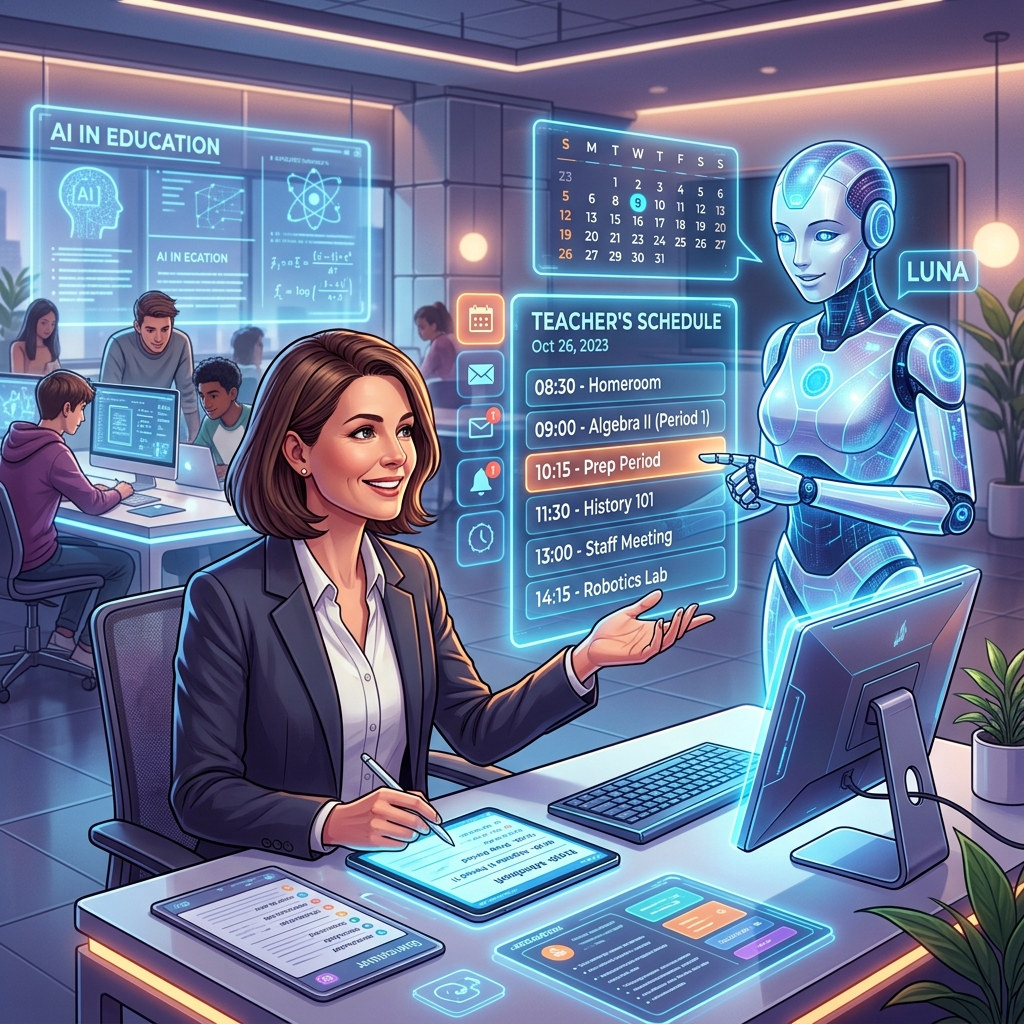
The modern South African classroom cannot ignore the impact of Artificial Intelligence. At SA Teachers, we believe AI should not replace the teacher but act as a force multiplier for student independence.
The AI Tutor: A 24/7 Learning Companion
One of the biggest barriers to independent learning is "getting stuck." When a student is at home doing homework and hits a wall, they often stop. The AI Tutor on sateachers.co.za acts as a bridge. It doesn't just give the answer; it prompts the student with questions, guiding them toward the solution. This mimics the Socratic method, ensuring the student remains the active driver of the process.
Personalised Study Guides
Independence requires organisation. Many learners struggle because they don't know how to synthesise the vast amount of information in their CAPS textbooks.
The Study Guide Creator allows students (or teachers) to input specific topics from the ATPs and generate a structured, easy-to-digest guide. When a student has a personalised guide that speaks to their specific areas of weakness, they are far more likely to engage in independent revision.

Redefining Assessment: From Testing to Growth
If we want students to be independent, we must change how we assess them. Standardised testing often encourages "learning for the mark." To encourage independence, we need to involve students in the assessment process.
Transparent Rubrics and Self-Grading
When students understand exactly how they are being graded, they can self-regulate.
Using the Essay Grader & Rubric Creator, teachers can generate detailed rubrics for English FAL (First Additional Language) or Home Language essays. By giving the rubric to the student before they start writing, you empower them to check their own work against the criteria.
Furthermore, the Essay Grader provides instant, objective feedback. A student can upload a draft, receive feedback on their structure and tone, and then rewrite it independently before ever handing it in to the teacher. This cycle of "feedback-reflection-improvement" is the hallmark of an independent learner.
Phase-Specific Approaches to Independence
The way we encourage independence must be developmentally appropriate for the South African context.
Foundation Phase (Grades R-3)
At this level, independence is about choice and self-management.
- Practical Tip: Create "learning stations." While the teacher works with a small group on Guided Reading, other students navigate stations independently.
- Tool Integration: Use the Worksheet Generator to create visual, play-based tasks that students can complete with minimal verbal instruction.
Here, the focus shifts to research and time management. With the increase in the number of subjects, students often feel overwhelmed.
- Practical Tip: Teach students how to use a planner.
- Tool Integration: The Study Guide Creator is vital here. Teach students to generate a guide for "Social Sciences: History" to help them see the narrative flow of the CAPS content, making independent study less intimidating.
FET Phase (Grades 10-12)
In the lead-up to the National Senior Certificate, independence is non-negotiable.
- Practical Tip: Use the "Flipped Classroom" model. Assign a video or a reading for homework, and use class time for high-level discussion or problem-solving.
- Tool Integration: The Exam Generator is the ultimate tool for FET independence. Students can request past-paper style questions on specific sub-topics (e.g., Organic Chemistry or Euclidean Geometry) to test their own readiness without waiting for a formal school assessment.
Overcoming the "Time" Barrier: How SMTs Can Support
One of the most common complaints from School Management Teams (SMTs) and teachers is: "We don't have time to teach independence; we have to finish the syllabus!"
This is a valid concern. The CAPS curriculum is content-heavy. However, independent learning actually saves time in the long run. When students are independent, the teacher doesn't have to repeat instructions five times. The teacher doesn't have to spend hours marking "first drafts" because the AI Tutor and Essay Grader have already helped the student refine their work.
Streamlining Administration
A major part of a teacher's "lost time" is administrative. Writing report comments, for example, can take dozens of hours.
The Report Comments Generator on SA Teachers uses AI to create professional, CAPS-aligned comments based on a few student descriptors. By reducing the time spent on admin, teachers are refreshed and have more mental capacity to plan the creative, student-centred lessons that foster independence.
Creating a Culture of Independent Learning: A Step-by-Step Guide
- Set the Expectation: From day one, tell your students: "I am your guide, but you are the pilot."
- Provide the Tools: Introduce them to the AI Tutor and explain how to use it ethically to solve problems.
- Differentiate Instruction: Don't give every student the same task. Use the Worksheet Generator to provide level-appropriate challenges.
- Value the Process, Not Just the Product: Praise a student for how they found a solution, not just for getting the right answer.
- Use Data to Empower: Show students their progress. Use the analytics from AI-powered tools to show them where they have improved and where they need to focus their independent efforts.
Real-World Scenario: The Grade 11 Life Sciences Classroom
Imagine a Grade 11 class tackling "Human Reproduction." The ATP is tight, and the content is complex.
- Traditional Approach: The teacher lectures for three days, students draw diagrams from the board, and then they write a quiz. Many fail because they didn't "get it" during the lecture.
- Independent Approach:
- Day 1: The teacher uses the CAPS-Aligned Lesson Planner to set up a "Discovery" lesson. Students are given a list of key terms and must use their textbooks and the AI Tutor to create their own "concept map."
- Day 2: Students use the Study Guide Creator to generate a summary of the hormonal cycles. They compare their summaries in small groups.
- Day 3: The teacher uses the Worksheet Generator to create a quiz. Students who struggle are directed back to the AI Tutor for a 10-minute "booster session" on their specific area of weakness.
In the second scenario, the teacher spent less time talking and more time observing and assisting. The students, meanwhile, were actively engaging with the material, building neural pathways that rote memorisation can never replicate.
Conclusion: The Future of South African Education
Encouraging independent learning is a journey, not a destination. It requires a shift in mindset from both teachers and students. We must move away from the fear of "getting it wrong" and toward the excitement of "finding it out."
By integrating the AI-powered tools available at sateachers.co.za, South African educators can bridge the gap between the demanding requirements of the CAPS curriculum and the need to develop autonomous, critical thinkers. Whether it's through generating the perfect rubric, providing 24/7 tutoring support, or streamlining the dreaded report-writing season, technology is the key to unlocking the potential of our learners.
Let us empower our students to stop asking, "Teacher, what do I do next?" and start saying, "Teacher, look at what I’ve discovered."
Are you ready to transform your classroom into a hub of independent learning? Explore our AI-powered tools today and reclaim your time while empowering your students.
SA
Dedicated to empowering South African teachers through modern AI strategies, research-backed pedagogy, and policy insights.