The Unseen Weight of the South African Chalkboard
In the quiet moments before the first bell rings at 07:30, thousands of South African educators stand in their classrooms, bracing themselves. Whether you are in a bustling metropolitan school in Gauteng or a rural quintile one school in the Eastern Cape, the pressure is palpable. It is the weight of the Annual Teaching Plans (ATPs), the looming Department of Basic Education (DBE) moderations, and the emotional labour of supporting learners who often bring the trauma of their socio-economic realities into the classroom.
Teacher mental health is no longer a "nice-to-have" topic for staffroom gossip; it is a critical pillar of our national education system. For too long, the narrative in South African schools has been one of "resilience" – a word often used to demand that teachers do more with less, until they reach a point of total exhaustion.
This post explores the systemic and psychological reasons why mental health support is non-negotiable for South African educators and provides actionable strategies, powered by the AI tools at SA Teachers, to reclaim your time and your peace of mind.
The Unique Stressors of the South African Educator
South African teachers face a unique set of challenges that are often overlooked in global pedagogical discussions. We are not just teaching; we are social workers, administrators, disciplinarians, and surrogate parents.
1. Overcrowded Classrooms and Diverse Learner Needs
In many Foundation Phase classrooms, a single teacher may be responsible for over 40 learners. In the Senior and FET phases, managing the diverse academic levels within one class—where some learners struggle with basic literacy while others need extension—creates immense cognitive load. This "differentiation fatigue" is a primary driver of teacher burnout.
2. The Administrative Mountain
The CAPS curriculum, while structured, requires a massive amount of record-keeping. Between tracking ATP compliance, maintaining learner profiles, and preparing for SMT (School Management Team) monitoring, the actual act of teaching often feels secondary to the act of documenting.
3. High-Stakes Assessments
The pressure of matric results and systemic evaluations creates a "results-at-all-costs" culture. This pressure trickles down from the DBE to the SMT and, finally, onto the shoulders of the individual educator.

Recognising the Signs of Burnout vs. Stress
It is important to distinguish between a "bad week" and professional burnout. Stress is characterized by over-engagement—feeling frantic and urgent. Burnout, however, is characterized by disengagement.
- Emotional Exhaustion: Feeling drained before the day even begins.
- Depersonalisation: Feeling cynical about your learners or your ability to make a difference.
- Reduced Accomplishment: Feeling that no matter how hard you work, you are falling behind on the ATPs.
If you find yourself dreading the Sunday evening "scramble" to prepare for Monday, your mental health is likely under siege.
The Link Between Workload and Mental Well-being
The primary cause of teacher mental health decline is not the children—it is the workload. When an educator spends their entire weekend marking 150 Grade 9 English FAL essays or manually creating rubrics for a Geography project, they lose the time necessary for psychological recovery.
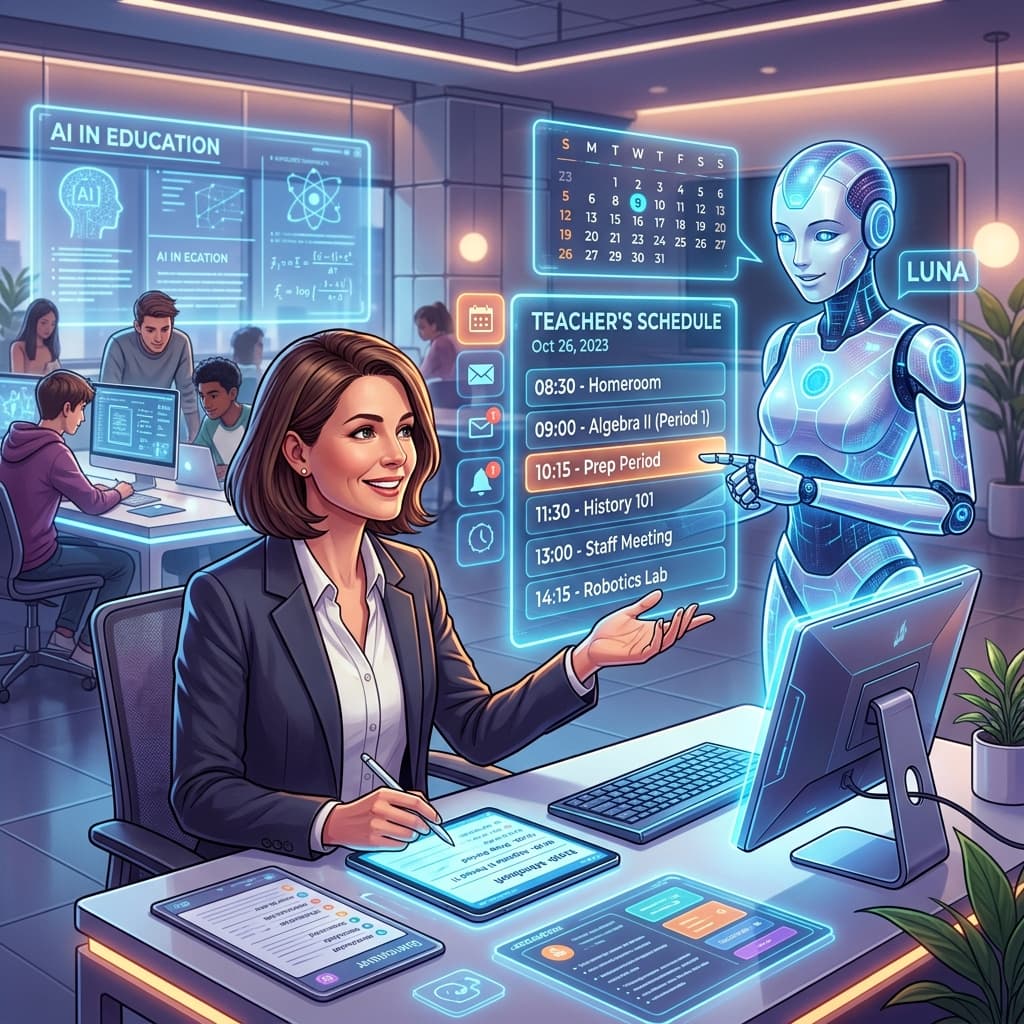
This is where digital transformation becomes a mental health intervention. By using the AI-powered tools on SA Teachers, you are not just "using tech"; you are setting boundaries.
How the CAPS-Aligned Lesson Planner Saves Your Sunday
One of the most significant stressors is the requirement to produce detailed lesson plans that align perfectly with the CAPS requirements. This often involves hours of cross-referencing documents.
The SA Teachers CAPS-Aligned Lesson Planner automates this process. By inputting your subject and the specific week of the ATP, the AI generates a structured plan that meets departmental standards. This reduces the "decision fatigue" that plagues educators, allowing you to focus on how to teach rather than what to document.
Reducing Prep Time with Worksheet & Exam Generators
Creating high-quality assessments from scratch is a time-sink. Many teachers find themselves staying at school until 17:00 just to type up a formal assessment.
The Worksheet & Exam Generators on our platform allow you to create differentiated materials in seconds. Whether you need a Grade 4 Mathematics mental maths drill or a Grade 11 Life Sciences practice test, the tool ensures the content is relevant and cognitively levelled.
Managing the Assessment Crisis
Assessment is arguably the most stressful part of the South African school calendar. Term 2 and Term 4 are notorious for "marking marathons" that lead to physical and mental illness.

Reclaiming Your Evenings with the Essay Grader
Language teachers, in particular, suffer from high burnout rates due to the volume of creative writing and transactional texts they must mark.
The SA Teachers Essay Grader & Rubric Creator is a game-changer. By uploading or inputting learner work, the AI provides a preliminary grade based on the DBE-style rubrics you’ve created.
Disclaimer: While the AI provides a powerful starting point, the teacher’s professional judgement remains final. However, having the AI highlight grammatical errors and suggest rubric levels reduces the grading time per script by up to 60%.
As the term draws to a close, the dread of writing hundreds of unique, meaningful report comments sets in. Many teachers resort to "copy-paste" methods that don't truly help the learner or the parent.
Our Report Comments Generator helps you craft professional, South African-context-specific comments that are constructive and personalized. This tool eliminates the linguistic "blank page syndrome" and ensures your SMT is satisfied with the quality of your feedback.
Practical Strategies for Mental Health Maintenance
While tools can reduce the workload, mental health also requires a shift in mindset. Here are actionable steps for South African educators:
1. Establish "Hard" Boundaries
Decide on a time when the "school brain" switches off. If you use WhatsApp groups for parents or learners, set an automated "Away" message after 17:00. Use your reclaimed time from using the Study Guide Creator to engage in a hobby that has nothing to do with education.
2. Peer Support Networks
Do not suffer in silence in your classroom. Use staff meetings to advocate for mental health days or peer-support systems. Sometimes, sharing a "lesson gone wrong" with a colleague over a cup of Rooibos is the best therapy.
3. Differentiated Support without the Effort
A major source of stress is the guilt of not being able to help every learner who is falling behind. The SA Teachers AI Tutor can be recommended to parents or used on classroom tablets. This tool provides 1-on-1 support to learners based on the specific CAPS curriculum, acting as a "teaching assistant" that never gets tired. This offloads the remedial pressure from you, the educator.
The Role of SMTs and School Governing Bodies (SGBs)
Mental health support must also be top-down. School Management Teams need to recognise that a burnt-out teacher is an ineffective teacher.
- Invest in Tools: Schools should provide access to platforms like SA Teachers as a standard resource, acknowledging that AI is a tool for teacher retention.
- Reduce Redundancy: SMTs should look at where administrative requirements overlap and use AI to summarise or consolidate reporting.
Why "Self-Care" Isn't Just Bubble Baths
In the context of South African education, self-care is a radical act of professional longevity. It is about:
- Cognitive Offloading: Using the Worksheet Generator so you don't have to think about formatting at 9 PM.
- Strategic Outsourcing: Using the Rubric Creator to ensure your marking is fair and fast.
- Physical Rest: Actually sleeping because your lesson plans for the week were finished in 15 minutes on Friday afternoon.
Case Study: From Burnout to Balance
Consider "Mrs. Mkhize," a Grade 10 Accounting teacher in Durban. She was spending 15 hours a week just on preparation and marking. Her stress levels were affecting her physical health, leading to frequent bouts of flu.
By integrating the SA Teachers suite into her workflow:
- Her lesson planning time dropped from 3 hours to 20 minutes using the CAPS-Aligned Lesson Planner.
- She used the Study Guide Creator to provide her learners with exam prep materials, which reduced the number of repetitive questions she had to answer in class.
- By the end of the term, she felt more "present" in her classroom, and her learners' engagement levels increased because their teacher wasn't perpetually exhausted.
Conclusion: A Call to Action for Every Educator
You cannot pour from an empty cup. The South African education system is demanding, but your mental health is the most valuable resource in your classroom. It is time to stop viewing overwork as a badge of honour and start viewing efficiency as a form of self-care.
By leveraging the AI-powered tools at SA Teachers, you are not taking a shortcut; you are choosing to work smarter. You are choosing to preserve your energy for what matters most: the learners in front of you.
Your mental health matters. Your time matters. Start reclaiming both today.
Ready to reduce your administrative burden? Explore our CAPS-Aligned Lesson Planner and Essay Grader today and join a community of South African educators who are prioritising their well-being.
SA
Dedicated to empowering South African teachers through modern AI strategies, research-backed pedagogy, and policy insights.