The Assessment Burden in South African Education
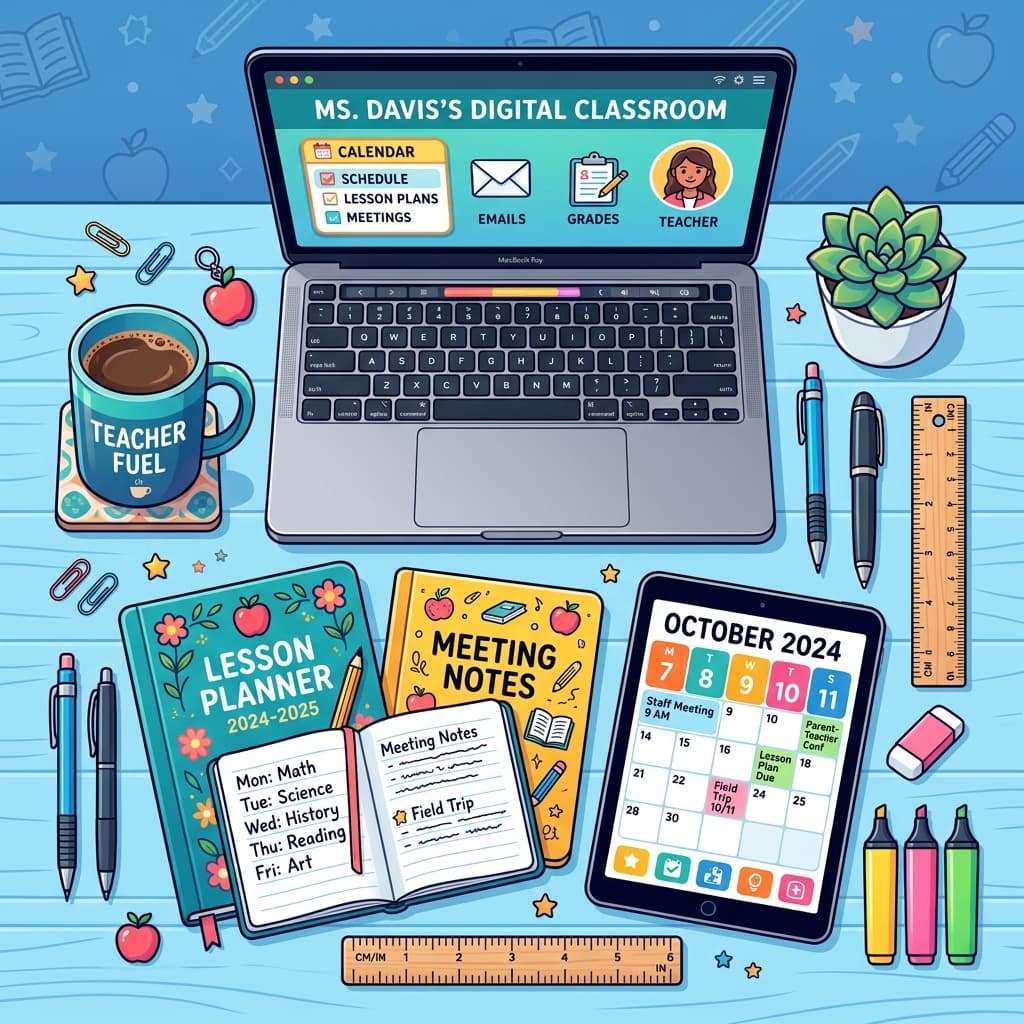
For many South African educators, the term "assessment" often triggers a sense of overwhelming administrative pressure. Whether you are teaching Foundation Phase in a rural school or managing a matriculant class in a busy urban FET college, the requirements set out by the Department of Basic Education (DBE) are rigorous. Between the Annual Teaching Plans (ATPs), the heavy weighting of School-Based Assessments (SBA), and the meticulous need for CAPS alignment, teachers often find themselves spending more time on paperwork than on actual teaching.
The traditional process of creating a high-quality exam or test is exhaustive. It involves sourcing relevant texts or data, ensuring cognitive levels are balanced according to Bloom’s Taxonomy (as required by CAPS), drafting a comprehensive marking guideline (memo), and then formatting the document for printing. This process can take hours, if not days, of a teacher’s personal time.
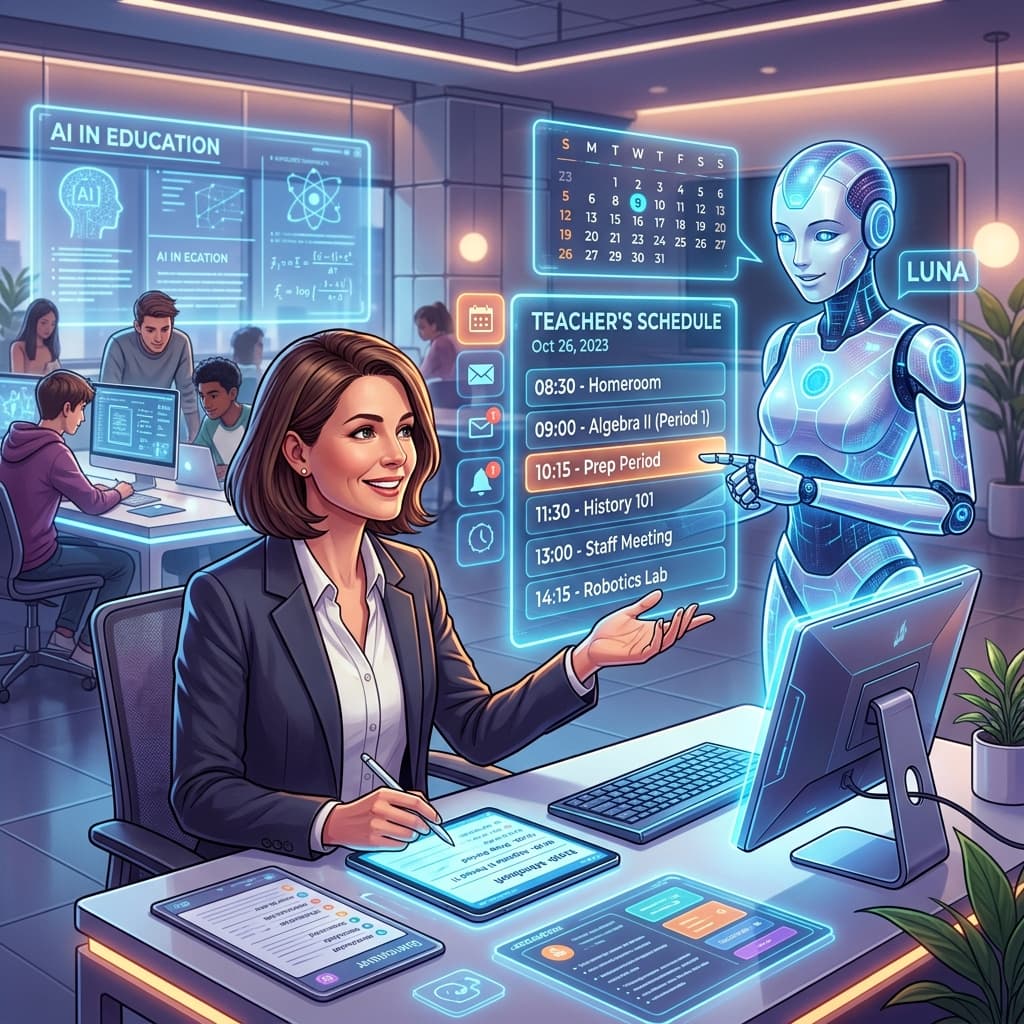
However, a technological shift is occurring. Artificial Intelligence (AI) is no longer a futuristic concept; it is a practical, everyday tool that is transforming South African staffrooms. By leveraging AI-powered platforms like SA Teachers, educators are reclaiming their weekends while producing assessments that are more professional, varied, and accurately aligned with national standards than ever before.

Why AI is a Necessity for the Modern South African Teacher
The modern South African classroom is characterized by its diversity—not just culturally, but academically. Teachers are often faced with large class sizes where learners possess vastly different reading ages and cognitive abilities. Creating a "one size fits all" assessment is no longer sufficient to meet the needs of all learners.
1. Alignment with CAPS and ATPs
The Curriculum and Assessment Policy Statement (CAPS) is the backbone of our education system. Every assessment must strictly adhere to the specific aims and objectives outlined for a particular term. AI tools, specifically those built for the local context like the CAPS-Aligned Lesson Planner on SA Teachers, understand these nuances. They can generate content that speaks directly to the topics prescribed in the ATPs for any given week.
2. Maintaining Cognitive Balance
Moderation by School Management Teams (SMTs) often highlights a common issue: assessments are either too easy or too difficult. CAPS requires a specific distribution of cognitive levels:
- Lower Order (Knowledge and Recall): 25%
- Middle Order (Understanding and Application): 50%
- Higher Order (Analysis, Evaluation, and Synthesis): 25%
Manually calculating this balance while drafting questions is tedious. AI can be instructed to generate a specific number of questions for each level, ensuring that your formal assessment passes internal and external moderation with flying colours.
At sateachers.co.za, we have developed a suite of AI tools specifically designed to handle the heavy lifting of assessment creation. Here is how you can use these tools to transform your preparation process.
The Worksheet & Exam Generator: From Topic to Test
The Worksheet & Exam Generator is perhaps the most powerful tool in the arsenal. Instead of scouring old past papers and trying to "copy-paste" a new test together, you can simply input your subject, grade, and the specific topics you’ve covered in the current cycle.
For example, a Grade 7 Natural Sciences teacher can request a 50-mark test on "The Solar System," specifying a mix of multiple-choice questions, data-response questions, and long-form paragraphs. Within seconds, the AI generates a structured paper complete with a professional layout and, crucially, a full marking guideline (memo). This tool doesn't just provide questions; it ensures they are phrased in the way South African learners are accustomed to seeing them in national exams.
Essay Grader & Rubric Creator: Objective Marking for Subjective Work
Marking English Home Language essays or Life Orientation projects is notoriously time-consuming. The subjective nature of these tasks often leads to "marking fatigue," where the first script is graded differently from the fiftieth.
The Essay Grader & Rubric Creator solves this by allowing teachers to generate custom, CAPS-compliant rubrics in seconds. You can specify criteria such as "Structure," "Language Usage," or "Content Relevancy." Furthermore, the AI can assist in the preliminary grading of digital submissions, providing consistent feedback based on the rubric. This ensures transparency and fairness, which is vital during SMT moderation or parental queries.

Step-by-Step: Creating a Grade 9 Mathematics Assessment in 5 Minutes
Let's look at a practical scenario. Imagine you are a Grade 9 Mathematics teacher. You have just finished the section on Algebraic Equations, and the ATP requires a formal class test.
- Input Parameters: Open the Worksheet & Exam Generator on SA Teachers. Select Grade 9, Mathematics, and input "Algebraic Equations: solving for x, word problems, and equations with fractions."
- Define Cognitive Levels: Request a 30-mark test with 10 marks for basic calculation, 15 marks for application, and 5 marks for a "challenge" question (higher order).
- Generate and Refine: The AI will produce the questions. You can "regenerate" any specific question that doesn't quite fit your class's current level.
- Create the Memo: Click the button to generate the marking guideline. The AI will provide step-by-step solutions, which are perfect for showing learners where they went wrong during post-test corrections.
- Export and Print: Copy the content into your school’s letterhead, and you are ready for the photocopier.
By using this method, a task that usually takes two hours of searching and typing is completed in the time it takes to brew a cup of coffee.
Assessment isn't only about the final exam; it’s about the journey of learning. Formative assessment—checking for understanding during the lesson—is where the AI Tutor on SA Teachers shines.
Teachers can project the AI Tutor onto a smartboard or have learners interact with it on tablets. The AI Tutor can ask probing questions based on the lesson content, providing instant feedback to learners. This allows the teacher to identify gaps in knowledge before the formal SBA takes place. If the AI Tutor notices that 60% of the class is struggling with a particular concept in Geography, the teacher can immediately pivot the lesson to address that specific "bottleneck."
Supporting Diverse Learners with the Study Guide Creator
Inclusivity is a major focus of the Department of Basic Education. Learners with barriers to learning often struggle with the dense language of traditional textbooks.
Before a major assessment, you can use the Study Guide Creator to summarise complex chapters into bullet points, infographics, or simplified language. This tool can take a 20-page chapter on the "Industrial Revolution" and condense it into a "Quick-Review Guide" for learners who need extra support. By providing these resources, you are not just assessing learners; you are equipping them with the tools they need to succeed in those assessments.
Once the assessments are marked, the final administrative hurdle remains: report cards. Writing meaningful, personalised comments for 200+ learners is a daunting task that often results in generic "He must work harder" remarks.
The Report Comments Generator on SA Teachers integrates with your assessment data. By inputting a learner's strengths and weaknesses identified during the assessment phase, the AI can generate professional, encouraging, and constructive comments. For example, if a learner excelled in Geometry but struggled with Algebra, the AI will craft a comment that acknowledges the achievement while providing specific advice for improvement, all while maintaining the professional tone expected by SMTs and parents.
Practical Tips for AI-Assisted Assessment
To get the most out of these AI tools, keep these three tips in mind:
1. Be Specific in Your Prompts
The more detail you give the AI, the better the result. Instead of saying "Create a History test," say "Create a Grade 10 History test on the French Revolution, focusing on the causes and the Storming of the Bastille, including one source-based question."
2. Always Review and Edit
AI is a co-pilot, not the captain. While the Worksheet & Exam Generator is incredibly accurate, you should always review the questions to ensure they match the exact terminology you used in class. You know your learners best.
3. Use AI for Differentiation
If you have a group of learners who are struggling with English as a First Additional Language (FAL), use the AI to simplify the language of a Science or EMS test without changing the core content being assessed. This ensures you are testing their subject knowledge, not their language proficiency.
The Future of Teaching in South Africa
The integration of AI into South African schools is not about replacing teachers; it is about empowering them. We are currently facing a crisis of teacher burnout and a shortage of resources. By adopting tools like the CAPS-Aligned Lesson Planner and the Exam Generator, we reduce the "grunt work" and allow teachers to focus on what they do best: inspiring and mentoring the next generation.
Using AI for assessments ensures that our standards remain high, our marking remains fair, and our teachers remain sane. As we move further into the 21st century, the ability to use AI effectively will become a core competency for every educator in the country.
Conclusion
Creating assessments doesn't have to be a midnight chore. With the AI-powered suite available at SA Teachers, you can create high-quality, CAPS-aligned, and professionally formatted tests, rubrics, and study guides in a fraction of the time.
Whether you are preparing for a small class quiz or a major year-end examination, the tools at sateachers.co.za are designed to support you every step of the way. Stop spending your weekends on admin and start using AI to bring more creativity and impact back into your classroom.
Are you ready to save hours on your next assessment? Head over to our Worksheet & Exam Generator today and experience the future of South African education.
SA
Dedicated to empowering South African teachers through modern AI strategies, research-backed pedagogy, and policy insights.