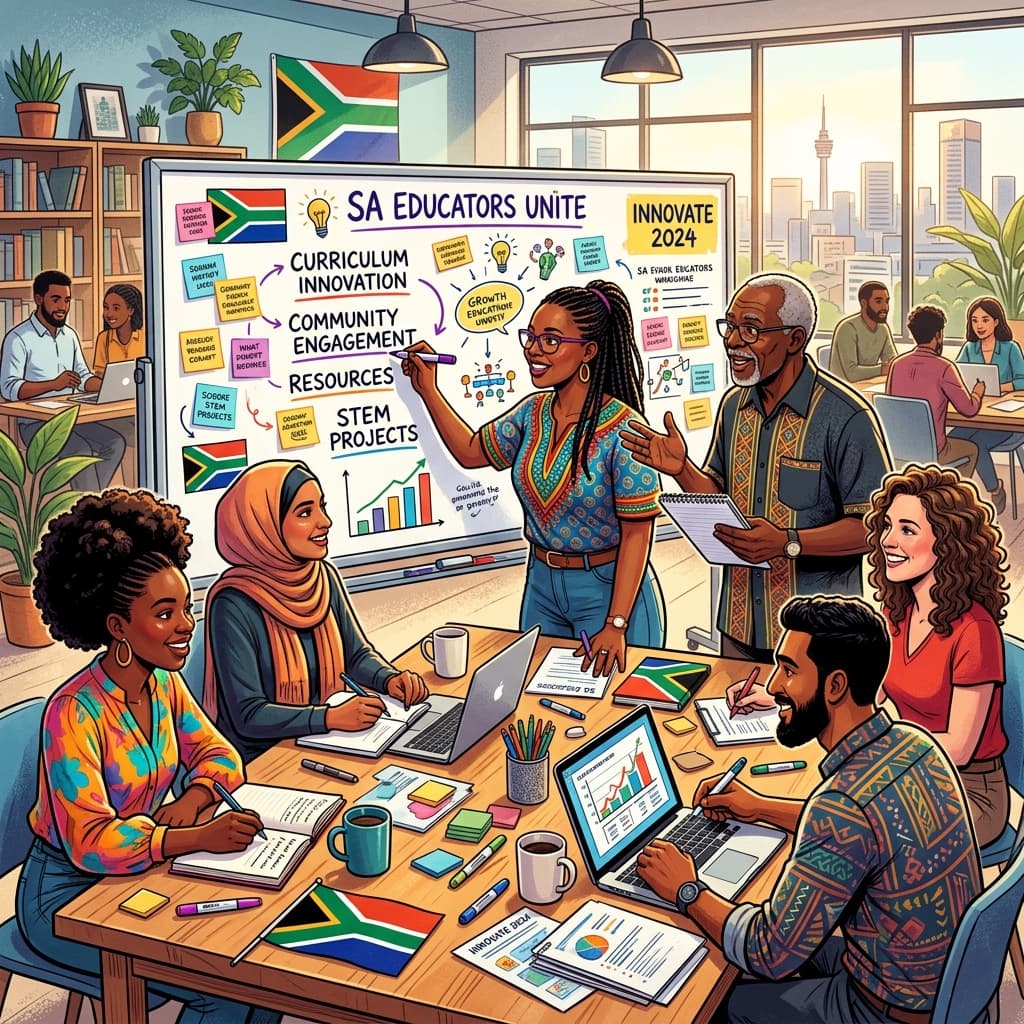
Welcome, fellow educators! In the dynamic world of South African education, we're constantly seeking effective tools to bring the Curriculum and Assessment Policy Statement (CAPS) to life in our classrooms. The digital landscape offers an incredible array of resources, but navigating it to find genuinely CAPS-aligned, high-quality material can feel like searching for a needle in a haystack.
We all understand the unique pressures of our profession: the packed curriculum, diverse learning needs, and the constant drive to innovate while staying true to educational standards. This post is designed to be your comprehensive guide, a practical roadmap to discovering and utilising online CAPS-aligned teaching resources that will not only save you precious time but also enrich your students' learning experiences. Let's unlock the digital treasure chest together!
Why Embrace Online CAPS-Aligned Resources?
In an increasingly digital world, relying solely on textbooks can limit our students' exposure and our own teaching methodologies. Online resources offer a multitude of benefits that directly support our CAPS objectives:
- Time-Saving Efficiency: Imagine not having to create every single worksheet or lesson plan from scratch. High-quality online resources provide ready-to-use materials, freeing you to focus on classroom interaction and individual student support.
- Access to Diverse Perspectives: Beyond the core textbook, online platforms offer alternative explanations, interactive simulations, and real-world examples that can deepen understanding and cater to different learning styles.
- Staying Current and Relevant: The digital realm is dynamic. You can find resources reflecting the latest pedagogical approaches, current events, or updated scientific discoveries faster than traditional materials.
- Enhanced Student Engagement: Interactive quizzes, educational videos, virtual field trips, and gamified learning experiences can transform abstract CAPS concepts into engaging, memorable lessons.
- Differentiation Made Easier: Whether you need remedial support materials, enrichment activities for advanced learners, or resources tailored for visual or auditory learners, the online world provides options for every student in your CAPS classroom.
- Collaborative Learning Opportunities: Many platforms facilitate student collaboration, project-based learning, and peer-to-peer teaching, all vital skills nurtured within the CAPS framework.
Official Pillars: Department of Basic Education (DBE) and Provincial Resources
When it comes to CAPS-aligned teaching resources, your first port of call should always be the official sources. These are the foundational documents and materials that directly inform our curriculum.
The Department of Basic Education (DBE) Website
The DBE website is an indispensable hub, often overlooked in the rush for 'new' content. It's where you'll find the most authentic and comprehensive CAPS documents.
- CAPS Documents Themselves: Always refer to the official CAPS documents for each subject and grade. These are your ultimate guide to content, context, assessment requirements, and specific skills to be developed. You can find them under the "Curriculum" section.
- Workbooks and Textbooks: The DBE provides a range of learner workbooks and approved textbook lists. While not always cutting-edge in design, these workbooks are meticulously aligned with CAPS and offer a solid base for classroom activities and homework. Look for the "Materials" or "Resource Centre" sections.
- Practical Tip: Download the relevant workbooks at the start of the year. Even if you use other resources, these can serve as excellent baseline activities or homework assignments.
- Past Examination Papers: Crucial for Grades 9-12, the DBE archives past National Senior Certificate (NSC) examination papers with marking guidelines. These are invaluable for preparing students for high-stakes assessments and understanding the expected depth of knowledge for CAPS topics.
- Practical Tip: Use past papers not just for revision, but throughout the year to familiarise students with question types and mark allocation for specific CAPS content areas.
- Annual Teaching Plans (ATPs): These plans break down the CAPS curriculum into manageable weekly units, providing guidance on pacing, assessment, and resource allocation. While not always available for every subject and phase directly on the national site, they are a critical planning tool.
- Teacher Guides and Support Materials: Occasionally, the DBE publishes supplementary teacher guides or resource packs for specific subjects or initiatives. Keep an eye on their announcements section.
Provincial Department of Education Websites
Each of South Africa's nine provinces has its own Department of Education website. These often complement the national DBE site with provincial-specific resources, policies, and support materials.
Provincial ATPs: Often, provincial departments will release their own detailed Annual Teaching Plans, sometimes with additional guidance or clarification specific to the province's context or priorities.
Provincial Initiatives and Projects: Keep an eye out for provincial projects, workshops, or resource development initiatives. These can offer unique insights and materials that cater more directly to your local teaching environment.
District Support: Some provincial sites link to district-level support, which might include access to local subject advisors or resource centres.
Keywords:
DBE resources,CAPS documents,past papers South Africa,learner workbooks,annual teaching plans.
Reputable South African Educational Publishers and Providers
Many established South African educational publishers have transitioned their offerings into the digital space, providing excellent CAPS-aligned content, often with interactive features. These frequently require subscriptions but offer comprehensive, reliable resources.
Traditional Publishers with Digital Portfolios
Companies like Via Afrika, Macmillan Education South Africa, Oxford University Press Southern Africa, and Shuter & Shooter have long been pillars of SA education. Their digital platforms now offer:
- e-Textbooks and Interactive Content: Digital versions of their approved textbooks, often enhanced with videos, simulations, quizzes, and direct links to supplementary materials.
- Lesson Planning Tools: Many platforms integrate features to help you plan lessons, assign activities, and track student progress – all aligned with specific CAPS outcomes.
- Teacher Guides and Solutions: Access to digital teacher guides, answer keys, and additional support materials that complement their textbooks.
- Assessment Banks: Pre-built banks of questions and assessment tasks, often customisable, covering all aspects of the CAPS curriculum for various grades and subjects.
Dedicated South African Digital Resource Platforms
Beyond the traditional publishers, a vibrant ecosystem of SA-specific digital platforms has emerged, created by and for South African teachers.
Teacha! (www.teacha.co.za):
- What it offers: Often called the "Teachers Pay Teachers" of South Africa, Teacha! is an online marketplace where South African teachers can buy and sell their original educational resources. This means a vast and ever-growing collection of worksheets, lesson plans, presentations, posters, assessments, and more, created by fellow educators who understand the CAPS context intimately.
- Why it's great for CAPS: Resources are often tagged by grade, subject, and even specific CAPS topic, making it easier to find exactly what you need. You'll find a mix of free and paid resources.
- Practical Tip: Start by searching for free resources in your subject and grade. This allows you to sample the quality before investing in paid content. Many teachers on Teacha! are excellent at differentiating content, so look out for bundles that offer varying levels of difficulty.
Siyavula (www.siyavula.com):
- What it offers: Siyavula is renowned for providing high-quality, free and open education resources (OER), particularly strong in Mathematics and Physical Sciences for Grades 4-12. They offer textbooks, practice questions, and online assessment tools aligned with CAPS.
- Why it's great for CAPS: Their content is meticulously aligned and developed with local context in mind. The practice questions often provide instant feedback, which is excellent for student self-assessment.
- Practical Tip: Encourage your Maths and Science students to use Siyavula for extra practice and revision. The platform is particularly useful for matriculants preparing for NSC exams.
Mindset Learn (www.mindset.africa):
- What it offers: Mindset Learn is a non-profit organisation that provides free educational resources via TV broadcasts and an extensive online platform. They cover a wide range of subjects for Grades 10-12, focusing on exam preparation, revision, and concept explanation.
- Why it's great for CAPS: Their video lessons are particularly effective for visual and auditory learners, breaking down complex CAPS topics into digestible segments. They also provide worksheets and study guides.
- Practical Tip: Use Mindset Learn videos as supplementary explanations for difficult concepts in class, or recommend them to students for homework or self-study, especially leading up to assessments.
EduTab (www.edutab.co.za):
- What it offers: While primarily focused on providing digital textbooks and learning devices, EduTab also curates a collection of digital learning resources.
- Why it's great for CAPS: Their focus is on delivering curriculum-aligned content in a digital format, suitable for schools adopting more technology.
- Keywords:
South African teaching resources,CAPS lesson plans SA,Teacha resources,Siyavula Maths Science,Mindset Learn matric,digital textbooks SA.
Global Platforms with a CAPS Alignment Strategy
While not exclusively South African, many international educational platforms host vast quantities of resources. With a discerning eye and smart search strategies, you can adapt or adopt materials that align well with CAPS.
1. Twinkl (www.twinkl.co.za)
- What it offers: Twinkl is a global educational publisher with an enormous library of teaching materials, covering virtually every subject and grade. Crucially, they have a dedicated South Africa section (twinkl.co.za) where resources are specifically created or adapted for the CAPS curriculum.
- Why it's great for CAPS: The SA section makes a huge difference. You'll find lesson packs, worksheets, presentations, display materials, and activities often explicitly labelled with grade levels and CAPS topics. They excel at visually appealing and engaging resources.
- Practical Tip: While a significant portion requires a paid subscription, the depth and breadth of resources often make it worthwhile. Use their free trial to explore their SA-specific content first. Search using keywords like "Grade 6 Natural Sciences CAPS."
2. Teachers Pay Teachers (www.teacherspayteachers.com)
- What it offers: Similar to Teacha!, TPT is an international online marketplace where teachers buy and sell resources. While it's primarily US-focused, many educators from around the world, including South Africa, contribute.
- Why it can be CAPS-aligned: With millions of resources, you can often find conceptual explanations, interactive activities, or graphic organisers that transcend specific curricula. Look for SA teachers who contribute or use broad conceptual search terms.
- Practical Tip: Filter by 'grade' and 'subject'. For specific CAPS alignment, you'll need to review the resource carefully to ensure it fits the SA context and curriculum requirements. Sometimes, a resource can be easily adapted by changing a few terms or examples.
3. Khan Academy (www.khanacademy.org)
- What it offers: Khan Academy provides free, world-class education primarily through video lessons and practice exercises in Mathematics, Science, Arts & Humanities, and more.
- Why it's great for CAPS: While not specifically CAPS-aligned, the core concepts taught in subjects like Maths and Science are universal. Their explanations are clear, concise, and offer excellent supplementary learning for students struggling with specific concepts in CAPS.
- Practical Tip: Assign specific Khan Academy videos or practice sets to students who need extra support or enrichment in a particular CAPS topic. It's particularly strong for high school Maths and Sciences.
4. YouTube
- What it offers: A vast repository of video content. Many educators, educational institutions, and content creators upload lessons, demonstrations, documentaries, and tutorials.
- Why it's great for CAPS: Search for specific CAPS topics, scientific experiments, historical events, literature analyses, or practical demonstrations.
- Examples: "Photosynthesis Grade 8 CAPS explanation," "South African history Grade 7," "Life Sciences Grade 11 mitosis." Look for channels by South African educators or reputable international educational channels.
- Practical Tip: Always preview videos for accuracy, relevance, and appropriateness before sharing with students. Curate playlists of relevant videos for easy access.
5. Pinterest (www.pinterest.com)
What it offers: A visual discovery engine where users can find and save ideas, including a massive amount of educational content.
Why it's great for CAPS: Search for "CAPS worksheets," "Grade 3 Maths activities South Africa," "Creative Arts CAPS ideas," or "classroom decor South Africa." You'll find infographics, activity ideas, printables, and links to various educational blogs and websites.
Practical Tip: Create subject-specific boards to organise your findings. Pinterest is excellent for finding inspiration for classroom displays, hands-on activities, and visually engaging resources.
Keywords:
Twinkl South Africa,Teachers Pay Teachers CAPS,Khan Academy SA,YouTube education South Africa,Pinterest teaching ideas.
Non-Profit Organisations and NGOs Supporting SA Education
Several non-profit organisations are committed to improving education in South Africa, often providing free and valuable CAPS-aligned teaching resources.
1. The African Storybook Initiative (africanstorybook.org)
- What it offers: A collection of openly licensed picture storybooks for early reading, available in multiple African languages (including all 11 official SA languages) and English.
- Why it's great for CAPS: Perfect for Foundation and Intermediate Phase teachers, promoting literacy, language development, and a love for reading. The stories are culturally relevant and can be downloaded, printed, or read online.
- Practical Tip: Use these stories for shared reading, independent reading, or even as a basis for creative writing tasks, aligning with Language CAPS requirements.
2. Fundza Literacy Trust (www.fundza.mobi)
- What it offers: Fundza provides free, accessible online content for young people, with a strong focus on literacy and reading. They offer short stories, novels, non-fiction, and educational content.
- Why it's great for CAPS: Excellent for promoting reading for pleasure and improving literacy skills among high school students, especially those with limited access to physical books. Their content is designed to be engaging and mobile-friendly.
- Practical Tip: Encourage students to explore Fundza for recreational reading or assign specific articles/stories that tie into themes in your English or Home Language CAPS curriculum.
3. Bridge (www.bridge.org.za)
What it offers: Bridge acts as a network and knowledge broker, connecting education stakeholders and sharing effective practices. While not a direct resource provider in the same way as Twinkl, they often highlight innovative educational initiatives and resources developed by their network partners.
Why it's great for CAPS: Keep an eye on their publications and news sections for insights into best practices, successful projects, and potential new resource avenues that align with CAPS implementation.
Keywords:
African Storybook Initiative,Fundza Literacy Trust,South Africa education NGOs.
Strategies for Effective Resource Search and Evaluation
Finding resources is one thing; ensuring they are high-quality and genuinely CAPS-aligned is another. Here’s a framework for smart resource hunting.
Mastering Your Search Keywords
Be specific and use relevant South African terminology.
- Grade + Subject + CAPS Topic + Resource Type:
- "Grade 5 Social Sciences CAPS map skills worksheet"
- "Grade 10 Physical Sciences CAPS momentum lesson plan"
- "Foundation Phase Life Skills CAPS hygiene activity"
- Include "South Africa" or "SA":
- "Grade 7 English FAL short stories South Africa"
- "Grade 12 History CAPS apartheid essay questions SA"
- Be specific about pedagogical approach:
- "CAPS inquiry-based learning Natural Sciences"
- "Cooperative learning activities CAPS Maths"
Your CAPS Alignment Checklist: Does It Fit?
Before you download or adapt a resource, put it through this crucial CAPS filter:
- Content Accuracy and Relevance: Does the factual content align with the CAPS curriculum statements for your specific grade and subject? Are the examples culturally appropriate for South Africa?
- Cognitive Demand: Does the resource challenge students at the appropriate CAPS cognitive level (e.g., remembering, understanding, applying, analysing, evaluating, creating)? Avoid resources that are too simplistic or overly complex.
- Skills Development: Does it promote the skills outlined in CAPS (e.g., critical thinking, problem-solving, communication, collaboration, research, digital literacy)?
- Language and Terminology: Does it use the correct academic language and terminology as prescribed by CAPS? (Be especially mindful of international resources that might use different terms.)
- Assessment Potential: Can the resource be used to assess specific CAPS learning outcomes? Does it offer opportunities for formative or summative assessment?
- Pacing and Scope: Does it cover the specific scope of work for your grade and subject according to the ATPs? Is it too broad or too narrow?
- Bias and Inclusivity: Is the resource free from bias and inclusive of diverse backgrounds, abilities, and cultures, reflecting the values of the South African Constitution and CAPS?
Quality Indicators for Online Resources
Beyond CAPS alignment, consider these aspects of quality:
Credibility of Source: Who created this resource? Is it from a reputable publisher, educational institution, or experienced educator?
Clarity and Readability: Is the text clear, well-organised, and easy for students to understand? Is the layout visually appealing and not cluttered?
Engagement Factor: Does it capture student interest? Does it encourage active participation or passive consumption?
Accessibility: Is it usable for students with diverse needs? (e.g., clear fonts, good contrast, options for differentiation). Can it be printed easily if needed?
Up-to-Date: Is the information current, especially for subjects like Science, Technology, and Social Sciences?
Copyright and Licensing: Is the resource free to use, or do you need to purchase a license? Always respect intellectual property.
Keywords:
evaluate teaching resources,CAPS alignment checklist,online resource quality,South African educational content.
Beyond Worksheets: Integrating Digital Tools for CAPS
Online resources aren't just about static worksheets. The digital realm offers dynamic tools that can transform your CAPS lessons.
Interactive Whiteboard Resources: Many platforms offer interactive games, puzzles, and activities designed for smart boards, making lessons engaging and collaborative.
Virtual Labs and Simulations: For Science and Technology, virtual labs (e.g., PhET Interactive Simulations) allow students to conduct experiments safely and explore concepts that might be difficult to demonstrate in a physical classroom, directly supporting CAPS practical investigations.
Online Quiz Tools (Kahoot!, Quizizz, Google Forms): These tools make formative assessment fun and provide instant feedback, helping you identify areas where students need more support on specific CAPS content.
Collaboration Platforms (Google Classroom, Microsoft Teams, Zoom): Use these to share resources, facilitate group projects, host virtual discussions, and collect assignments, fostering the collaborative skills emphasised in CAPS.
Digital Storytelling Tools (Storybird, Canva): Encourage students to create their own digital stories, presentations, or infographics to demonstrate their understanding of CAPS topics, enhancing creativity and communication skills.
Keywords:
interactive learning South Africa,virtual labs for schools SA,online quizzes CAPS,classroom technology South Africa.
The Teacher's Digital Toolbox: Organisation and Management
Finding great resources is only half the battle. Organising them effectively ensures they are always at your fingertips.
- Cloud Storage (Google Drive, OneDrive, Dropbox): Create a structured folder system by grade, subject, and CAPS topic. This allows you to access your resources from any device.
- Browser Bookmarks/Favourites: Categorise your favourite educational websites and specific resource pages for quick access. Use bookmark folders for different subjects or types of resources.
- Digital Notebooks (OneNote, Evernote): Use these to jot down ideas, link to resources, and plan lessons, integrating all your digital findings into your daily workflow.
- "To-Do" Lists and Planners: When you find a promising resource, immediately add it to your weekly or monthly planner to ensure it gets used.
- Collaborate with Colleagues: Share your findings with your subject department or phase team. Create a shared cloud folder where everyone contributes and benefits from curated CAPS resources.
Challenges and Considerations for South African Teachers
While online resources are invaluable, we must acknowledge the realities of our context:
- Data and Connectivity: Access to reliable internet and affordable data remains a significant hurdle for many teachers and students. Prioritise resources that can be downloaded for offline use or require minimal bandwidth.
- Device Access: Not all students have access to personal devices. Plan lessons that can be used on shared classroom devices, or printed if needed.
- Digital Literacy: Both teachers and students may need support in developing the digital skills necessary to effectively use online tools and resources.
- Information Overload: The sheer volume of online content can be overwhelming. Stick to your CAPS alignment checklist and quality indicators to filter effectively.
- Copyright and Fair Use: Always be mindful of copyright. Use resources that are openly licensed (OER), clearly labelled for educational use, or purchased legally.
Your Journey to CAPS Resource Mastery
The digital world is a powerful ally in our mission to deliver high-quality, CAPS-aligned education. By strategically leveraging the wealth of online resources – from official DBE documents to innovative SA platforms and adaptable global content – you can enrich your teaching, inspire your students, and manage your workload more effectively.
Remember, you are not alone in this journey. Connect with your peers, share your discoveries, and continuously explore the evolving landscape of educational technology. Embrace the challenge, empower your students with engaging content, and let's continue to shape the future of South African education, one well-resourced lesson at a time. Happy hunting, and here's to a digitally enriched CAPS classroom!
Tyler. M
Dedicated to empowering South African teachers through modern AI strategies, research-backed pedagogy, and policy insights.