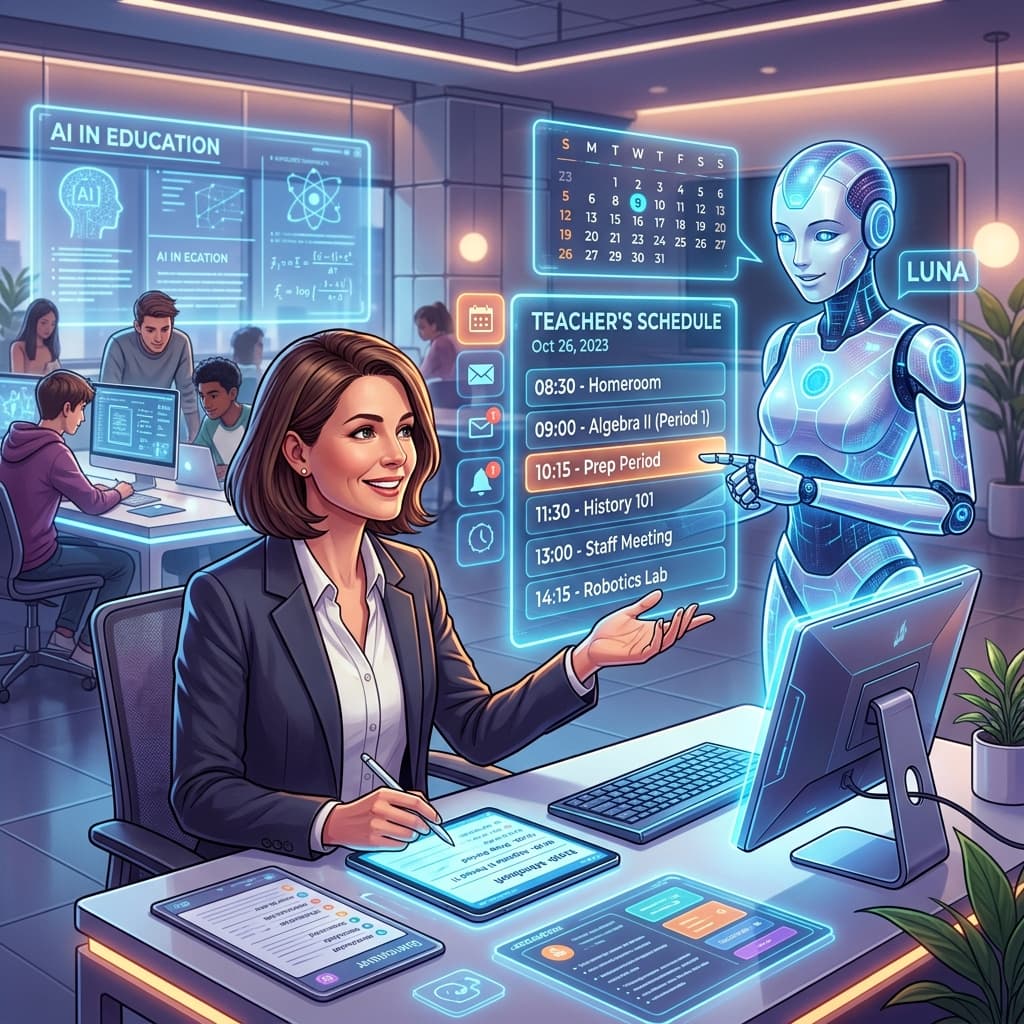
The Reality of the Modern South African Classroom
In any given South African classroom, from the bustling urban centres of Gauteng to the rural schools of the Eastern Cape, a teacher is faced with a monumental task. You aren't just teaching a subject; you are navigating a complex landscape of diverse learning abilities, multiple home languages, and the rigid requirements of the Curriculum and Assessment Policy Statement (CAPS).
The pressure to adhere to the Annual Teaching Plans (ATPs) provided by the Department of Basic Education (DBE) often leaves educators feeling like they are on a treadmill that never stops. While the ATP provides the "what" and the "when," it often fails to account for the "how"—the specific way a lesson needs to be adapted for a learner who is struggling with English as a First Additional Language (FAL) or a learner who has already mastered the content and needs an extension.
This is where the need for easier lesson customisation tools becomes critical. Customisation is no longer a luxury for the "overachieving" teacher; it is a survival mechanism for every educator committed to inclusive, effective education.
The Conflict: CAPS Compliance vs. Differentiated Instruction
The Department of Basic Education is clear: every learner has the right to quality education. However, the sheer volume of administrative work—lesson filing, moderation, and assessment tracking—often eats into the time required for actual pedagogical innovation.
Teachers frequently find themselves trapped in a cycle of "teaching to the middle." Because customising a lesson for three different ability levels in a class of 40 learners takes hours of manual work, many are forced to use a one-size-fits-all approach. This leads to two major problems:
- Learner Disengagement: High-flyers become bored and disruptive.
- Learning Gaps: Struggling learners fall further behind, creating a cumulative deficit that becomes impossible to bridge by the time they reach the FET phase.
Easier customisation tools allow teachers to take the core requirements of CAPS and "remix" them instantly to suit their specific context.

Why "Off-the-Shelf" Resources Are No Longer Enough
For years, teachers have relied on standard textbooks and shared folders of "legacy" resources. While these are useful starting points, they lack the flexibility required for the 21st-century classroom.
1. The Language Barrier
In South Africa, the Language of Learning and Teaching (LoLT) is often not the learner's mother tongue. A standard worksheet designed for a native speaker might be cognitively appropriate but linguistically inaccessible. Customisation tools allow a teacher to simplify the vocabulary of a complex Science or History text without lowering the cognitive demand of the task.
2. Contextual Relevance
A Geography lesson on urban settlement is far more impactful if it references local landmarks or the specific provincial context of the learners. Customisation allows teachers to swap out generic examples for ones that resonate with the learners' lived experiences, increasing engagement and retention.
3. Neurodiversity and Inclusion
With the move towards inclusive education, teachers are seeing more learners with ADHD, dyslexia, and other barriers to learning in mainstream classrooms. Customising a lesson might mean changing the font size, breaking instructions into smaller steps, or providing visual scaffolds. Doing this manually for every lesson is unsustainable.
How SA Teachers is Solving the Customisation Crisis
At SA Teachers, we understand that South African educators are some of the hardest-working professionals in the country. Our suite of AI-powered tools is designed specifically to give you back your time while actually improving the quality of your customisation.
The CAPS-Aligned Lesson Planner: Your Foundation
The biggest hurdle to customisation is the fear of falling behind the ATP. Our CAPS-Aligned Lesson Planner bridges this gap. By inputting your subject and grade, the AI generates a lesson structure that is already mapped to the specific objectives required by the DBE.
Instead of spending two hours drafting a lesson plan from scratch, you can generate a compliant draft in seconds and then use your expertise to customise it. You can tell the AI to "make this lesson more practical for a school with limited lab equipment" or "include more visual aids for Foundation Phase learners." This shifts your role from a "content compiler" to a "learning designer."
Worksheet & Exam Generators: Precision Assessment
Assessment is the heartbeat of the classroom, but creating high-quality worksheets and formal assessments is incredibly time-consuming. Teachers often resort to "copy-pasting" from old exam papers, which may not match the specific scaffolding provided in class.
Our Worksheet & Exam Generators allow for instant customisation. You can specify the difficulty level (Bloom's Taxonomy), the length of the task, and the specific topics covered. This means you can create a "Version A" for the bulk of the class and a "Version B" with extra scaffolding for learners needing remediation, all within a few clicks.

Customisation isn't just about the lesson plan; it's about the resources that support it.
Study Guide Creator
Often, the textbook provided by the school is too dense or lacks the summary notes learners need for exam prep. The Study Guide Creator on sateachers.co.za allows you to turn your lesson notes into a streamlined, learner-friendly guide. You can customise these guides for different terms, ensuring that your learners have exactly what they need to succeed in their mid-year or final examinations.
AI Tutor: 24/7 Customised Support
One of the greatest challenges for South African teachers is the high learner-to-teacher ratio. It is physically impossible to sit with every learner who has a question. The AI Tutor acts as an extension of your teaching. You can direct learners to use the AI Tutor to clarify concepts discussed in class. Because the AI is trained on educational frameworks, it provides explanations that are age-appropriate and curriculum-aligned, effectively providing each learner with a customised tutoring session.
Solving the Marking Bottleneck
A major reason teachers shy away from customising lessons with more creative tasks (like essays or long-form projects) is the looming mountain of marking. If you have five classes of 40 learners each, one essay assignment represents 200 hours of marking.
Essay Grader & Rubric Creator
To encourage more critical thinking and writing in the classroom, teachers need help with the feedback loop. Our Rubric Creator ensures that your expectations are clear and CAPS-aligned from the start.
Furthermore, the Essay Grader tool doesn't just give a mark; it provides constructive, customised feedback based on the specific rubric you've set. This allows you to assign more writing-intensive tasks—which are essential for the FET phase and university readiness—without sacrificing your entire weekend to red pen duty.
Every South African teacher knows the dread of "Report Week." Your School Management Team (SMT) requires detailed, personalised comments for every learner, but after writing the 50th comment for Grade 9 Mathematics, your creativity is drained.
The Report Comments Generator is perhaps the ultimate customisation tool for teacher well-being. By inputting a few key data points about a learner's performance and attitude, the AI generates professional, South African-context-appropriate comments. This ensures that every parent receives a meaningful update on their child’s progress that feels personalised, rather than a generic "Keep up the good work" that offers no real insight.
Practical Scenarios: How Customisation Changes the Classroom
Scenario A: The Multi-Grade Classroom
In many rural South African schools, teachers manage multi-grade classrooms (e.g., teaching Grade 4 and 5 Social Sciences simultaneously).
- The Problem: Trying to teach two different curriculum streams at once.
- The Customisation Solution: Using the CAPS-Aligned Lesson Planner, the teacher can identify overlapping themes (e.g., Map Skills). They can then use the Worksheet Generator to create a shared foundational activity, with differentiated "extension" tasks for the Grade 5s.
Scenario B: The High-Pressure Matric Year
A Grade 12 Life Sciences teacher is struggling to finish the syllabus while their learners are failing to grasp "Evolution."
- The Problem: No time to stop and remediate while the ATP keeps moving.
- The Customisation Solution: The teacher uses the Study Guide Creator to produce a "High-Yield Summary" of the previous section for the learners to study at home. They then use the AI Tutor to allow learners to ask questions on "DNA" while the teacher focuses the classroom time on the tougher "Evolution" concepts.
The Psychological Impact on Teachers
We must talk about teacher burnout. The South African education system is under immense pressure, and teachers are at the frontline. When a teacher feels like they are failing to reach their learners because they lack the time to adapt their materials, it leads to "moral injury"—the pain of knowing what your students need but being unable to provide it due to systemic constraints.
Easier customisation tools are a form of "Pedagogical Self-Care." By reducing the "grunt work" of teaching, these tools allow educators to rediscover the joy of their profession. Instead of fighting with a photocopier or staring at a blank Word document on a Sunday night, teachers can spend their time engaging with learners, mentoring colleagues, and actually teaching.
Moving Forward with SA Teachers
The future of education in South Africa isn't about replacing teachers with AI; it's about augmenting teachers so they can do what they do best: inspire and lead.
The tools available at sateachers.co.za are built by people who understand the local context. We know about the "15% weighting" for investigations, the importance of "Step-by-Step" scaffolding in Foundation Phase Literacy, and the specific formatting required for DBE-compliant lesson files.
Actionable Steps for You Today:
- Audit Your Time: For one week, track how much time you spend on administrative "compilation" (typing out lesson plans, making worksheets) versus actual "instructional design."
- Start Small: Choose one challenging class or one complex topic. Use the CAPS-Aligned Lesson Planner to generate a fresh perspective on how to tackle it.
- Differentiate One Assessment: Use the Worksheet Generator to create two versions of a small quiz—one standard and one for remediation. Observe the difference in learner confidence.
Conclusion
Customisation is the bridge between a curriculum that exists on paper and a classroom that thrives in reality. By embracing AI-powered tools, South African teachers can move away from the "one-size-fits-all" model that has left too many learners behind.
With the right tools, you can ensure that your teaching is as diverse, dynamic, and resilient as the learners you serve. Let's move beyond the era of manual administrative struggle and into an era of empowered, customised instruction.
Ready to transform your teaching? Explore the full range of AI tools at sateachers.co.za and join a community of forward-thinking South African educators who are taking back their time and putting their learners first.
SA
Dedicated to empowering South African teachers through modern AI strategies, research-backed pedagogy, and policy insights.